

I’ve been watching the “CEX versus DeFi” argument for years, and lately I catch myself questioning whether that split is still useful for people who trade daily. My old model was simple: centralized exchanges had speed and deep books, while onchain markets had transparency and composability, and you picked your compromise. What I’m seeing now is a more deliberate attempt to make the tradeoff less painful, and Fogo is a good example. When someone says “Fogo L1: where CEX liquidity meets SVM DeFi,” I don’t hear a magic pipe that pours an exchange order book onto a blockchain. I hear a chain that’s trying to feel exchange-adjacent in the ways that matter to traders: low latency, predictable confirmations, and fewer interruptions.
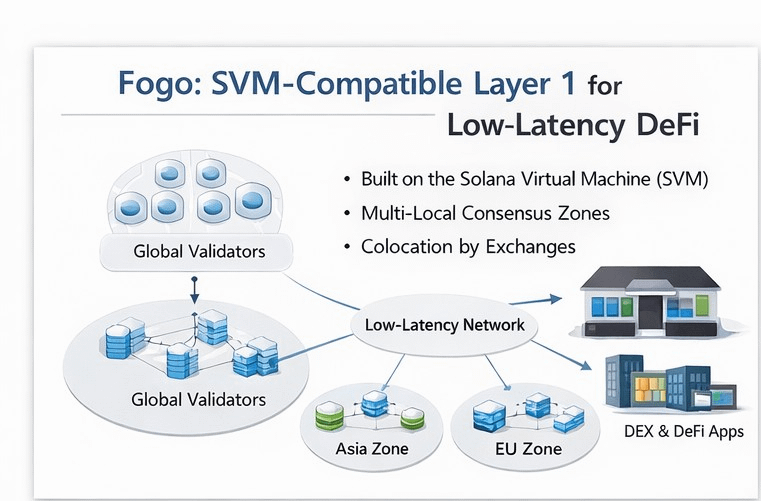
Fogo is built around the Solana Virtual Machine, so the programming model and tooling aim to look familiar to Solana developers, but the emphasis is clearly on real-time finance. Its docs describe a zone-based “multi-local consensus,” where validators are organized into geographic zones and the active set operates in close physical proximity to reduce network delay. That’s traditional market plumbing stated plainly: if milliseconds matter, distance matters. Fogo’s site goes further and calls this “colocation consensus,” saying active validators are collocated in Asia near exchanges, with other nodes on standby. I appreciate the tradeoff being explicit. You’re buying execution quality with some concentration of infrastructure, which changes what “decentralized” feels like day to day. Whether that’s acceptable depends on what you’re optimizing for: global dispersion as a default, or a tighter execution environment for trading.
It also helps explain why this is getting attention now. The performance story around the SVM isn’t just theory anymore; Solana’s Firedancer validator client has reached mainnet, which makes the “we can run faster” claim feel more grounded. At the same time, UX expectations have shifted. People might tolerate friction for long-term holding, but active trading is ruthless about it. Fogo Sessions reads like an answer to that reality: a chain primitive meant to reduce repeated fee prompts and signatures using scoped session keys and paymasters that can cover transaction fees. It’s the kind of unsexy detail that decides whether onchain trading feels workable.
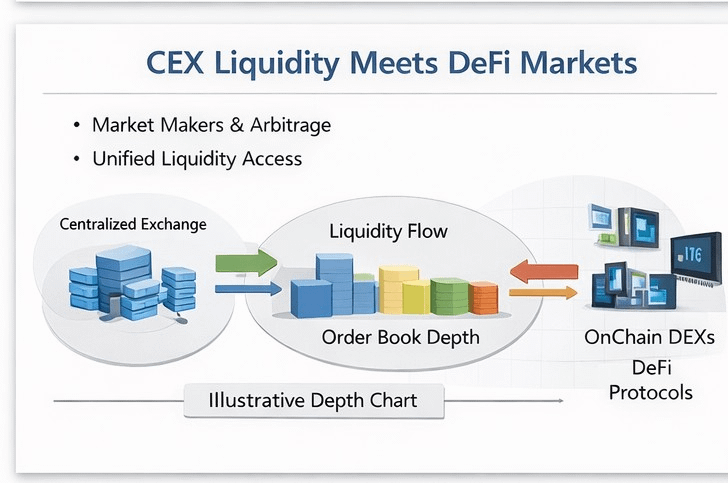
So where does “CEX liquidity” actually show up? Some of it is simple access: when a token is listed on large centralized venues, you get more continuous price discovery and easier on/off ramps than many DeFi-native assets ever manage. The subtler piece is market making. If a chain is physically and operationally friendly to firms that already run low-latency infrastructure, it becomes easier for them to quote onchain, arbitrage between venues, and manage inventory without being blindsided by network jitter. None of that guarantees deeper liquidity or fair execution, and I’m wary of treating it as inevitable. But I can see the bet: make onchain execution reliable enough that exchange-style liquidity provision becomes normal, and DeFi stops being the side room and starts looking like part of the same trading landscape—just with different custody, different visibility, and different failure modes.
@Fogo Official #fogo #Fogo $FOGO
