
Featuring insights from CereBree & Avinasi Labs.
One thing has hindered longevity projects for decades: the "translation gap." Experiments are often successful in reports, but implementation has been blocked for a very long time.
This translation gap is the difference between a clinical trial and a paper trail, representing the vast distance between a laboratory discovery and a medicine that actually reaches patients.
Today, we'll explore what's happening in this area now and how AI helps overcome that gap.
Modern protein design operates as an engineering loop from sequence to structure to function. Large-scale models, such as AlphaFold-class systems and protein language models including ESM, compress structural inference by rapidly predicting a protein's 3D shape from its genetic code. This improves the prediction of protein and small-molecule interactions.
Experimental validation remains essential because even highly specialized AI often makes mistakes. The cost of error is prohibitive, especially as the market grows; therefore, all options must be tested.
Small Molecule Discovery and Cellular Reprogramming
This structural progress directly influences small-molecule discovery. The expansion of the role of chemistry occurs through a combination of diffusion, variational and reinforcement learning.
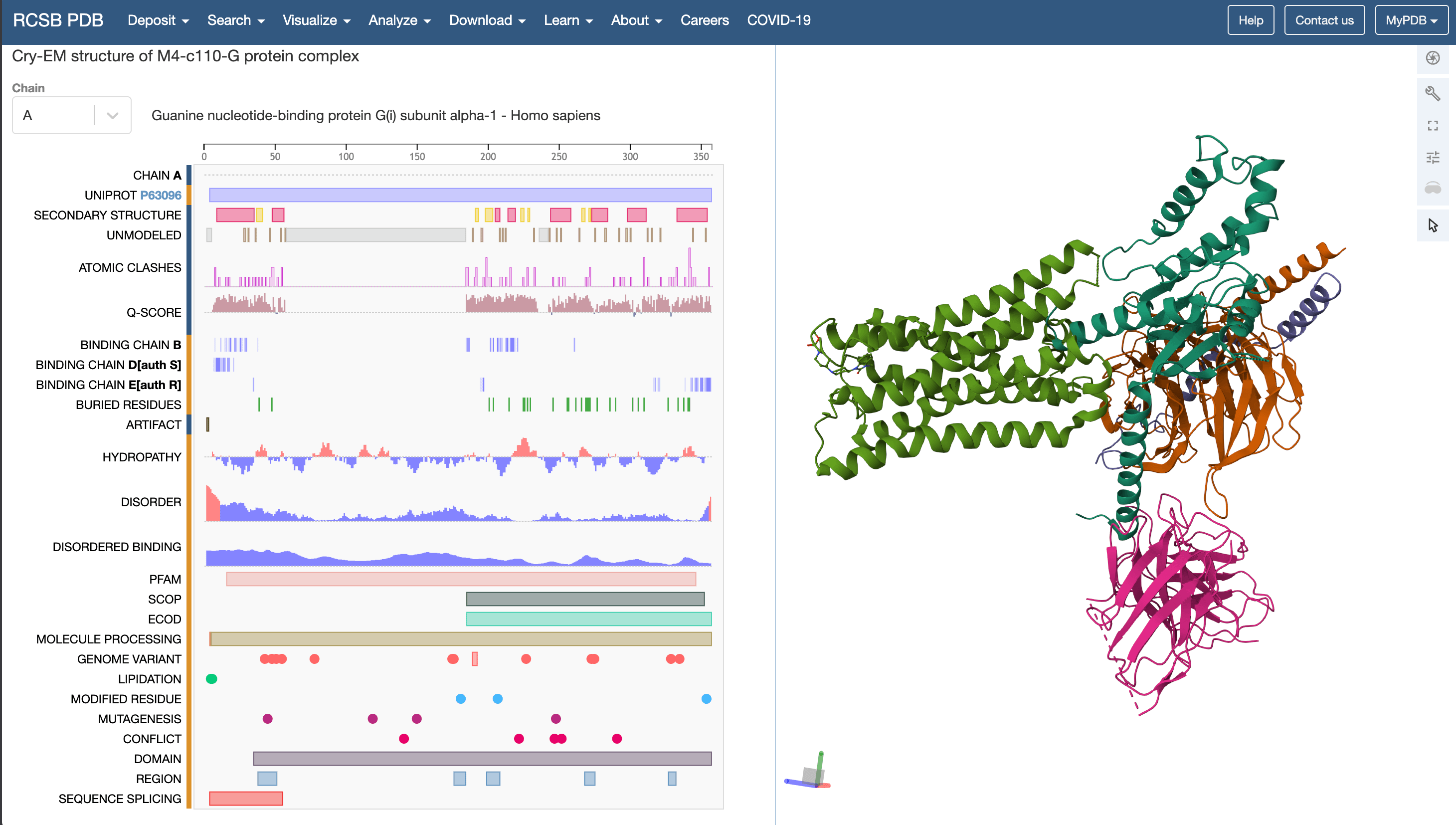
Pharmacological properties known as ADMET for monitoring how a drug is absorbed and processed are also optimized. Additionally, pathways that interact with aging, such as the mTOR and AMPK metabolic switches, are activated. The real value depends on measurable operational metrics, such as Hit rate and Time to candidate. Pipeline efficiency determines impact.
Cellular reprogramming aims to reset epigenetic and transcriptomic states, effectively rebooting old cells to a younger state, through the transient expression of Yamanaka factors or chemical alternatives.
Precise temporal control is required to reduce oncogenic risk and ensure that these rejuvenated cells do not become cancerous. In parallel, machine learning supports senolytic discovery through high-content imaging and single-cell analysis to identify drugs capable of eliminating the 'zombie' cells that clutter our tissues.
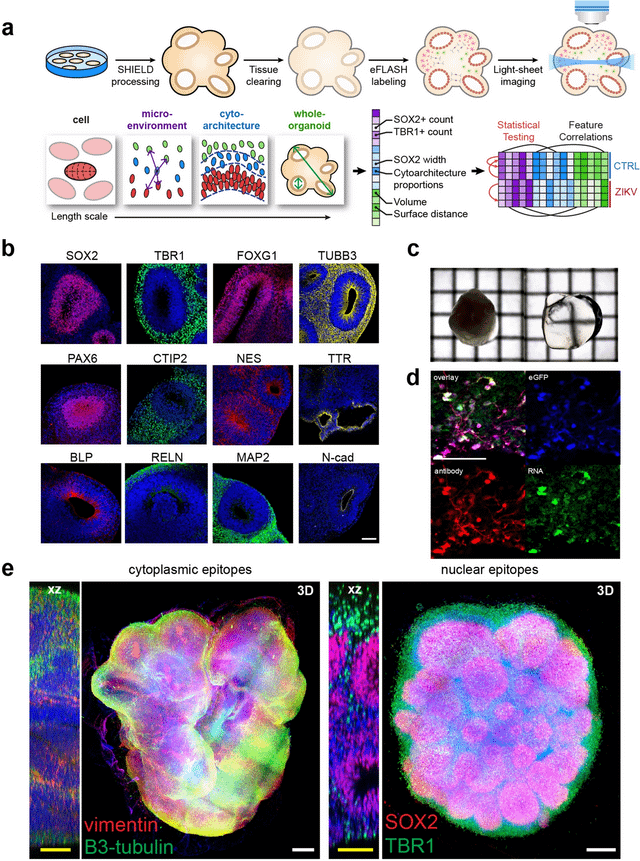
Human-derived organoids, or miniature lab-grown versions of human organs, provide higher-fidelity validation models compared to traditional systems.
Industrial Validation and the Future Landscape
Closing the translation gap requires the integration of generative design, structural prediction workflows, AI-guided biological optimization and strict enforcement of Hit Rate / Time to candidate benchmarks.
Human-derived assays and interpretable readouts must function as validation layers to ensure reproducible biological effects. Industrial examples clearly demonstrate this transition.
Insilico Medicine, a Hong Kong-based company, reported accelerating research using AI; a molecule developed using a neural network has already entered clinical trials.
Verge Genomics applies a "human-first" multi-omics strategy to reduce animal-to-human attrition, helping prevent the common failure where a drug works on mice but not on people.
Recursion combines image-based screening with machine learning and maintains published platform methods.
Emerging models prioritize AI-enabled biological validation over pure discovery. Developability scoring and staged validation are used to identify underexplored candidates.
DePharm represents such an approach. With the advent of AI, the entire landscape has undergone a qualitative change.
Now, pure calculations and model speculation are becoming practical propositions. AI is becoming a human architect, literally designing the biological building blocks of our future and this is true in the most literal sense.
Expert Perspective: CereBree & Avinasi Labs
To gain deeper insight into these developments, we reached out to the team at CereBree and Avinasi Labs for their perspective on how AI is reshaping our approach to biological time.
Commentary from CereBree
What struck the CereBree team most was not just the acceleration of research, but a fundamental shift in mindset. For decades, aging was something we observed; now, it is something we can actively design. This represents a transition from passive discovery to active, intentional problem-solving.
However, they emphasize that this power comes with significant responsibility. Biology is not a closed system and interventions at the cellular level can have unintended ripple effects. Beyond the laboratory, the team suggests we must proactively grapple with three critical areas:
Equity and Access: Ensuring these treatments don't create a "youth divide" between different economic classes.
Societal Impact: Rethinking retirement, resource allocation and population dynamics.
Healthspan vs Lifespan: Ensuring that AI focuses on extending healthy, productive years, not just the quantity of life.
Q: As AI speeds up discovery, how do we ensure we aren't moving too fast for human safety?
Safety in an AI-accelerated world isn’t about slowing innovation; it’s about grounding it in biological reality. AI can generate promising molecules quickly, but these must be treated as hypotheses and validated through rigorous preclinical pathways.
The key is not to slow down AI's potential, but to accelerate the development of the safety nets and ethical guardrails that surround it.
Q: What is the biggest barrier preventing lab breakthroughs from becoming real treatments in our daily lives?
The translation gap is still the bottleneck. While AI has crushed early discovery timelines, over 90% of candidates still fail in humans because mouse results rarely translate.
Furthermore, aging is not yet a recognized disease target by regulators. To finally get these advances into people’s hands, we need clearer regulations, stronger human-relevant models like organoids and better alignment between academia and pharma.
Commentary from Avinasi Labs
We asked the Avinasi Labs team for their broad perspective on the current landscape. Their extensive response covers everything from the ethics of innovation speed to the critical role of data infrastructure and the rise of AI health agents.
Q: As AI speeds up discovery, how do we ensure we aren’t moving too fast for human safety?
Dario Amodei from Anthropic recently raised an interesting question: if AI discovered a cure for cancer today, would the world immediately be cured? This highlights a vital perspective: in drug discovery, the challenge is often not that progress moves too fast, but that it moves too slowly.
The development process already has multiple layers of safeguards, from animal studies to Phase III trials and real-world monitoring, to ensure that faster discovery does not mean reckless deployment.
For a terminal cancer patient hoping to live just one more month to attend their daughter’s wedding, faster discovery is not an abstract idea, it is real time gained. The greater concern is not acceleration itself, but the risk of AI developing beyond human control.
Fortunately, organizations like the Ethereum Foundation and the Center for AI Safety are already collaborating with policymakers to develop guardrails that ensure AI remains aligned with human interests. The goal is to ensure technological acceleration is accompanied by strong governance and safety frameworks.
Q3. How will AI health agents reshape the future of longevity and personalized health?
Recently, OpenClaw surpassed Linux in GitHub stars, reflecting how quickly open AI ecosystems are evolving. This signals a future where AI health agents, systems capable of managing and interpreting an individual’s health data in a continuous way, become achievable.
With user consent, an agent could integrate data from wearables, lab tests, and clinical records into a unified profile to manage appointments, report to physicians and identify lifestyle risks decades in advance.
At Avinasi Labs, we are building infrastructure for this paradigm across three foundational layers:
1. Data infrastructure, enabling AI agents to query validated longevity datasets and population-scale biological signals.
2. Service infrastructure, connecting individuals with coaches, clinics, diagnostics and therapeutic services.
3. Secure data identity systems, ensuring individuals retain control over their data while enabling anonymized contributions to research.
Ultimately, the biggest breakthroughs may not come from a single drug, but from the data infrastructure that allows humans and AI to understand aging as a continuous, verifiable biological process.
Note from Cicada CEO Maxim Moris
While the technology shows immense promise, the path to its widespread adoption is complicated by market perceptions. Maxim Moris, CEO of Cicada Market Maker, highlights a significant challenge facing the intersection of emerging tech and life sciences:
Longevity has become one of the defining trends of recent years, yet it remains far removed from the crypto and Web3 industries.
Established projects in this space already have queues of traditional funds eager to invest; for these founders, the last thing they want is to take capital associated with the crypto industry.
There is a clear reason for this: in the eyes of traditional science and finance, our industry is still strongly associated with scams and fraud. This perception will not change overnight. While I have seen only a few Web3 projects genuinely aiming to build something useful in this field, the potential is enormous.
However, success will only come to those projects that find a way to be truly valuable and genuinely necessary to the Longevity industry itself.
Conclusion
The bridge across the translation gap is finally being built, not just with better molecules, but with superior data and a shift in industrial philosophy. As we have seen, the path to longevity is no longer just a biological quest, it is an infrastructure and reputation challenge.
While AI provides the tools to design the biological building blocks of our future, the success of these innovations depends on their integration into a transparent, safe, and professional ecosystem.
The transition from observing aging to actively designing our biological time is well underway. For those projects capable of proving their utility to both science and society, the reward is more than just market success, it is the tangible expansion of human potential.