
币圈超短马大帅
专职实盘超短5年,每晚9:00-4:00,下午1:00-4:00直播实盘带单,加好友ID1192674524
5 Following
1.3K+ Followers
595 Liked
11 Shared
Posts
All
Quotes
Videos
Live
PINNED
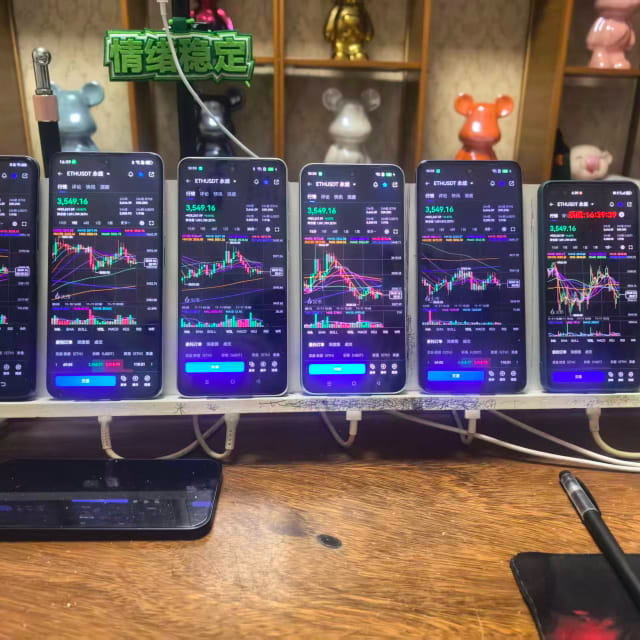
Full-time contract ultra-short real-time trading, live streaming every day from 1:00 PM to 4:00 PM, and 9:00 PM to 4:00 AM. Binance transaction fee rebate of 38%, equivalent to a 60% discount on fees. Add me as a friend to register and join the group,
ID1192674524
ID1192674524
🎙️ ETH实盘超短带你干CPI数据,

Preview
Feb 13 13:00
0
0
February 11th, 9:30 PM, lock in Ma Dashuai's live broadcast room to experience the charm of ultra-short.
🔥Important Events Schedule for This Week (2026.2.9-2026.2.15)
👀This Week's Outlook: Non-Farm Data Hits Hard, Precious Metal Trends May Affect Capital Flows
Last week, the crypto market accelerated its decline. Although there was a brief rebound on Friday, the fragile market sentiment will continue to be tested this week. This week's important macro events and data are dense, including US-Iran negotiations (geopolitical changes continue to affect the crypto industry), Japanese elections (starting early on February 8, which will determine Japan's subsequent direction and the global situation), US non-farm data (delayed to this week, becoming a barometer for interest rate cuts), CPI, and other significant events.
🔥This week, the US will negotiate with Iran again and hold Japanese elections.
🔥Wednesday: US January non-farm data and unemployment rate
🔥Friday: US January CPI data
👉For more major industry events, please check on mobile - Market - News/Event Calendar
👀This Week's Outlook: Non-Farm Data Hits Hard, Precious Metal Trends May Affect Capital Flows
Last week, the crypto market accelerated its decline. Although there was a brief rebound on Friday, the fragile market sentiment will continue to be tested this week. This week's important macro events and data are dense, including US-Iran negotiations (geopolitical changes continue to affect the crypto industry), Japanese elections (starting early on February 8, which will determine Japan's subsequent direction and the global situation), US non-farm data (delayed to this week, becoming a barometer for interest rate cuts), CPI, and other significant events.
🔥This week, the US will negotiate with Iran again and hold Japanese elections.
🔥Wednesday: US January non-farm data and unemployment rate
🔥Friday: US January CPI data
👉For more major industry events, please check on mobile - Market - News/Event Calendar
One minute to complete two trades, this is the charm of ultra-short trading. Stop holding positions, it's useless; the market will exceed your understanding.
As of February 7, 2026, 03:00 (UTC+8), the core information of the cryptocurrency market is summarized as follows, focusing on prices, liquidations, regulations, and institutional dynamics:
1. Core Prices and Market
• BTC: After rebounding from a low of about 59800 USD, it is now reported between 67000-69000 USD, with a maximum decline of over 17% in 24 hours.
• ETH: Once dropped to about 1999 USD, it has now rebounded to around 2000 USD, with a 24-hour decline of over 10%.
• Liquidations: Coinglass shows that about 2.705 billion USD has been liquidated across the network in the last 24 hours, affecting over 590,000 investors, with long positions accounting for over 92%.
3. Institutional and On-Chain Dynamics
• Trend Research has continuously sold ETH to reduce leverage and repay debts, having cumulatively sold over 410,000 ETH since February 1, with total losses of about 700 million USD.
• Related addresses of institutions like BlackRock have transferred BTC and ETH to Coinbase Prime, triggering discussions on reallocation and potential selling pressure.
• Bitcoin ETF's recent capital flow has fluctuated, turning from net inflow to net outflow after previously recording inflows, putting institutional confidence under pressure.
4. Other Important Information
• Berachain unlocked 63.75 million BERA on February 6, worth about 28.8 million USD, accounting for 41.7% of the current circulation.
• Bitfarms is transitioning to AI infrastructure, with its stock price soaring by 16%; Bithumb experienced a temporary drop to 55000 USD due to an unexpected airdrop of 2000 BTC.
1. Core Prices and Market
• BTC: After rebounding from a low of about 59800 USD, it is now reported between 67000-69000 USD, with a maximum decline of over 17% in 24 hours.
• ETH: Once dropped to about 1999 USD, it has now rebounded to around 2000 USD, with a 24-hour decline of over 10%.
• Liquidations: Coinglass shows that about 2.705 billion USD has been liquidated across the network in the last 24 hours, affecting over 590,000 investors, with long positions accounting for over 92%.
3. Institutional and On-Chain Dynamics
• Trend Research has continuously sold ETH to reduce leverage and repay debts, having cumulatively sold over 410,000 ETH since February 1, with total losses of about 700 million USD.
• Related addresses of institutions like BlackRock have transferred BTC and ETH to Coinbase Prime, triggering discussions on reallocation and potential selling pressure.
• Bitcoin ETF's recent capital flow has fluctuated, turning from net inflow to net outflow after previously recording inflows, putting institutional confidence under pressure.
4. Other Important Information
• Berachain unlocked 63.75 million BERA on February 6, worth about 28.8 million USD, accounting for 41.7% of the current circulation.
• Bitfarms is transitioning to AI infrastructure, with its stock price soaring by 16%; Bithumb experienced a temporary drop to 55000 USD due to an unexpected airdrop of 2000 BTC.
As of 5:00 on February 6, 2026, the core information in the cryptocurrency circle is summarized as follows, focusing on market crashes, regulatory impacts, and large unlocks, along with key data and risk warnings.
📉 Market Shock: Widespread crash, panic intensifies
• Core Trigger: The statement from the U.S. Treasury Secretary triggered market sell-offs, compounded by institutional withdrawals and leverage liquidations, leading to a total market capitalization of the cryptocurrency market evaporating approximately $186 billion (about 1.3 trillion RMB) in 24 hours.
• Performance of Major Coins:
◦ BTC: Dropped below $70,000, reaching a low of around $67,000, with a 24-hour decline of about 12.37%.
◦ ETH: Dropped below $2,000, with a decline exceeding 13%.
◦ XRP, SOL: Both dropped more than 17%, with most major coins declining over 15%.
• Market Sentiment: The cryptocurrency fear and greed index fell to 14 (extreme fear), the lowest since November 2025; over $800 million in liquidations in 24 hours, with approximately 165,000 traders being forcibly liquidated.
🔓 Large Token Unlocks: Short-term selling pressure warning
• Unlock on February 6:
◦ Hyperliquid (HYPE): Unlocking 9.92 million tokens, valued at approximately $304 million, accounting for 2.79% of the total issued.
◦ Berachain (BERA): Unlocking 63.75 million tokens, accounting for 59.03% of the circulation, significant short-term selling pressure.
• Impact of Unlocks: May exacerbate market volatility, related tokens may face price correction risks.
🏛️ Regulatory and Institutional Dynamics
• U.S. regulation continues to tighten, the advancement of the cryptocurrency market structure bill encounters obstacles, requiring presidential intervention to facilitate compromise.
• Coinbase is about to launch the COIN50 perpetual contract, covering the top 50 digital assets by market value, enhancing investment convenience.
• Institutional attitudes are polarized, with some institutions experiencing fund outflows from ETFs, putting pressure on market confidence.
⚠️ Risk Warning
• The short-term market is in extreme panic, leverage trading risks are very high, it is recommended to control positions and be cautious about bottom fishing.
• Pay attention to the rhythm of token unlocks to avoid blindly chasing highs and prevent liquidity risks.
📉 Market Shock: Widespread crash, panic intensifies
• Core Trigger: The statement from the U.S. Treasury Secretary triggered market sell-offs, compounded by institutional withdrawals and leverage liquidations, leading to a total market capitalization of the cryptocurrency market evaporating approximately $186 billion (about 1.3 trillion RMB) in 24 hours.
• Performance of Major Coins:
◦ BTC: Dropped below $70,000, reaching a low of around $67,000, with a 24-hour decline of about 12.37%.
◦ ETH: Dropped below $2,000, with a decline exceeding 13%.
◦ XRP, SOL: Both dropped more than 17%, with most major coins declining over 15%.
• Market Sentiment: The cryptocurrency fear and greed index fell to 14 (extreme fear), the lowest since November 2025; over $800 million in liquidations in 24 hours, with approximately 165,000 traders being forcibly liquidated.
🔓 Large Token Unlocks: Short-term selling pressure warning
• Unlock on February 6:
◦ Hyperliquid (HYPE): Unlocking 9.92 million tokens, valued at approximately $304 million, accounting for 2.79% of the total issued.
◦ Berachain (BERA): Unlocking 63.75 million tokens, accounting for 59.03% of the circulation, significant short-term selling pressure.
• Impact of Unlocks: May exacerbate market volatility, related tokens may face price correction risks.
🏛️ Regulatory and Institutional Dynamics
• U.S. regulation continues to tighten, the advancement of the cryptocurrency market structure bill encounters obstacles, requiring presidential intervention to facilitate compromise.
• Coinbase is about to launch the COIN50 perpetual contract, covering the top 50 digital assets by market value, enhancing investment convenience.
• Institutional attitudes are polarized, with some institutions experiencing fund outflows from ETFs, putting pressure on market confidence.
⚠️ Risk Warning
• The short-term market is in extreme panic, leverage trading risks are very high, it is recommended to control positions and be cautious about bottom fishing.
• Pay attention to the rhythm of token unlocks to avoid blindly chasing highs and prevent liquidity risks.
Come on, brothers, let's talk about the application of the MA indicator and how to enter and exit in ultra-short-term intraday trends.
February 4, 2026 (Wednesday) Core Overview: BTC approximately $76,000 (-3.10%), ETH approximately $2,280 (-3.72%), market in extreme fear; only a few sectors like SocialFi, AI, and DePIN are going against the trend.
1. Market Conditions
• BTC: At one point during the day, it fell below $73,000, currently around $76,000, with a 7-day drop of over 20%; Fear and Greed Index at 22%, in the extreme fear zone.
• ETH: Underperformed compared to BTC, 7-day drop of 25.08%; Lido and other staking protocols' TVL dropped over 25% in 7 days, with some stakers withdrawing.
• SOL: TVL dropped 10.60% over 7 days, but the 24-hour DEX trading volume reached $5.159 billion, on-chain activity remains high.
• Sector Highlights: SocialFi (+2.14%), AI (+0.06%), DePIN (+0.01%) went against the trend; TON (+2.80%), WLD (+2.03%), AR (+2.40%) led the gains.
2. Funds and Institutions
• ETF Funds: Bitcoin ETF continues to see net outflows, BlackRock ETF had over $300 million outflow in a single day.
• Institutional Rebalancing: Grayscale reduced holdings by 12,000 BTC and increased ETH; HashKey Capital withdrew $14.8 million in ETH from Binance.
• Large Movements: 505,500 SOL (approximately $50.34 million) transferred to Binance; Binance transferred 1,433 BTC (approximately $109 million).
3. On-Chain and Regulation
• On-Chain Dynamics: Two dormant ETH addresses from 5 years ago were activated, depositing 44,500 ETH and borrowing $104 million USDT, then purchasing 45,900 ETH.
• Regulatory Progress: The U.S. CLARITY Act passed the Senate Agriculture Committee by a narrow margin, the regulatory framework is becoming clearer but bipartisan disagreements remain.
4. Market Perspectives
• Bullish: Tom Lee claims bottom factors are in place; Michaël van de Poppe believes the cycle bottom has emerged.
• Bearish/Cautious: Bernstein Research believes it may drop to $60,000; Wintermute warns of liquidity crisis and liquidation risks.
1. Market Conditions
• BTC: At one point during the day, it fell below $73,000, currently around $76,000, with a 7-day drop of over 20%; Fear and Greed Index at 22%, in the extreme fear zone.
• ETH: Underperformed compared to BTC, 7-day drop of 25.08%; Lido and other staking protocols' TVL dropped over 25% in 7 days, with some stakers withdrawing.
• SOL: TVL dropped 10.60% over 7 days, but the 24-hour DEX trading volume reached $5.159 billion, on-chain activity remains high.
• Sector Highlights: SocialFi (+2.14%), AI (+0.06%), DePIN (+0.01%) went against the trend; TON (+2.80%), WLD (+2.03%), AR (+2.40%) led the gains.
2. Funds and Institutions
• ETF Funds: Bitcoin ETF continues to see net outflows, BlackRock ETF had over $300 million outflow in a single day.
• Institutional Rebalancing: Grayscale reduced holdings by 12,000 BTC and increased ETH; HashKey Capital withdrew $14.8 million in ETH from Binance.
• Large Movements: 505,500 SOL (approximately $50.34 million) transferred to Binance; Binance transferred 1,433 BTC (approximately $109 million).
3. On-Chain and Regulation
• On-Chain Dynamics: Two dormant ETH addresses from 5 years ago were activated, depositing 44,500 ETH and borrowing $104 million USDT, then purchasing 45,900 ETH.
• Regulatory Progress: The U.S. CLARITY Act passed the Senate Agriculture Committee by a narrow margin, the regulatory framework is becoming clearer but bipartisan disagreements remain.
4. Market Perspectives
• Bullish: Tom Lee claims bottom factors are in place; Michaël van de Poppe believes the cycle bottom has emerged.
• Bearish/Cautious: Bernstein Research believes it may drop to $60,000; Wintermute warns of liquidity crisis and liquidation risks.
As of February 3, 2026, 18:00, the core information in the cryptocurrency circle is as follows (all information is from public market data and media reports and does not constitute investment advice):
📊 Market Overview (February 3, 18:00, UTC+8)
• BTC: Approximately $78,350, down 3.2% in 24 hours, weakly rebounded after hitting a low of $75,658 during the day, fluctuating between $78,000 and $78,500.
• ETH: Approximately $2,390, down 5.1% in 24 hours, reaching a recent low of $2,219, rebounded about 7.7% but struggled to break the resistance at $2,400.
• BNB: Approximately $485, down 4.8% in 24 hours, lowest at $472, rebounded about 2.7%, with mild fluctuations.
• Market Overview: Total market capitalization approximately $2.78 trillion (down 4.1% in 24 hours), trading volume approximately $18.20 billion (12% increase compared to the previous period); the Fear and Greed Index is at 22%, in the extreme fear range.
🏦 Institutional Movements
• Grayscale: Reduced holdings by 12,000 BTC (holding 658,000 BTC), increased holdings by 50,000 ETH, adjusting by reducing BTC and increasing ETH.
• BlackRock: Bitcoin ETF saw a capital outflow of over $300 million in a single day, being the main force of capital withdrawal from the ETF.
• Unrealized Loss: MicroStrategy and 11 spot ETFs hold approximately 10% of circulating BTC, with an average cost of $85,360, an overall unrealized loss of about $7 billion.
💥 Liquidations and On-chain Dynamics
• In the past 24 hours, 41,000 people were liquidated across the network, with losses exceeding $2.3 billion, with 50x leverage contracts accounting for 68%, and long positions liquidated exceeding 80%.
• A dormant wallet for 8 years deposited 243 BTC into Gemini, worth approximately $19.15 million.
• The TRUMP Meme coin team transferred 5.267 million tokens (approximately $22.44 million) to BitGo, possibly for OTC sale.
🛠️ Platform and Project Dynamics
• Singapore Gulf Bank: Upgraded the clearing network, added stablecoin settlements such as USDC and USDT, to be opened for institutional clients in the first quarter.
• Binance: Will suspend SEI token deposits and withdrawals on February 4 at 00:30 (UTC+8) to support network upgrades.
📊 Market Overview (February 3, 18:00, UTC+8)
• BTC: Approximately $78,350, down 3.2% in 24 hours, weakly rebounded after hitting a low of $75,658 during the day, fluctuating between $78,000 and $78,500.
• ETH: Approximately $2,390, down 5.1% in 24 hours, reaching a recent low of $2,219, rebounded about 7.7% but struggled to break the resistance at $2,400.
• BNB: Approximately $485, down 4.8% in 24 hours, lowest at $472, rebounded about 2.7%, with mild fluctuations.
• Market Overview: Total market capitalization approximately $2.78 trillion (down 4.1% in 24 hours), trading volume approximately $18.20 billion (12% increase compared to the previous period); the Fear and Greed Index is at 22%, in the extreme fear range.
🏦 Institutional Movements
• Grayscale: Reduced holdings by 12,000 BTC (holding 658,000 BTC), increased holdings by 50,000 ETH, adjusting by reducing BTC and increasing ETH.
• BlackRock: Bitcoin ETF saw a capital outflow of over $300 million in a single day, being the main force of capital withdrawal from the ETF.
• Unrealized Loss: MicroStrategy and 11 spot ETFs hold approximately 10% of circulating BTC, with an average cost of $85,360, an overall unrealized loss of about $7 billion.
💥 Liquidations and On-chain Dynamics
• In the past 24 hours, 41,000 people were liquidated across the network, with losses exceeding $2.3 billion, with 50x leverage contracts accounting for 68%, and long positions liquidated exceeding 80%.
• A dormant wallet for 8 years deposited 243 BTC into Gemini, worth approximately $19.15 million.
• The TRUMP Meme coin team transferred 5.267 million tokens (approximately $22.44 million) to BitGo, possibly for OTC sale.
🛠️ Platform and Project Dynamics
• Singapore Gulf Bank: Upgraded the clearing network, added stablecoin settlements such as USDC and USDT, to be opened for institutional clients in the first quarter.
• Binance: Will suspend SEI token deposits and withdrawals on February 4 at 00:30 (UTC+8) to support network upgrades.
Have fun and that's it, all expenses will be reimbursed by Brother Suo
I. Core Market (January 29, 1 PM, Data Source: CoinMarketCap, Coindesk)
• BTC: Approximately $89,200 (¥617,925), 24h change **+0.28%, 7 days -0.94%, holding at $88,000 support, oscillating in the $89,000-$90,000 range**
• ETH: Approximately $3,050 (¥20,840), 24h change **+0.72%**, 7 days basically flat
• SOL: Approximately $128 (¥868), 24h **-1.61%, 7 days +3.88%**
• BNB: Approximately $890 (¥6,262), 24h **+0.29%, 7 days +1.64%**
• Market Sentiment: Fear and Greed Index 37 (Fear), trading volume shrank by about 25% compared to the previous period
II. Key Information
1. Macroeconomics and Institutions: The Federal Reserve maintains interest rates at 3.50%-3.75%, statement leans hawkish; U.S. Treasury yield curve steepens for two consecutive days, inflation expectations heat up. Fidelity's stablecoin FIDD is about to launch, BitMine Chairman Tom Lee states that Ethereum is the future of finance. Binance has seen a net inflow of 166 million USDT in the past 24h, with a net inflow of 30,998,800 USDT in the last hour.
2. Regulatory Dynamics: The Trump team plans to grant CFTC greater crypto regulatory authority, weakening SEC's influence, viewed as a favorable institutional development for the industry.
3. Hashrate and Supply: Extreme cold in North America has caused some Bitcoin mining farms to shut down, overall hashrate temporarily declines, easing mining difficulty, leading to a rebound in miner profit margins.
4. Risk Warning: There are $10.8 billion in crypto options approaching expiration on Friday, increasing short-term volatility risk.
III. Operational Tips
• Short-term focus on BTC's $88,000 support and $90,000 resistance, be cautious in chasing highs, control positions.
• Funds are concentrating on mainstream coins, altcoin volatility may intensify, be mindful of liquidity risks in small-cap coins.
• BTC: Approximately $89,200 (¥617,925), 24h change **+0.28%, 7 days -0.94%, holding at $88,000 support, oscillating in the $89,000-$90,000 range**
• ETH: Approximately $3,050 (¥20,840), 24h change **+0.72%**, 7 days basically flat
• SOL: Approximately $128 (¥868), 24h **-1.61%, 7 days +3.88%**
• BNB: Approximately $890 (¥6,262), 24h **+0.29%, 7 days +1.64%**
• Market Sentiment: Fear and Greed Index 37 (Fear), trading volume shrank by about 25% compared to the previous period
II. Key Information
1. Macroeconomics and Institutions: The Federal Reserve maintains interest rates at 3.50%-3.75%, statement leans hawkish; U.S. Treasury yield curve steepens for two consecutive days, inflation expectations heat up. Fidelity's stablecoin FIDD is about to launch, BitMine Chairman Tom Lee states that Ethereum is the future of finance. Binance has seen a net inflow of 166 million USDT in the past 24h, with a net inflow of 30,998,800 USDT in the last hour.
2. Regulatory Dynamics: The Trump team plans to grant CFTC greater crypto regulatory authority, weakening SEC's influence, viewed as a favorable institutional development for the industry.
3. Hashrate and Supply: Extreme cold in North America has caused some Bitcoin mining farms to shut down, overall hashrate temporarily declines, easing mining difficulty, leading to a rebound in miner profit margins.
4. Risk Warning: There are $10.8 billion in crypto options approaching expiration on Friday, increasing short-term volatility risk.
III. Operational Tips
• Short-term focus on BTC's $88,000 support and $90,000 resistance, be cautious in chasing highs, control positions.
• Funds are concentrating on mainstream coins, altcoin volatility may intensify, be mindful of liquidity risks in small-cap coins.
3:00 The Federal Reserve is waiting for you to experience the charm of ultra-short.
Add me as a friend
Ma Ge. How to get the Binance rebate
As of January 28, 2026, 1:50 PM, the FOMC decision for January 2026 has not yet been announced (it will be released at 3 AM Beijing time on January 29, followed by a press conference by Powell). Here is the key information:
1. Current official interest rates (as of before the decision)
• Federal funds rate target range: 3.50%-3.75% (effective December 11, 2025, last rate cut of 25bp)
• Reserve requirement rate: 3.65%; primary credit (discount) rate: 3.75%
2. Market consensus and core predictions
• Market expectation: CME's "FedWatch" indicates a 95.6% probability of maintaining the interest rate in January, with only a 4.4% probability of a 25bp rate cut.
• Core reasons: Sticky inflation (core PCE around 2.8%, above the 2% target), strong economic resilience (Q3 2025 GDP growth rate of 4.4%), officials leaning hawkish, preferring to wait and see.
3. Core points of the decision
1. 📝 Policy statement: whether to retain the wording "additional adjustments," suggesting future rate cut pace.
2. 🗳️ Voting dissent: whether there are dissenting votes (e.g., officials advocating for a rate cut).
3. 🗣️ Powell's speech: assessment of inflation and employment, conditions for triggering a rate cut, independence and term statements.
4. 📊 Economic forecast: whether to adjust expectations for inflation, employment, and interest rate paths.
1. Current official interest rates (as of before the decision)
• Federal funds rate target range: 3.50%-3.75% (effective December 11, 2025, last rate cut of 25bp)
• Reserve requirement rate: 3.65%; primary credit (discount) rate: 3.75%
2. Market consensus and core predictions
• Market expectation: CME's "FedWatch" indicates a 95.6% probability of maintaining the interest rate in January, with only a 4.4% probability of a 25bp rate cut.
• Core reasons: Sticky inflation (core PCE around 2.8%, above the 2% target), strong economic resilience (Q3 2025 GDP growth rate of 4.4%), officials leaning hawkish, preferring to wait and see.
3. Core points of the decision
1. 📝 Policy statement: whether to retain the wording "additional adjustments," suggesting future rate cut pace.
2. 🗳️ Voting dissent: whether there are dissenting votes (e.g., officials advocating for a rate cut).
3. 🗣️ Powell's speech: assessment of inflation and employment, conditions for triggering a rate cut, independence and term statements.
4. 📊 Economic forecast: whether to adjust expectations for inflation, employment, and interest rate paths.
The U.S. government shutdown refers to the situation where Congress fails to pass budget bills or continuing resolutions on time, leading to the federal government closing non-essential agencies and suspending related employee salaries due to a funding gap. The core issue is the budget tug-of-war between the two parties and the constraints of congressional voting rules. The following are key details:
1. Core Mechanism
• The U.S. fiscal year ends on September 30. If new fiscal year appropriations or temporary appropriations (continuing resolutions) are not passed before October 1, the government will shut down.
• Senate appropriation bills require 60 votes to pass (currently 53 Republican seats, requiring Democratic support), and disagreements can easily lead to deadlock.
• During a shutdown, non-essential services are suspended, core positions (such as air traffic control and security screening) work without pay, and non-core employees are forced to take unpaid leave.
2. Recent Developments (as of 2026-01-28)
• Last shutdown: October 1, 2025 - November 12, 2025, lasted 43 days, the longest in history. On November 12, Trump signed a temporary appropriations bill, extending funding to January 30, 2026.
• New round of risks: Funding for most departments, including the Department of Homeland Security, will run out on January 30; following the Minnesota shooting incident, Democrats oppose a bill including funding for the Department of Homeland Security, making it difficult to reach the Senate's 60-vote threshold. The probability of a partial shutdown is high starting January 31.
3. Major Impacts
• Livelihood: Distribution of benefits such as food stamps is hindered, flight delays increase, and the livelihoods of federal employees are impacted.
• Economy: Delays in data releases, small business loans and farm subsidies are hindered, affecting business planning and economic activities.
• Governance: Exposes polarization between the two parties, trapped in a cycle of 'shutdown - temporary appropriations - shutdown' again.
1. Core Mechanism
• The U.S. fiscal year ends on September 30. If new fiscal year appropriations or temporary appropriations (continuing resolutions) are not passed before October 1, the government will shut down.
• Senate appropriation bills require 60 votes to pass (currently 53 Republican seats, requiring Democratic support), and disagreements can easily lead to deadlock.
• During a shutdown, non-essential services are suspended, core positions (such as air traffic control and security screening) work without pay, and non-core employees are forced to take unpaid leave.
2. Recent Developments (as of 2026-01-28)
• Last shutdown: October 1, 2025 - November 12, 2025, lasted 43 days, the longest in history. On November 12, Trump signed a temporary appropriations bill, extending funding to January 30, 2026.
• New round of risks: Funding for most departments, including the Department of Homeland Security, will run out on January 30; following the Minnesota shooting incident, Democrats oppose a bill including funding for the Department of Homeland Security, making it difficult to reach the Senate's 60-vote threshold. The probability of a partial shutdown is high starting January 31.
3. Major Impacts
• Livelihood: Distribution of benefits such as food stamps is hindered, flight delays increase, and the livelihoods of federal employees are impacted.
• Economy: Delays in data releases, small business loans and farm subsidies are hindered, affecting business planning and economic activities.
• Governance: Exposes polarization between the two parties, trapped in a cycle of 'shutdown - temporary appropriations - shutdown' again.
• January 29 at 03:00 Interest Rate Decision Announcement (Probability of maintaining **3.50%-3.75%** is extremely high)
• 03:30 Powell holds a press conference to interpret policies, respond to interest rate cut rhythm and political pressure, etc.
🔎 Key Highlights
1. Interest Rate Action: Market consensus is to hold steady, with no expectations for rate cuts/rate hikes
2. Policy Signals: Wording of the statement, inflation and employment descriptions, whether to rule out a rate cut in the first quarter
3. Powell's Speech: Timing of rate cuts, inflation confidence, independence and responses to legal pressures
4. Political Connections: Pressure from Trump and the impact of the new chair nomination, Powell's arrangements at the end of his term in May
📈 Market Impact
The decision and speech will guide global asset pricing, with a focus on the tone regarding the rhythm of interest rate cuts, affecting U.S. stocks, U.S. bonds, the U.S. dollar, and commodity trends.
• 03:30 Powell holds a press conference to interpret policies, respond to interest rate cut rhythm and political pressure, etc.
🔎 Key Highlights
1. Interest Rate Action: Market consensus is to hold steady, with no expectations for rate cuts/rate hikes
2. Policy Signals: Wording of the statement, inflation and employment descriptions, whether to rule out a rate cut in the first quarter
3. Powell's Speech: Timing of rate cuts, inflation confidence, independence and responses to legal pressures
4. Political Connections: Pressure from Trump and the impact of the new chair nomination, Powell's arrangements at the end of his term in May
📈 Market Impact
The decision and speech will guide global asset pricing, with a focus on the tone regarding the rhythm of interest rate cuts, affecting U.S. stocks, U.S. bonds, the U.S. dollar, and commodity trends.
Sunday afternoon at 1:00 PM, broadcasting the explanation of MA moving average application, how to enter and exit ultra-short term trades, how to enter and exit intraday short trends,
Login to explore more contents