

How Walrus Can Shake Up Big Tech Cloud Providers
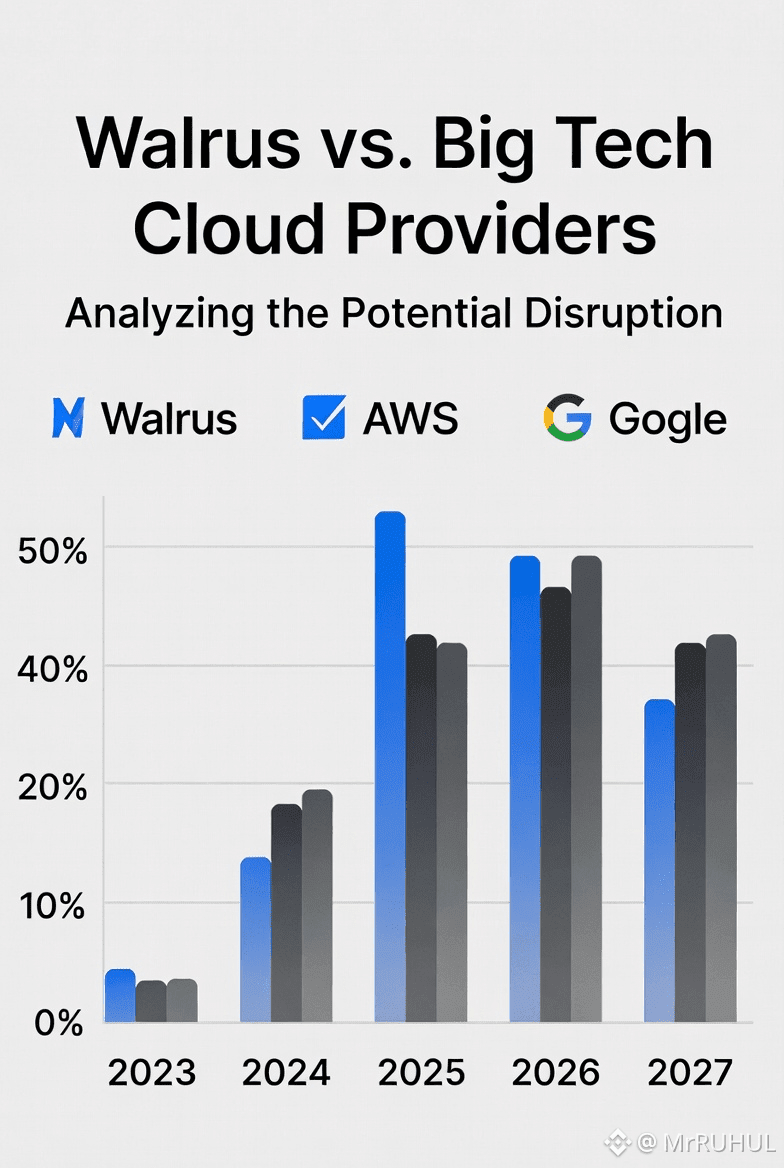
When you think about cloud infrastructure, let’s be honest—it’s basically just three big names: AWS, Microsoft Azure, and Google Cloud. They dominate the scene. Spinning up servers, storing files, using AI tools—it’s all pretty smooth, as long as you play by their rules. But here’s the catch: you end up paying way too much, you lose control, and everything funnels through their centralized systems. Walrus wants to turn all that upside down.
So, what exactly is Walrus? Picture a decentralized storage protocol built on the Sui blockchain. Instead of dumping your files into one company’s warehouse, Walrus breaks up huge files—videos, AI training data, high-res images—and spreads them across a network of independent nodes. Thanks to blockchain and smart erasure-coding, your data gets chopped up, scattered, and double-checked for integrity. There’s no single provider you have to trust. That’s the real twist.
Let’s dig into where the big cloud players drop the ball—and how Walrus flips the script.
First up: vendor lock-in. Once you’re settled into Amazon or Google’s ecosystem, good luck getting your stuff out. Their custom APIs and pricing traps keep you tied down, and even moving your own data somewhere else comes with brutal egress fees and eats up a ton of developer hours.
Outages are another headache. Even these giants stumble. Remember the 2024 AWS meltdown that took out half the internet for a day? When everything runs through one company, one screw-up can freeze a huge chunk of the web.
And then there’s the cost. Storage, bandwidth, and especially moving piles of AI training data—those bills blow up fast. Prices swing, and you don’t get much say in how anything works.
Walrus changes things by spreading your data across a global patchwork of independent nodes. The Sui blockchain keeps everything in sync and redundant. No single company holds your files hostage, and there’s no central fail point.
Decentralization is Walrus’s ace in the hole. The system chops files into coded pieces and stores them all over, so even if some nodes go dark, your data sticks around and stays available. This setup keeps costs lower—you’re not doubling or tripling everything just to stay safe.
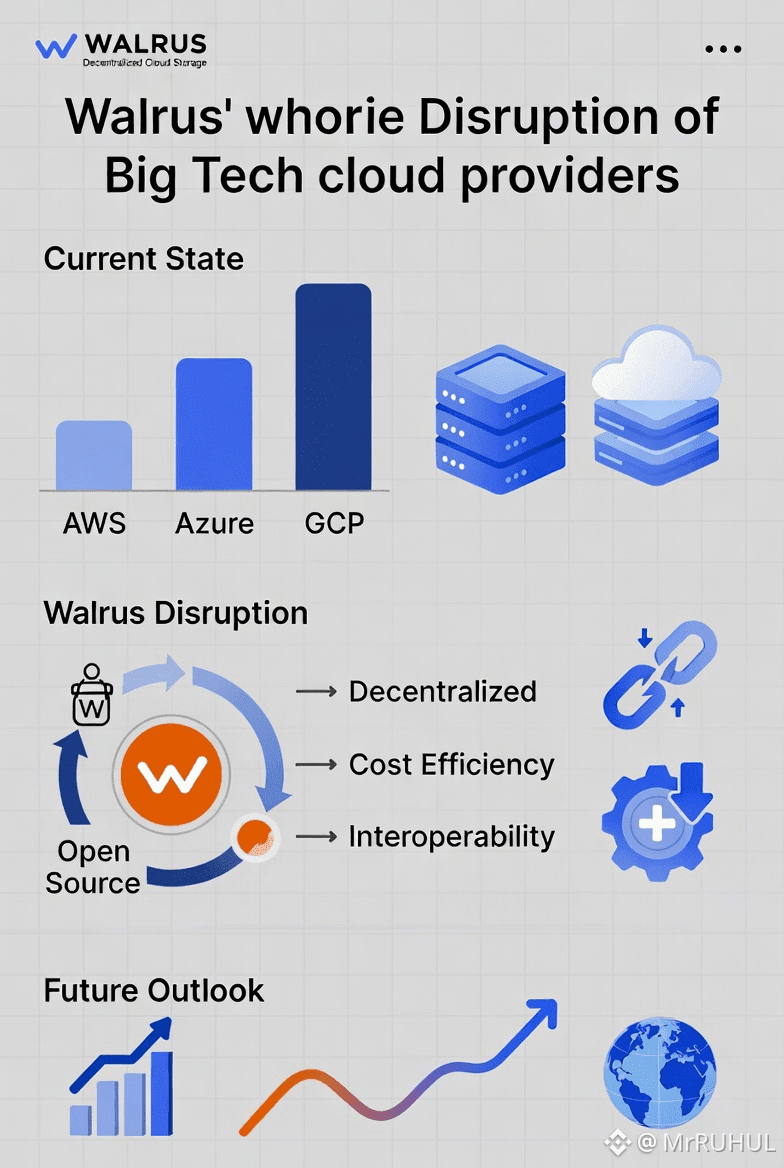
And you get a few perks Big Tech can’t match:
– Censorship resistance. No company or government can quietly erase or block your stuff.
– Transparent pricing. Storage and bandwidth costs run on open, competitive token economics (WAL tokens), so you pay what the market decides—not what some giant decides to charge you. That can make it way cheaper, especially for stuff you don’t need every day.
– Trustless integrity. Walrus lets you cryptographically verify your data, so you know it’s really there. No more crossing your fingers and trusting some provider’s audit.
This approach is a game-changer for AI and Web3 apps. These projects need to stash and fetch giant datasets without draining their budgets or giving up control. Training AI models on the usual clouds? That’s insanely pricey. Walrus offers something different—lower costs, true data ownership, and less risk.
But Walrus isn’t just storage. They’re joining forces with other next-gen networks, too:
– Decentralized compute: Partners like io.net are mixing Walrus storage with peer-to-peer GPU clusters, so you can process AI tasks on the fly and skip the usual cloud headaches.
– Edge and bandwidth networks: With the Pipe Network, hundreds of thousands of global nodes can deliver your data lightning-fast, taking on giants like Cloudflare and Amazon CloudFront.
– Edge infrastructure: Walrus is teaming up with companies like Veea to blend high-speed edge computing with decentralized storage, aiming to match—or even beat—the performance of the big clouds, but without centralizing everything.
Put all this together, and you get a glimpse of a truly decentralized cloud stack—storage, compute, and global delivery, all running outside the grip of Big Tech.
Of course, Walrus has some real-world obstacles to clear before it can topple the current giants. But the groundwork is there. If it catches on, a lot of us might finally have a real alternative to the old, centralized cloud.@Walrus 🦭/acc #Walrus $WAL