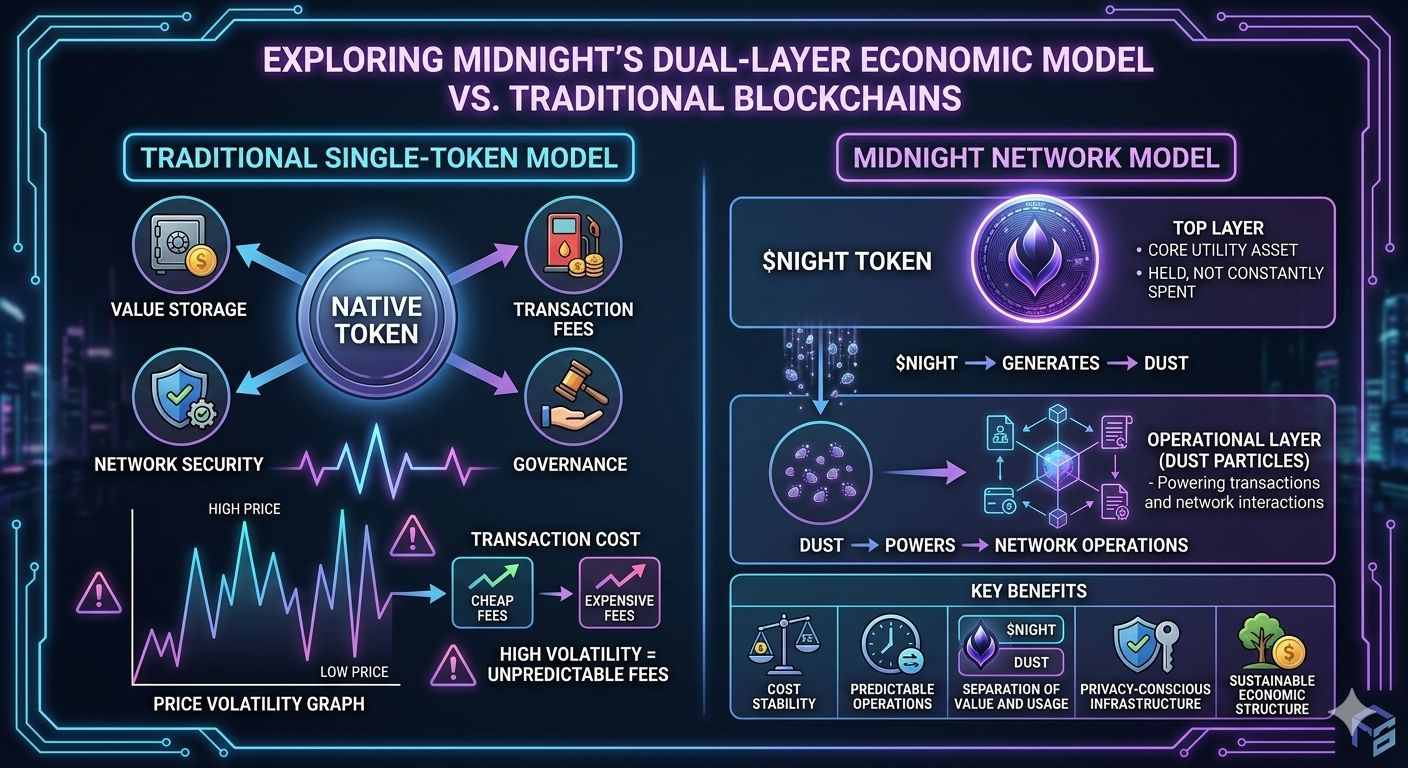
When I look at most blockchain systems, I see a familiar pattern. A single token is designed to handle value, transaction fees, and network security all at once. On paper, that structure seems clean. In practice, it often creates a direct link between token price and network usability.
Midnight introduces a different logic.
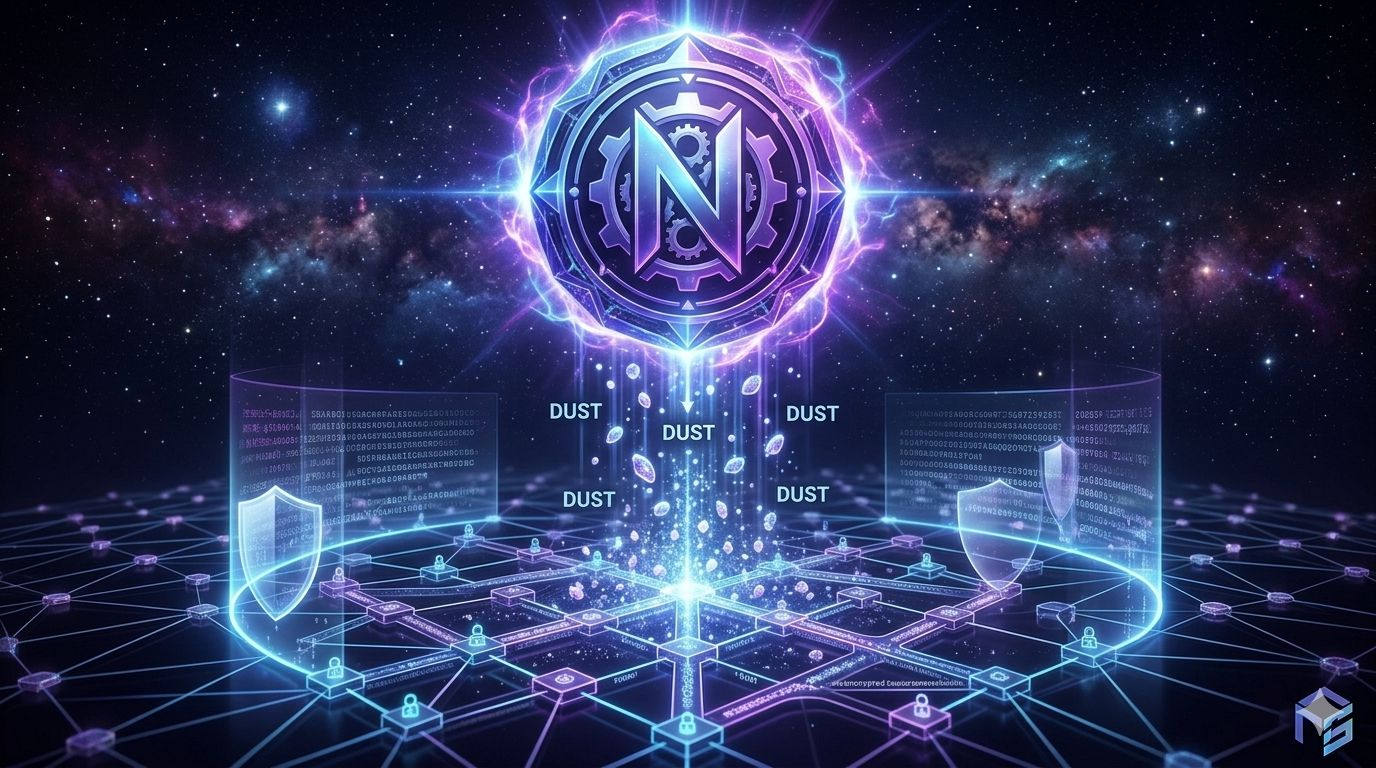
Instead of requiring users to spend $NIGHT for every transaction, the network separates roles. $NIGHT is the core utility token of the ecosystem, but its primary function is not consumption. It generates DUST, which acts as the operational resource used to execute transactions on the network.
This separation changes the economic dynamics in a subtle but important way. Network activity is powered through DUST, while $NIGHT represents long-term participation and value within the system. Holding $NIGHT allows participants to produce DUST over time, which can then be used for interactions and application usage.
From a design perspective, I find this approach interesting because it reduces direct dependence on market volatility for basic operations. Developers can think in terms of resource planning rather than constantly adjusting to token price fluctuations. Users, in turn, interact with the network through a resource model rather than repeatedly spending the core asset.
Another important aspect is how this model aligns with Midnight’s broader focus on rational privacy. DUST functions as a shielded resource, meaning transactions can be executed without exposing unnecessary metadata. The system aims to keep operations verifiable while limiting data exposure, creating a balance between transparency and protection.
hether this model becomes widely adopted will depend on real-world usage and ecosystem growth. But as an architectural decision, the dual-layer design presents a thoughtful alternative to the traditional single-token structure.