

How I’ve been spending some time looking deeper into Fabric Protocol lately, and I tried to approach it with a bit of distance. In crypto and tech circles, new infrastructure projects almost always arrive wrapped in excitement and big promises. But hype rarely tells you how something will actually function once it meets the real world. So instead of focusing on the noise, I kept coming back to a simpler question: if robots are going to operate across industries and environments, how would they realistically coordinate with each other?
That question seems to sit right at the center of what Fabric Protocol is trying to explore. Today most robotic systems still live inside closed environments. A company designs the machine, controls the software, manages the data, and everything stays within that single ecosystem. That structure works as long as the robots remain isolated. But once machines start interacting across networks, companies, and regions, the problem becomes less about building robots and more about coordinating them.
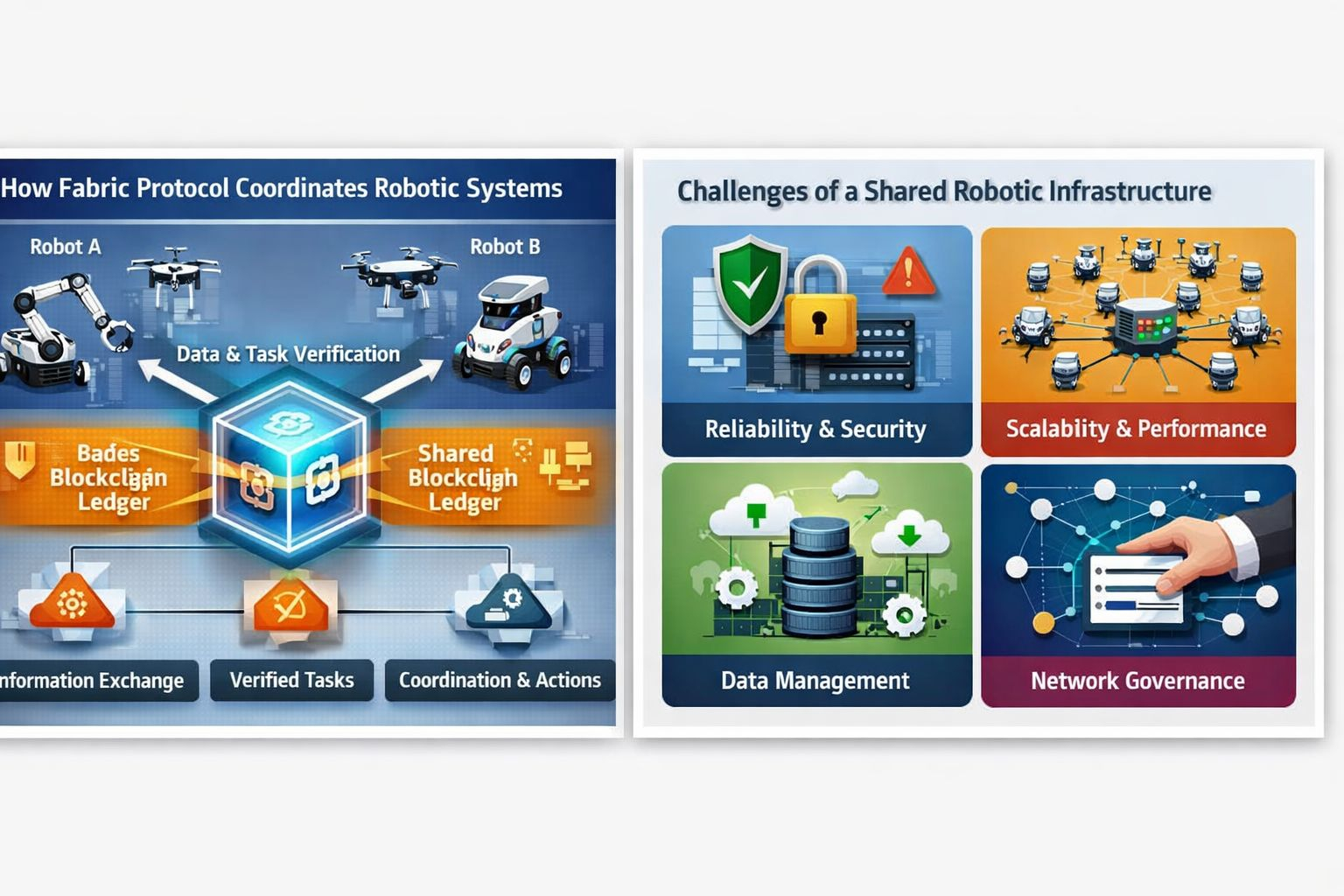
Fabric Protocol appears to approach this challenge by introducing the idea of shared infrastructure for robotic agents. Instead of each system operating in its own silo, the protocol suggests a network where robots, developers, and data sources can interact through a common framework. Machines could exchange information, verify tasks, and coordinate actions through that shared environment rather than through disconnected platforms.
What caught my attention is that the blockchain element isn’t really the main story here. The interesting part is how the network could act as a shared reference point. When a robot performs a task or processes some form of data, the system could record and verify that activity across the network. Instead of blindly trusting a machine or the company operating it, verification becomes part of the infrastructure itself.
That shift may sound subtle, but it becomes important once autonomous systems begin interacting at scale. If robots are making decisions in logistics networks, factories, research labs, or transportation systems, their outputs may influence other machines or processes. In those situations, being able to verify actions and computations becomes essential. Fabric Protocol introduces the idea of verifiable computing, where robotic processes can be confirmed by the network to ensure they happened correctly.
At the same time, the idea naturally raises questions about reliability. Shared infrastructure only works if the underlying system remains stable. If multiple robotic agents depend on the network to coordinate actions, the protocol has to operate securely and consistently under real operational pressure. Distributed networks often look elegant in theory, but maintaining them over time requires strong governance, careful monitoring, and resilient architecture.
Another layer of complexity appears when we think about scale. Coordinating a small group of machines is manageable. Coordinating thousands of robotic agents across industries and regions is something entirely different. The infrastructure would need to handle large amounts of data, verification processes, and interactions without slowing down the systems that rely on it.
That’s why the most interesting part of Fabric Protocol, at least to me, isn’t whether it succeeds immediately. Infrastructure rarely develops that quickly. What matters more is the direction of the idea itself. As automation continues to expand, coordination layers like this may eventually become necessary rather than optional.
If robots truly begin operating across global supply chains, cities, factories, and research environments, they will likely need systems that allow them to communicate, verify results, and follow shared rules. In that context, Fabric Protocol feels less like a finished solution and more like an early attempt to build the kind of infrastructure that large-scale automation might eventually require.
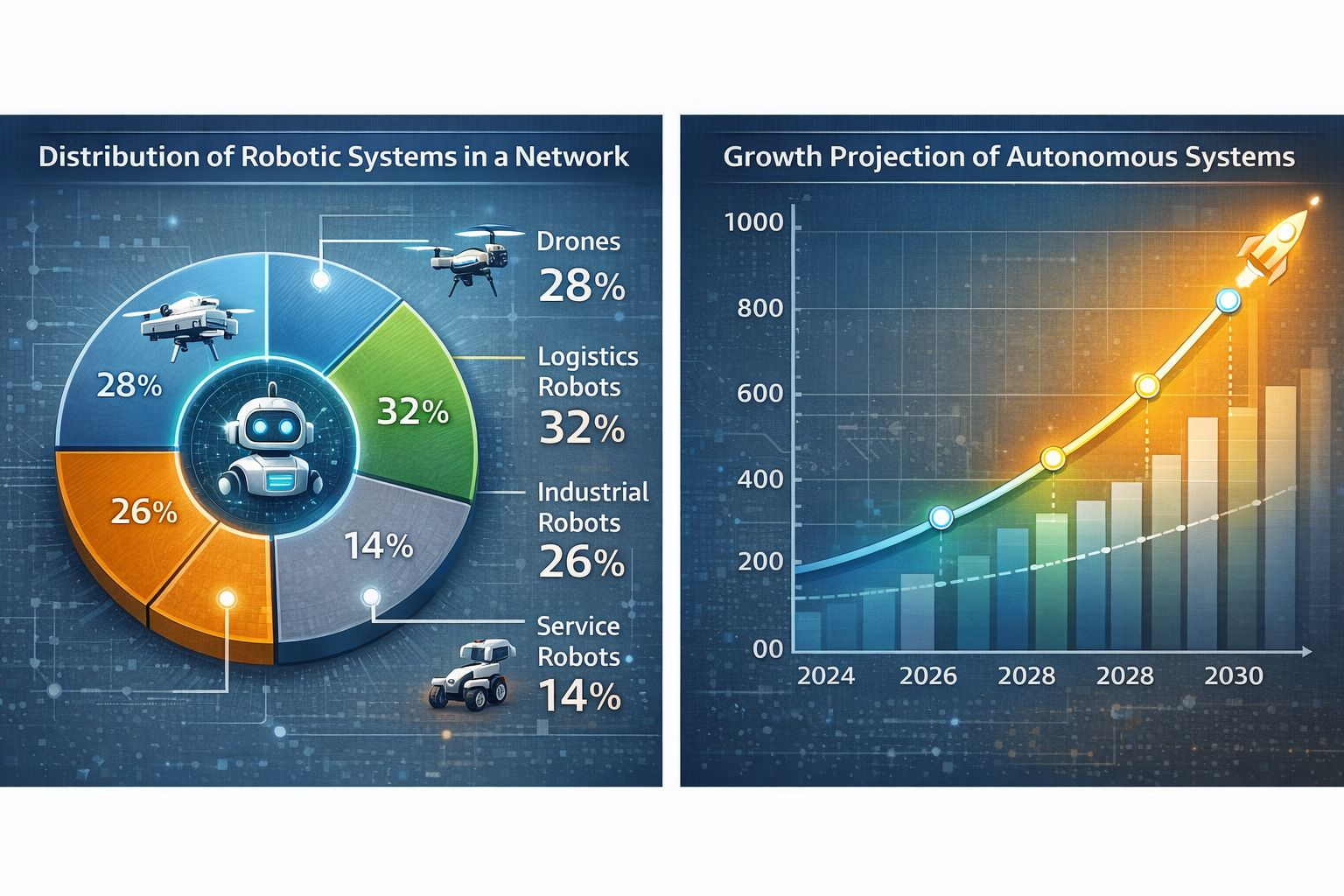
For now, it remains something I’m watching with curiosity rather than certainty. But the problem it points to is real. As machines become more autonomous and more connected, the question of how they coordinate with each other may end up becoming just as important as the technology that powers them.
@Fabric Foundation #robo #ROBO $ROBO
