

I spend most of my days staring at charts. Watching candles form, waiting for levels to react, trying to stay patient while the market does its thing. After a while it becomes a routine. Your mind starts to operate inside that world of entries, exits, and risk management. But every now and then something outside the trading screen pulls your attention away for a moment. That’s what happened when I started reading about Fabric Protocol and the work around the Fabric Foundation.
At first I didn’t expect much. Crypto is full of complicated ideas that sound impressive but don’t really change anything. But the more I read about Fabric, the more I realized the concept was actually pretty interesting.
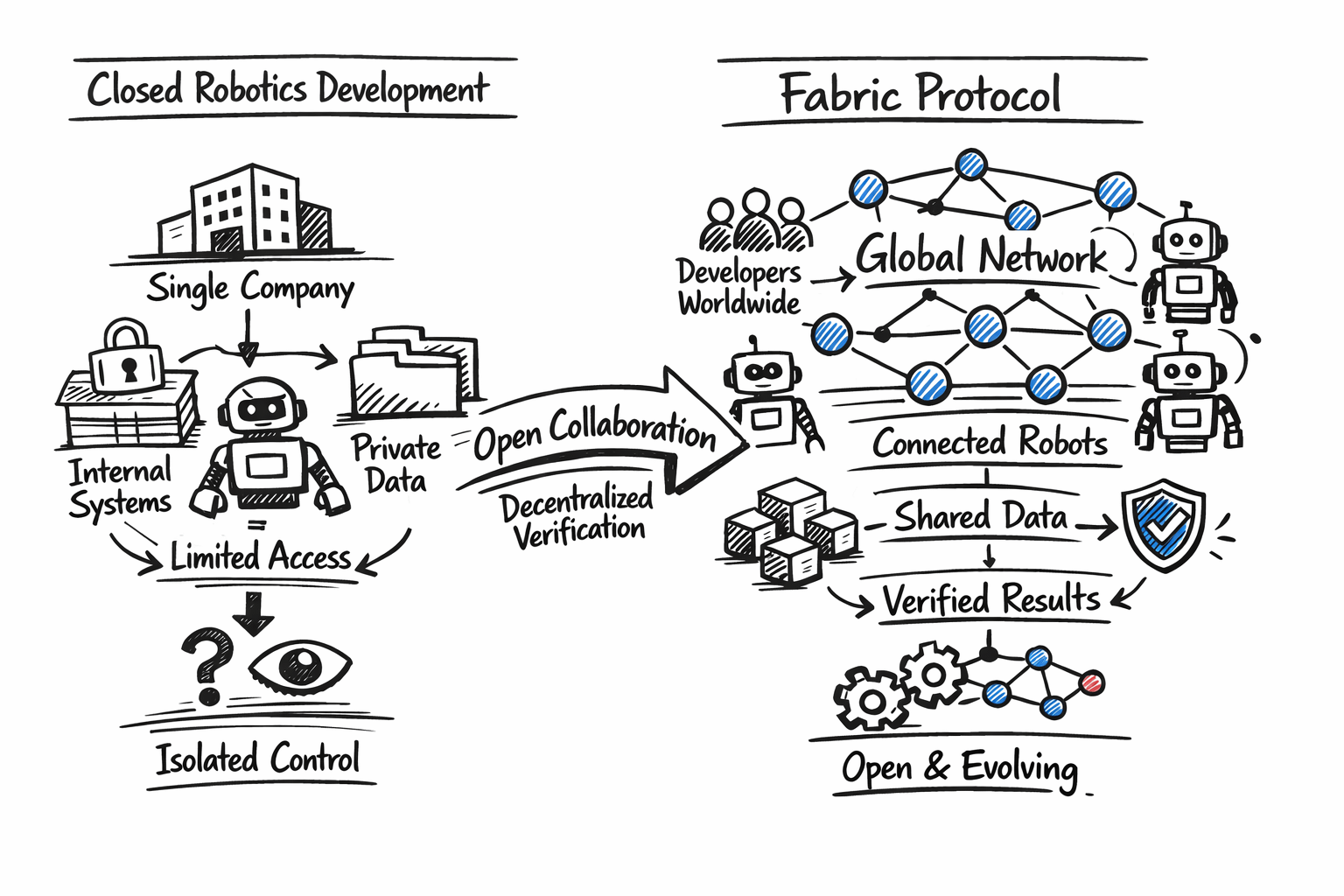
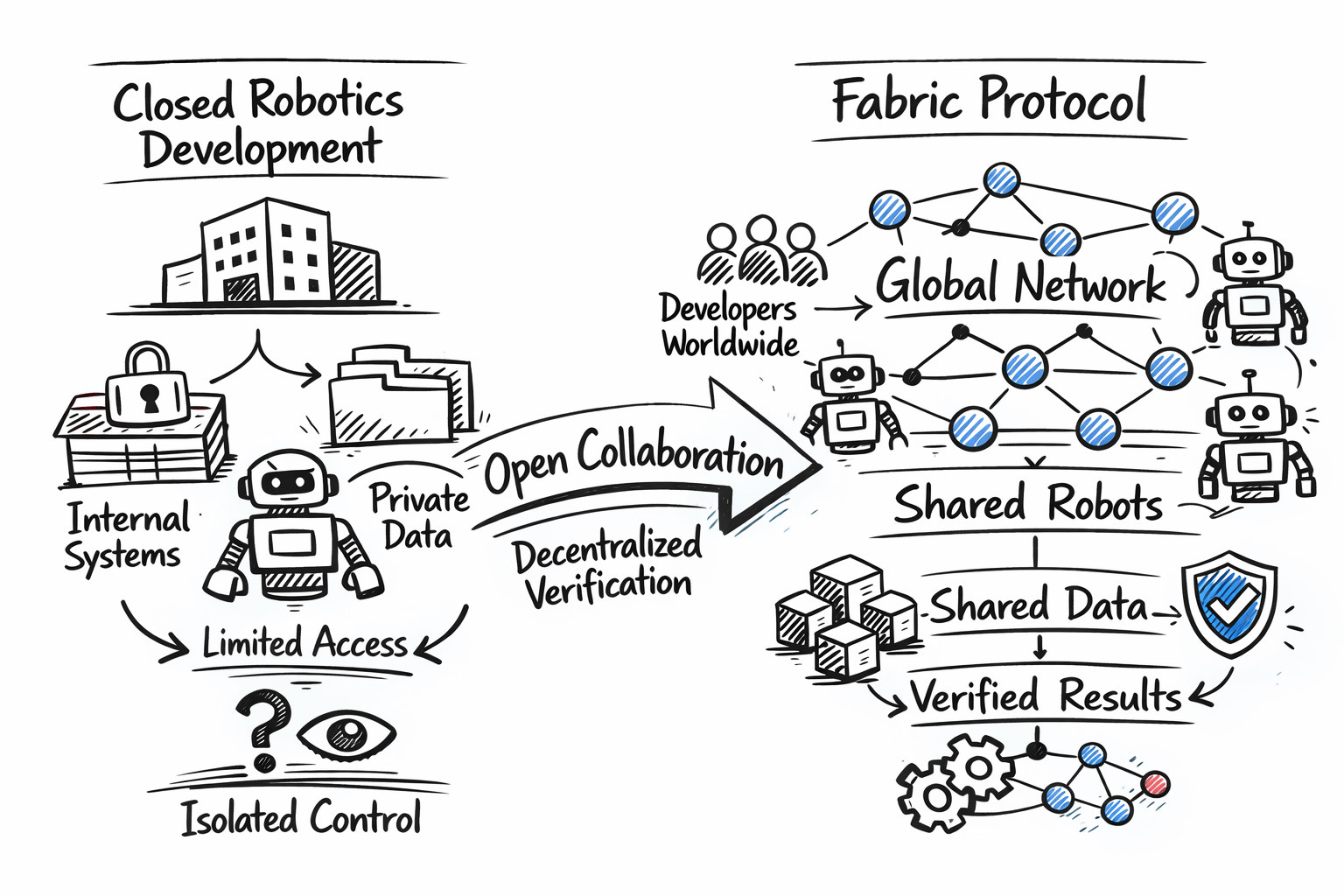
Most robotics today is built inside closed environments. A company designs the machines, writes the software, collects the data, and keeps improving everything internally. The outside world only sees the final product. Fabric is trying to look at robotics from a different angle. Instead of development being controlled by a single company, the idea is to create an open network where people from around the world can contribute to improving robots over time.
When you think about it, it’s similar to how open-source software evolved on the internet. Instead of one organization doing everything, a global community contributes ideas, improvements, and solutions. Fabric is trying to apply that same collaborative approach to robotics.
One thing that caught my attention while reading was the idea of verifiable computing. In robotics, it’s important to know that a machine actually completed the task it was supposed to do. Whether it’s delivering something, moving items in a warehouse, or performing some automated job, you need proof that the task happened correctly. Fabric’s approach is to allow those results to be verified through a shared system instead of relying only on a company’s internal data.
This is where blockchain technology becomes useful. By recording certain outcomes through a distributed ledger, the system can confirm that a computation or task actually happened. Instead of trusting one organization, the network itself helps verify the result.
Another interesting part of the protocol is the way it treats robots as agents inside a larger ecosystem. Rather than operating as isolated machines, they become part of a connected network where data and computation can flow between different systems. As more machines and developers participate, the environment gradually becomes smarter and more capable.
While reading about this, I couldn’t help but think about trading communities. In markets, progress usually comes when people share real insights instead of just hype. When traders exchange knowledge and learn from each other, everyone becomes a little better. Fabric seems to follow a similar idea, where collaboration could help robotics improve faster than it would inside closed systems.
Of course, ideas like this always sound smooth in theory. The real world is usually more complicated. Robotics involves physical machines, unpredictable environments, and hardware that can fail at the worst possible moment. Building a decentralized network that connects robotics, computation, and governance is not an easy task.
But the direction itself is interesting to watch. Robotics, artificial intelligence, and decentralized infrastructure are starting to overlap in ways that didn’t exist a few years ago. Fabric sits right at that intersection, exploring what happens when machines, data, and networks evolve together.
For someone who usually spends the day watching price charts, reading about ideas like this is a refreshing reminder that technology keeps moving forward quietly in the background. Markets may move fast, but real innovation often grows slowly, one experiment at a time. And sometimes those quiet developments end up shaping the future far more than the noise everyone is watching today.
#ROBO #robo $ROBO @Fabric Foundation
