
For years, blockchains have had a simple problem dressed up in technical language. They are good at making information hard to change, but not very good at keeping information appropriately hidden. Public ledgers are useful for auditability, settlement, and coordination among strangers. They are far less elegant when the data involved includes medical records, business contracts, payroll details, identity documents, or anything else that should not sit in plain view forever. Midnight Network is part of a growing attempt to deal with that mismatch directly.
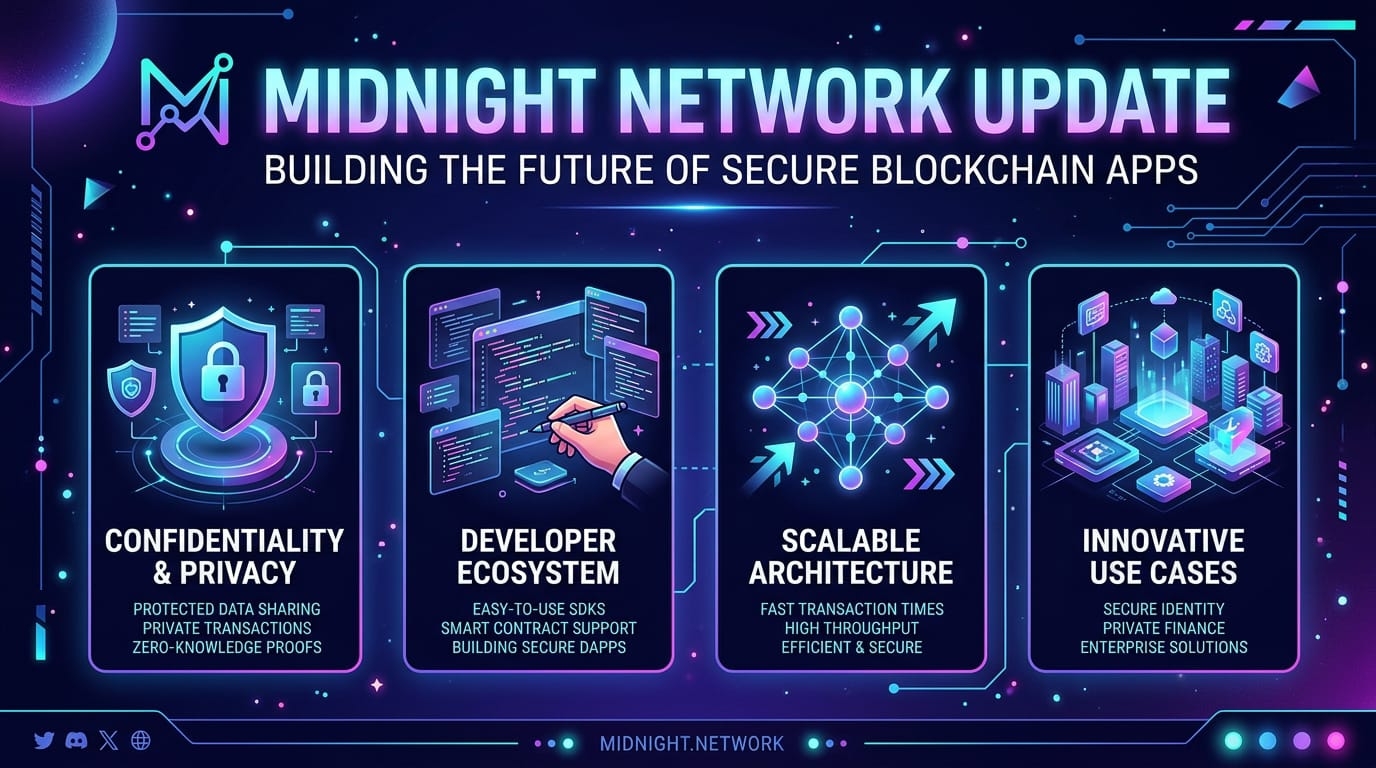
Built by Input Output Global, the engineering company best known for Cardano, Midnight is designed around a practical tension: people and institutions often need to prove something without revealing everything. That idea is not new. Banks do it. Employers do it. Governments do it. You show enough to satisfy a requirement, but not the whole file cabinet. Blockchain systems, despite all their claims to precision, have usually struggled with that middle ground. Too often, the choice has been binary. Reveal the data, or keep the transaction off-chain.
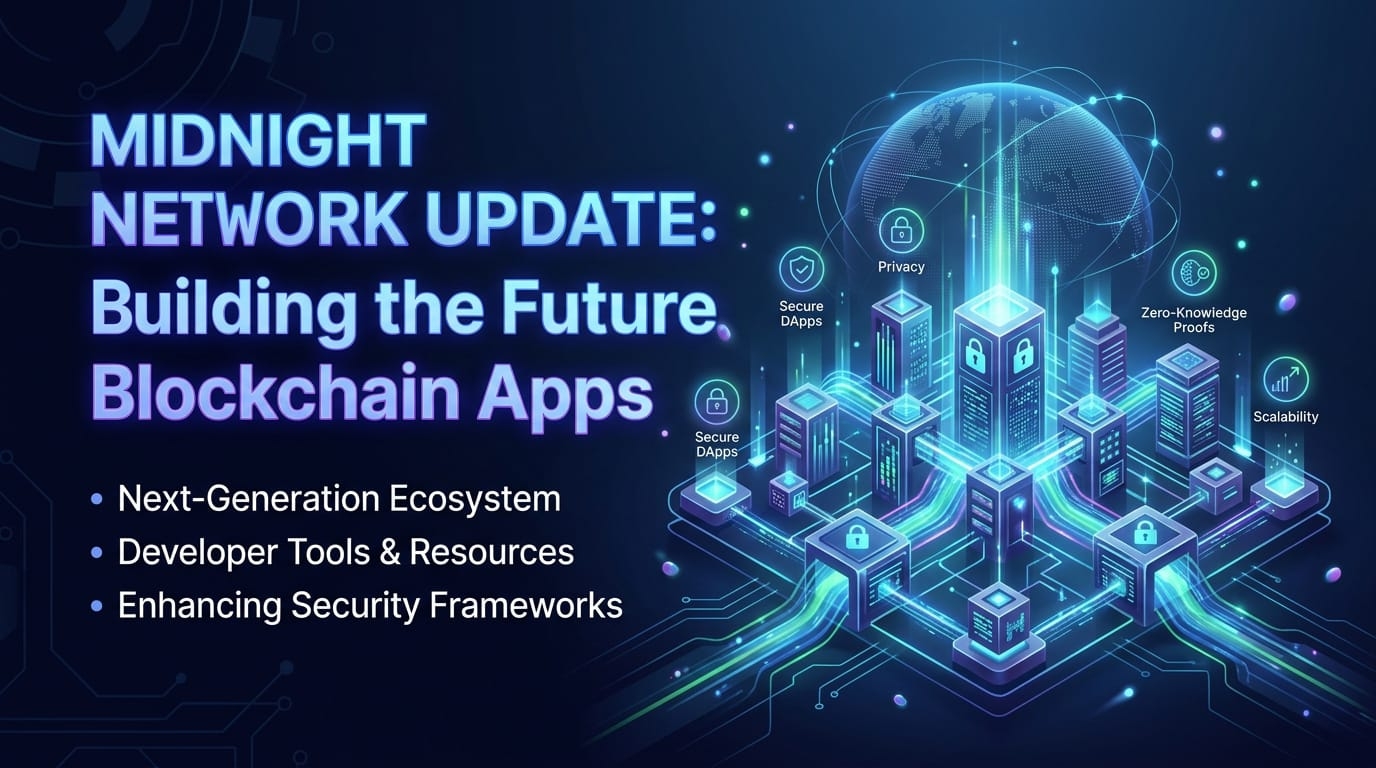
Midnight’s answer is selective privacy. A hospital might need to verify authorization to access records without turning patient data into a permanent public artifact. These are ordinary administrative problems. They become difficult when moved onto infrastructure originally built for radical transparency.
What makes Midnight worth watching is not the broad promise of privacy, which nearly every privacy-focused project has claimed in one form or another. It is the narrower and more difficult effort to build privacy that can still function in regulated settings. That distinction matters. Complete opacity may appeal to people who want maximal confidentiality, but it tends to collide with legal and institutional reality. Most serious organizations do not want a system that hides everything from everyone. They want a system that can separate what must remain confidential from what must be disclosed to auditors, counterparties, or regulators. That is a much harder design problem. It asks the network to support secrecy and accountability at the same time.
In practice, that means the success of Midnight will depend less on slogans about privacy than on mundane engineering choices. How are permissions handled? How expensive is it to run private computations compared with public ones? What tools do developers actually get when they try to build an application that mixes visible and hidden data? How easy is it to verify a claim without exposing the underlying record?
That style has won admirers and critics in roughly equal measure. Midnight appears to inherit some of that temperament. The bet seems to be that privacy infrastructure, especially if it hopes to support financial and institutional use cases, cannot be improvised. It has to be built with the assumption that small mistakes have long tails. A bug in a consumer app is annoying. A flaw in a system handling sensitive records or compliance logic can become a legal and operational disaster.
There is also a cultural shift embedded in projects like Midnight.But the real world is not organized around total visibility. A payroll manager does not need to know a patient’s diagnosis. A supplier may need proof of funds, not access to the full treasury ledger. A regulator may need a narrow, lawful window into a process, not unrestricted surveillance. Mature systems are built around boundaries. The challenge is not to eliminate them but to define them carefully.
That sounds abstract until you think about where these systems might actually be used.The world that Midnight is trying to enter is not the world of manifesto writing. It is the world of procurement meetings, audits, software deadlines, and internal risk committees. If the network cannot survive there, its design philosophy will remain theoretical.
None of this guarantees success. Privacy-preserving computation is resource-intensive. User experience around protected data is still clumsy in much of the industry. Interoperability brings its own strain, especially when one network needs to communicate trust assumptions to another. And there is always the familiar gap between elegant architecture and live adoption. Plenty of systems have looked coherent on paper and awkward in public use. Midnight is not really asking whether privacy matters. On that point, the answer is obvious. It is asking whether privacy can be built into blockchain infrastructure in a way that survives contact with institutions, laws, costs, and human habits. That is a more serious question. It has less romance to it, but more weight.
@MidnightNetwork $NIGHT #night #NIGHT