I returned to my family’s small apricot orchard in the hills of Swat last spring carrying more worry than hope. The trees were heavy with fruit, but the village had grown old. Most of the young had left for the cities, and those who stayed could barely manage the harvest. Every season we lost tons of ripe apricots to rot on the branches. Then the Fabric Foundation arrived with four quiet harvesting arms and a simple offer: the village could own them together through the $ROBO token.
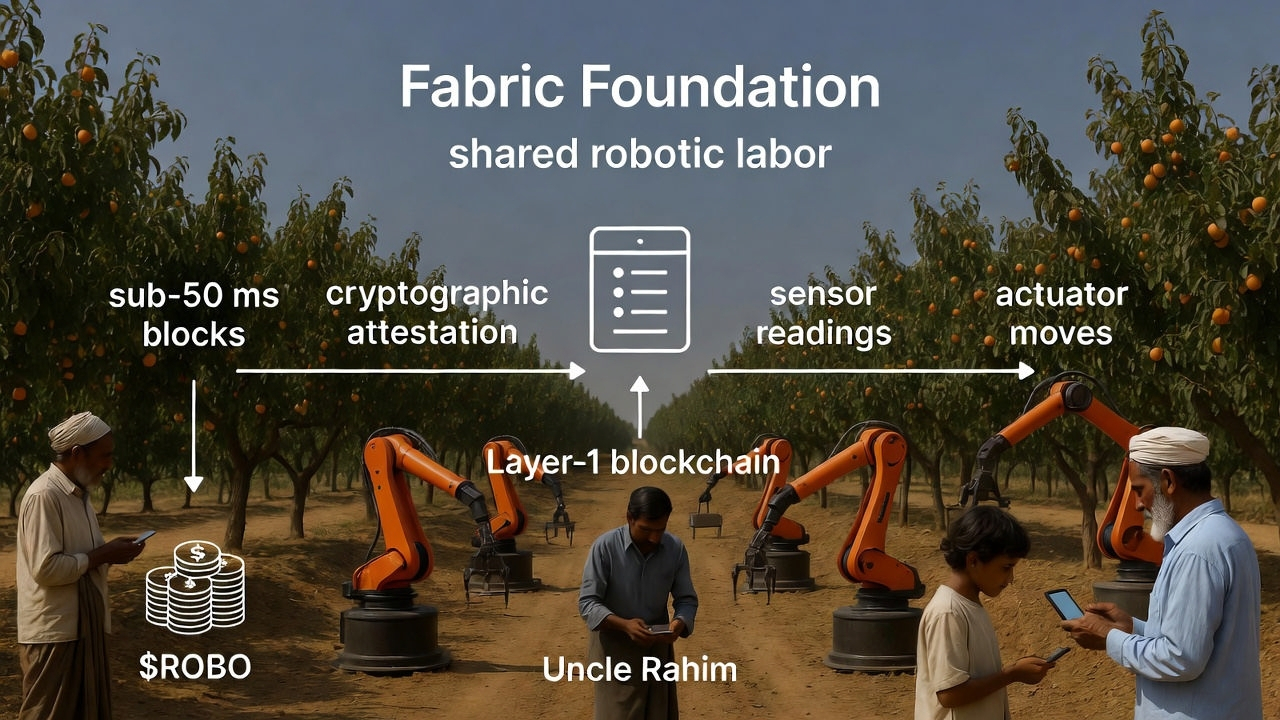
Abundance doesn’t come from more machines. It comes from owning them together.
The Foundation had built its Layer-1 for exactly this kind of shared life. Sub-50 ms blocks carried every sensor reading and actuator move with full cryptographic attestation. Nothing was hidden. When a robotic arm reached for a branch, the chain recorded the force curve, the ripeness scan, and the gentle grip in real time. Villagers earned $ROBO by sharing local knowledge—mapping which trees ripened first, suggesting better angles, or keeping the units clean. The robots earned their share by working carefully and efficiently. The protocol simply weighed human instinct against machine precision and minted tokens to both sides on the spot. No distant investor took the lion’s share. The ledger just told the truth.
When labor stops being rented and starts being shared, scarcity quietly begins to fade.
I watched old Uncle Rahim, who could no longer climb ladders, sit under a tree with a tablet. He spoke softly to one arm, guiding it with sixty years of feel for the fruit. The robot listened, adjusted its path, and harvested without bruising a single apricot. That evening the dashboard updated: Uncle Rahim received his $ROBO for guidance, the arm received its portion for careful execution, and the village treasury grew. For the first time in years we finished the harvest early. The fruit that once spoiled now reached markets fresh, and the money stayed right here.
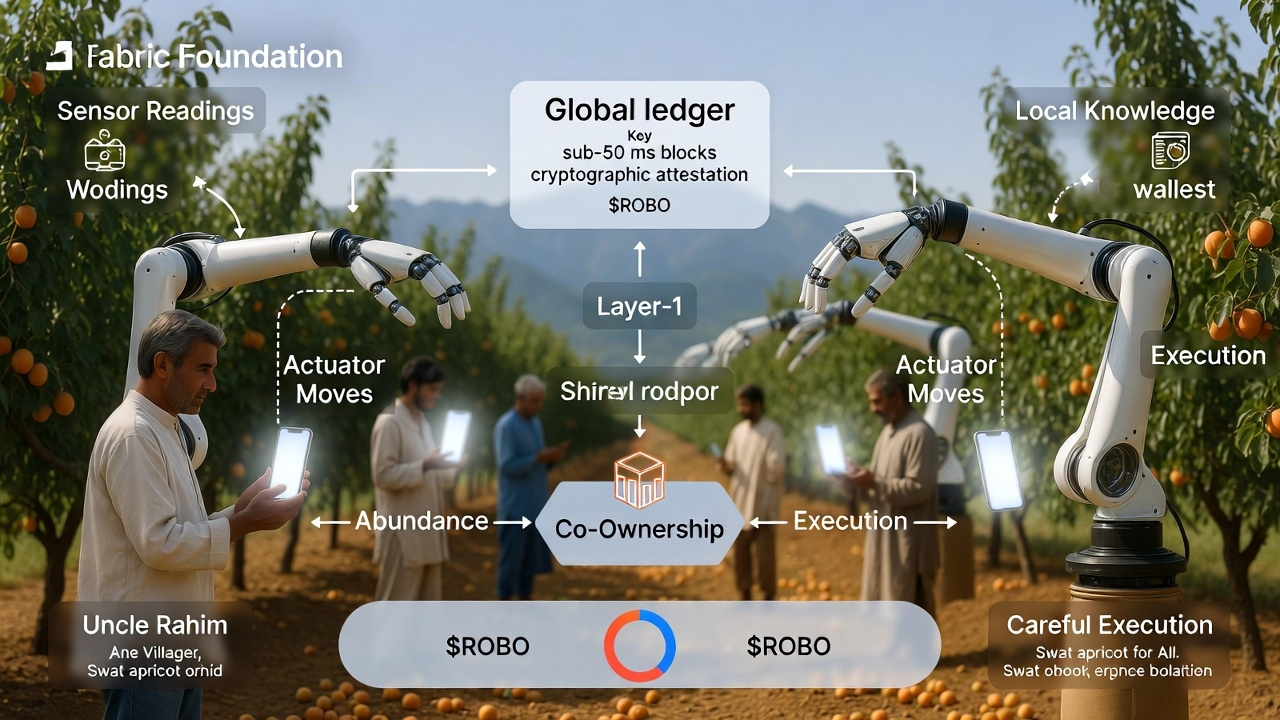
The real revolution isn’t robots doing the work. It’s robots and humans owning the work together.
Six months later the change felt ordinary in the best way. A few of the young people who had planned to leave stayed instead. They learned to run the local node and maintain the arms. The orchard expanded because we finally had reliable help that belonged to us. The Fabric Foundation hadn’t given charity or temporary jobs. It had given us the quiet infrastructure for genuine co-ownership.
I still walk the rows at golden hour, watching the arms move between the trees while neighbors check their wallets on their phones. The machines no longer feel like strangers from tomorrow. They feel like new members of the village—working, earning, and growing alongside us.
Fabric is showing that robotic labor doesn’t have to create unemployment or inequality. When powered by ROBO and true shared ownership, it can quietly open the first real door to abundance we’ve ever walked through.