 There is a moment we are slowly approaching, and most people do not even realize it yet.
For years technology lived behind glass screens. We could close the laptop, lock the phone, turn off the television, and the digital world disappeared. It stayed inside devices. It stayed under our control.
But now something new is happening.
Machines are stepping outside.
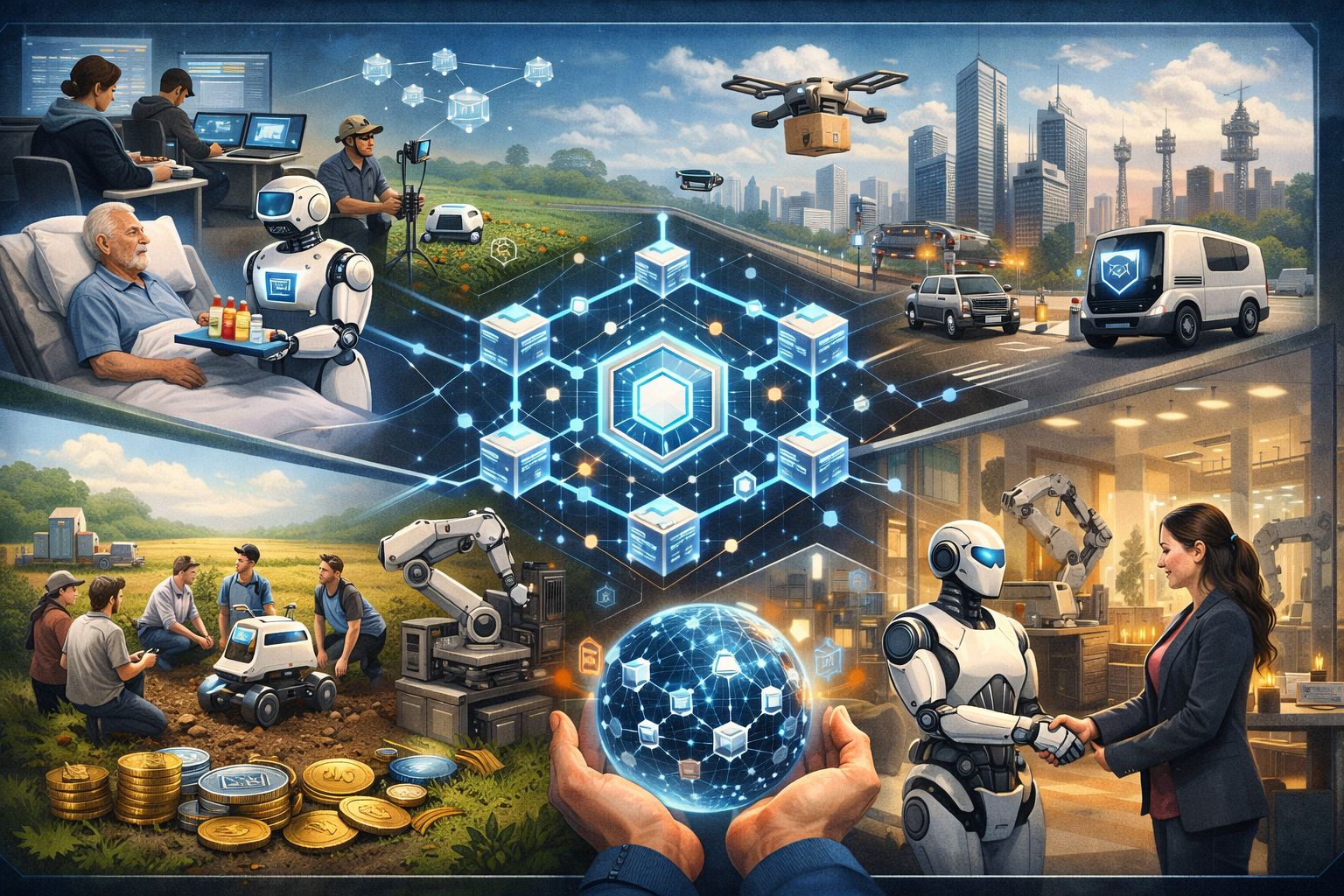
Robots are beginning to walk hospital corridors at night. Small automated vehicles are moving through warehouses without drivers. Agricultural machines are watering crops while farmers sleep. Inspection robots are checking dangerous bridges where humans no longer need to risk their lives. Artificial intelligence is no longer only thinking. It is acting.
And this changes everything, not technically, but emotionally.
Because once a machine acts in the real world, a simple human question appears in our hearts.
Ca
n I trust it
We trust a doctor because we see their training.
We trust a driver because we know there is a person holding the wheel.
But when a machine makes a decision, who do we trust
Right now, the honest answer is uncomfortable. We mostly trust companies. We trust logos. We trust promises written in small policy documents nobody reads. Modern AI systems operate like closed boxes. They give confident answers and perform actions, but the reasoning behind them is hidden. When they work, everything feels magical. When they fail, nobody really understands why.
Fabric Protocol was created exactly because of this feeling.
It is a global open network designed to make intelligent machines accountable, not mysterious. Instead of robots operating under invisible corporate control, Fabric allows their actions, data, and decisions to be verified through a shared public system. In simple words, machines stop asking us to believe them and start proving themselves.
The idea may sound technical, but at its heart it is deeply human.
Human beings can live with powerful technology.
Human beings struggle with uncontrollable technology.
Fabric introduces verifiable computation for machines. Every important action a robot performs can be checked and validated by the network. The machine does not just do something. It leaves evidence. It leaves a trace. It leaves responsibility.
Imagine a robot delivering medicine to an elderly patient late at night. Today the patient must trust a distant company they have never seen. With Fabric, the robot’s behavior can be recorded and verified. Not through marketing. Through proof.
This transforms the emotional relationship between humans and machines.
The project describes its structure as an agent native infrastructure. Each robot or AI agent connected to the network receives a digital identity. It follows shared rules. It communicates with other machines. Its updates can be audited. Its actions can be validated. Instead of a hidden system controlled by one authority, it becomes a transparent environment watched by many participants.
Why does this matter so much
Because the future will not have one intelligent assistant.
The future will have millions.
Traffic systems will be automated.
Energy grids will balance themselves.
Delivery services will operate continuously.
Homes will contain assisting robots.
Hospitals will rely on machine monitoring.
If all of this is owned and controlled privately, daily life becomes dependent on systems ordinary people cannot question. Fabric is trying to build a middle ground before that happens. Not anti technology, not anti innovation, but pro accountability.
At the center of the network lives its native token called ROBO.
The token is not simply money. It is a coordination tool. Every participant in the ecosystem is connected through it. Robot operators must stake tokens to register machines, meaning they are responsible for proper behavior. Validators earn rewards for checking that robots act correctly. Developers receive incentives for building useful applications. Even data providers are compensated for helping machines understand the real world better.
This creates something unique.
Instead of machines only generating profit for companies, machines can generate value for communities.
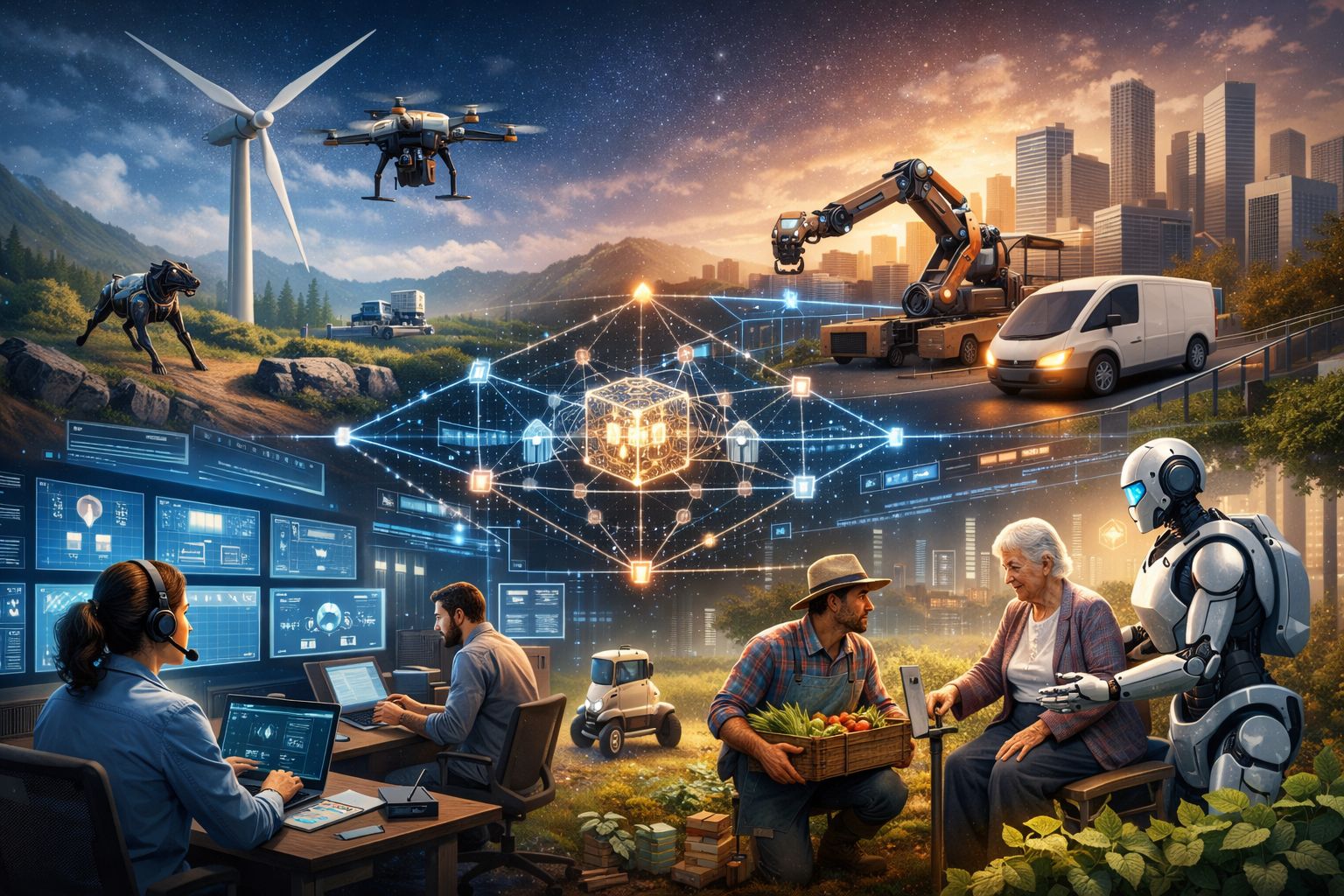
A small farming region could collectively fund a crop monitoring robot. A local logistics group could share automated delivery equipment. A town could operate environmental monitoring sensors. Technology becomes shared infrastructure instead of rented intelligence.
The roadmap follows a careful path.
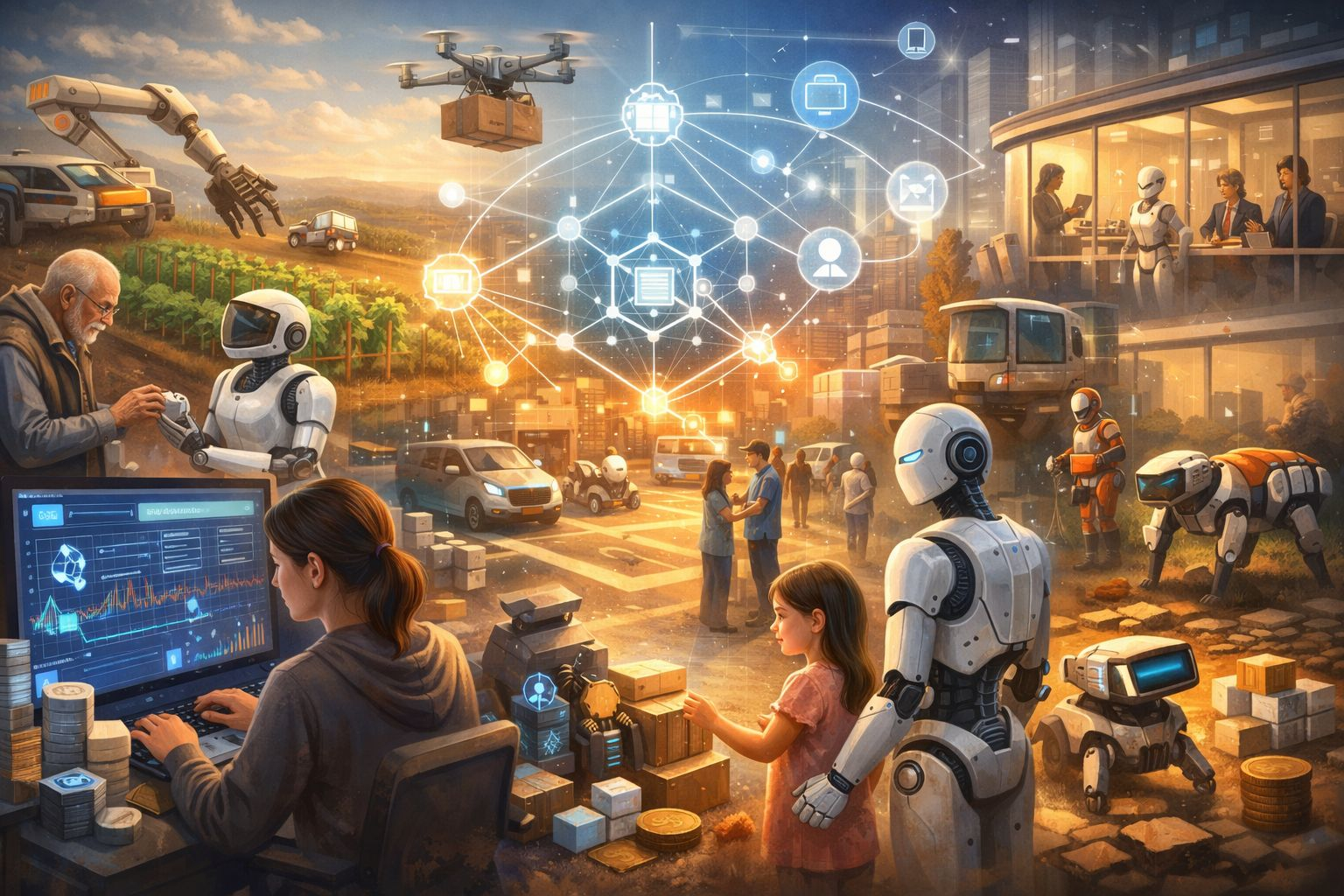
First comes the verification layer where machine actions can be proven.
Then come digital agents interacting safely in simulation.
Then physical robots connect to the network.
Finally entire ecosystems appear where machines cooperate while humans supervise governance.
Of course the road is not simple.
Technically, verifying real world machine behavior is extremely difficult. Sensors can fail. Networks can slow down. Physical environments are unpredictable. A software error can be patched easily, but a mechanical error can have real consequences.
There are also adoption challenges. Some companies prefer centralized control because it is profitable. An open network requires cooperation, and cooperation takes time.
Regulation is another uncertainty. Governments are still learning how to regulate AI text systems. A decentralized network of autonomous machines raises legal questions humanity has never faced before.
And there is the reality of expectations. New technologies often receive excitement faster than real world deployment. The idea is powerful, but real robots must still be built, connected, and maintained.
Yet the importance of Fabric goes beyond investment or speculation.
It touches something deeper than technology.
For the first time in history, humans are sharing decision making with non human intelligence. Not just calculators, not just tools, but agents capable of acting. Without systems of accountability, people begin to feel powerless in a world shaped by invisible logic.
Fabric is an attempt to restore balance.
It does not try to stop progress. It tries to humanize it.
Instead of fearing a future full of robots, the project imagines a world where machines operate under human values. Transparent actions. Verifiable behavior. Shared ownership. Community participation.
One day you may live in a city where robots clean streets before sunrise, monitor air quality, deliver emergency supplies, and assist elderly neighbors. The true question will not be how intelligent they are.
The real question will be whether you feel safe with them.
Trust is not built with marketing campaigns or impressive demonstrations. Trust is built with accountability. When actions can be checked, people relax. When systems can be questioned, fear disappears.
Fabric Protocol is trying to quietly build that future before machines become unavoidable.
Not a world where humans serve technology.
A world where technology respectfully serves humanity.
 And maybe that is what progress was always supposed to feel like.