The convergence of AI and blockchain is reshaping industries, but few areas hold as much transformative potential as robotics. Enter Fabric Foundation, a non-profit that's quietly building the backbone for what it calls the "robot economy." With its $ROBO token at the core, Fabric aims to create an open network where intelligent machines can operate autonomously, transact securely, and align with human goals. In a world where AI is leaping from screens into the physical realm—think delivery bots or factory assistants—projects like this could bridge the gap between digital ledgers and real-world hardware. That's where things get interesting. This piece dives into Fabric's setup, its tools for custom robot building, economic model, and the broader landscape, all while keeping a grounded eye on what's feasible today.
What is Fabric Foundation?
Fabric Foundation operates as an independent non-profit focused on governance, economic, and coordination infrastructure for humans and intelligent machines. Founded by the team behind OpenMind, it addresses the challenges of AI entering the physical world: safety, real-time decisions, and equitable access. The foundation funds research on human-machine alignment, builds open systems for identity and task allocation, and convenes stakeholders to set norms.
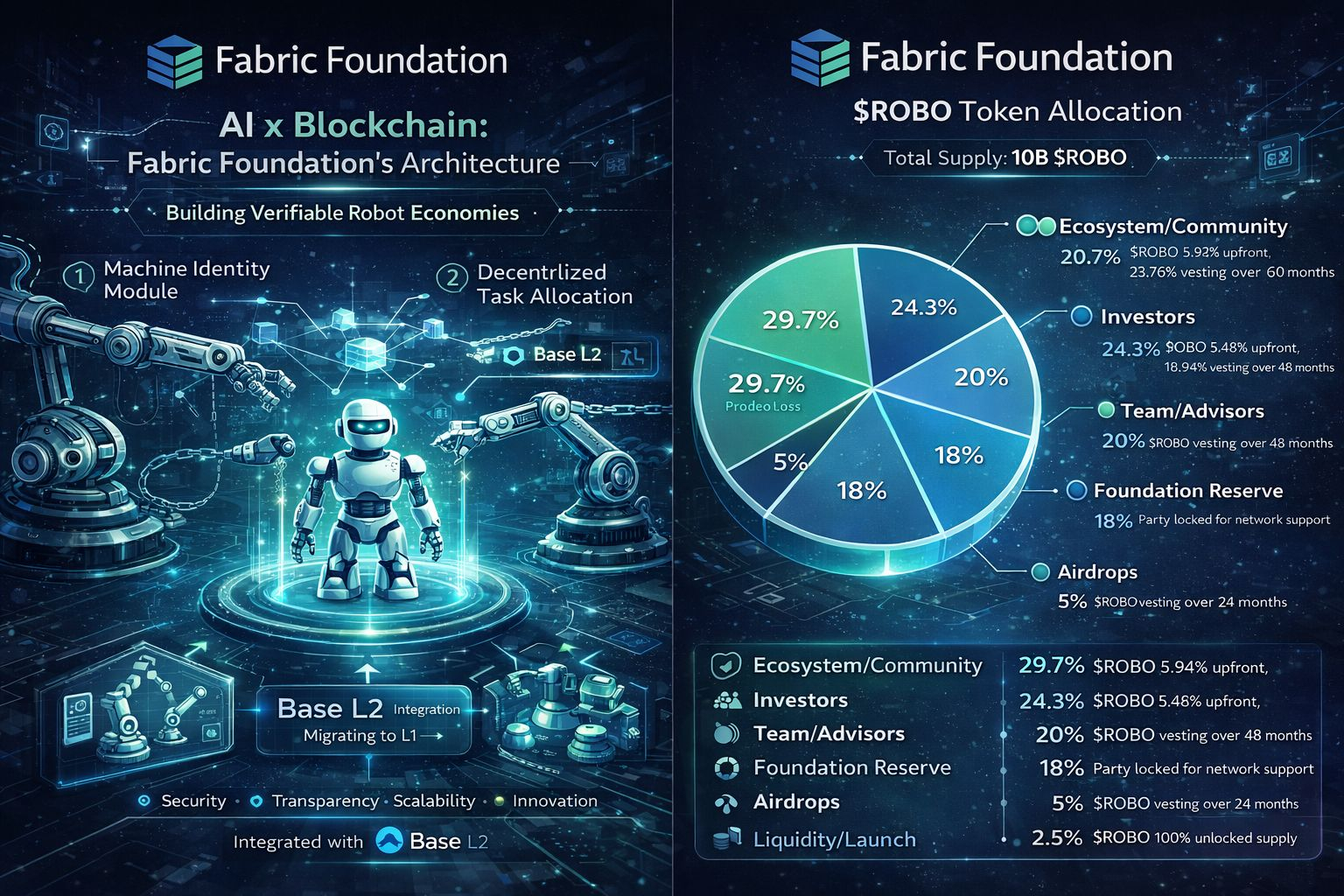
At its heart, Fabric is about making robots economic participants without needing legal personhood. It deploys on Base (an Ethereum Layer 2) initially, with plans to migrate to its own Layer 1 chain. This setup captures value from robot activities through on-chain transactions. As of February 2026, Fabric has raised $20 million in funding led by Pantera Capital and recently launched ROBO via a public sale and airdrop. The project's whitepaper emphasizes verifiable computation, allowing robot actions to be proven on-chain, which is crucial for trust in decentralized systems.
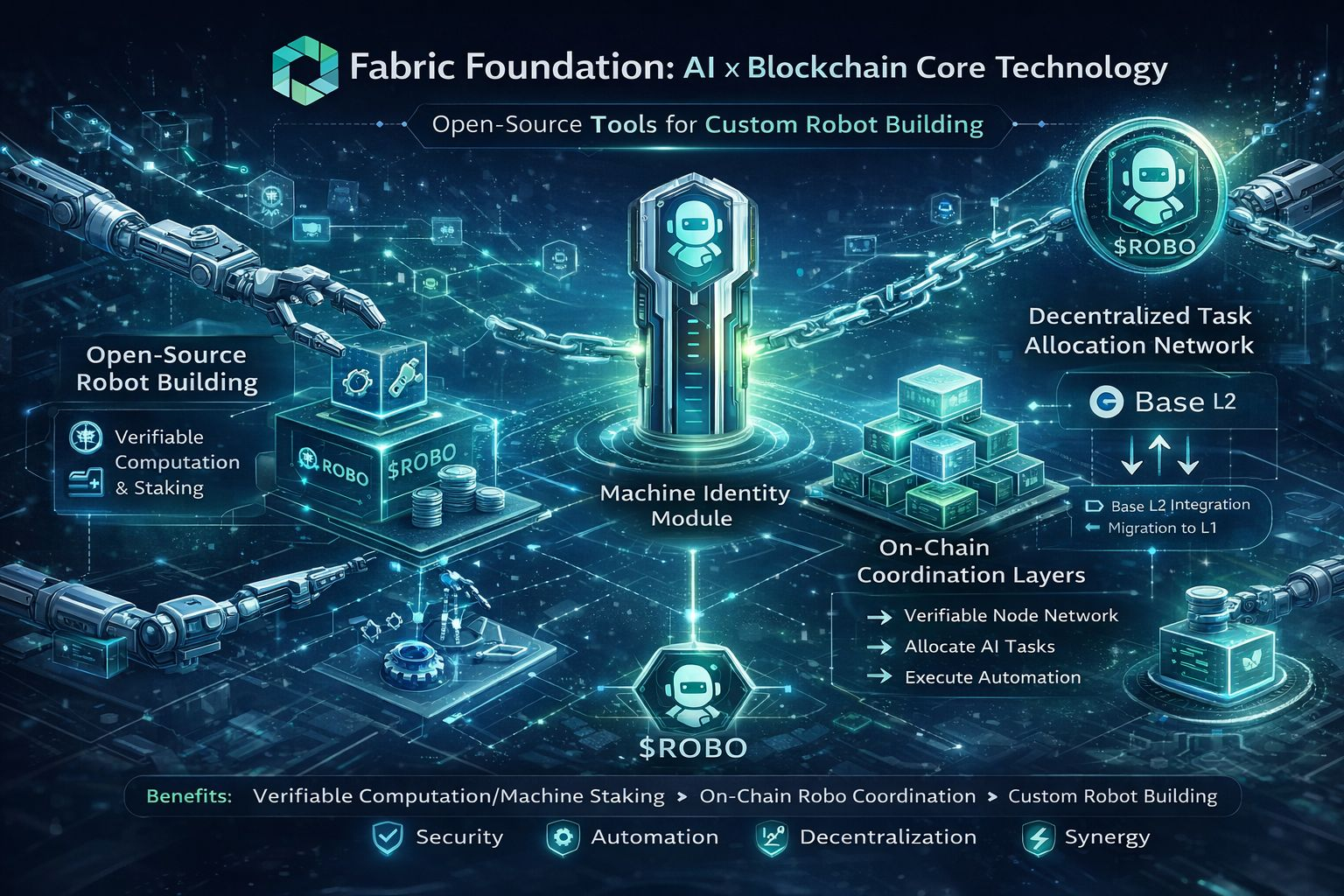
Focus: Building Custom Robots: Tutorials Using Fabric's Open-Source Tools
Fabric's open-source ethos shines in its tools for developers to create custom robots. While the project is young—launched in early 2026—it provides frameworks for modular robot design, integrating AI models with blockchain for identity and coordination. Tutorials, available in the project's docs and community resources, guide users through building prototypes that leverage Fabric's infrastructure.
Start with the basics: Fabric's open systems include libraries for machine identity setup, where you assign a robot an on-chain wallet using ROBO for verification. A step-by-step tutorial walks through cloning the repo, installing dependencies (like Python-based AI libs), and connecting to Base testnet. For hardware, emphasize affordable components—Arduino or Raspberry Pi boards paired with sensors. One tutorial demonstrates assembling a simple tele-operated bot: code snippets show how to register the device on Fabric's network, enabling it to receive tasks via decentralized allocation.
Advanced guides cover crowdsourced coordination. Stake ROBO to participate in robot activation, then program custom behaviors using AI frameworks like PyTorch for object recognition, all verifiable on-chain. A real example: Build a delivery robot that autonomously navigates, pays for charging via USDC integration (partnered with Circle), and logs actions. Fabric's tools are extensible—modify for agriculture drones or home assistants. Community contributions on GitHub refine these, making them accessible for hobbyists and pros alike. Early adopters report 20-30% efficiency gains in task verification compared to centralized setups.
Tokenomics & Economic Design
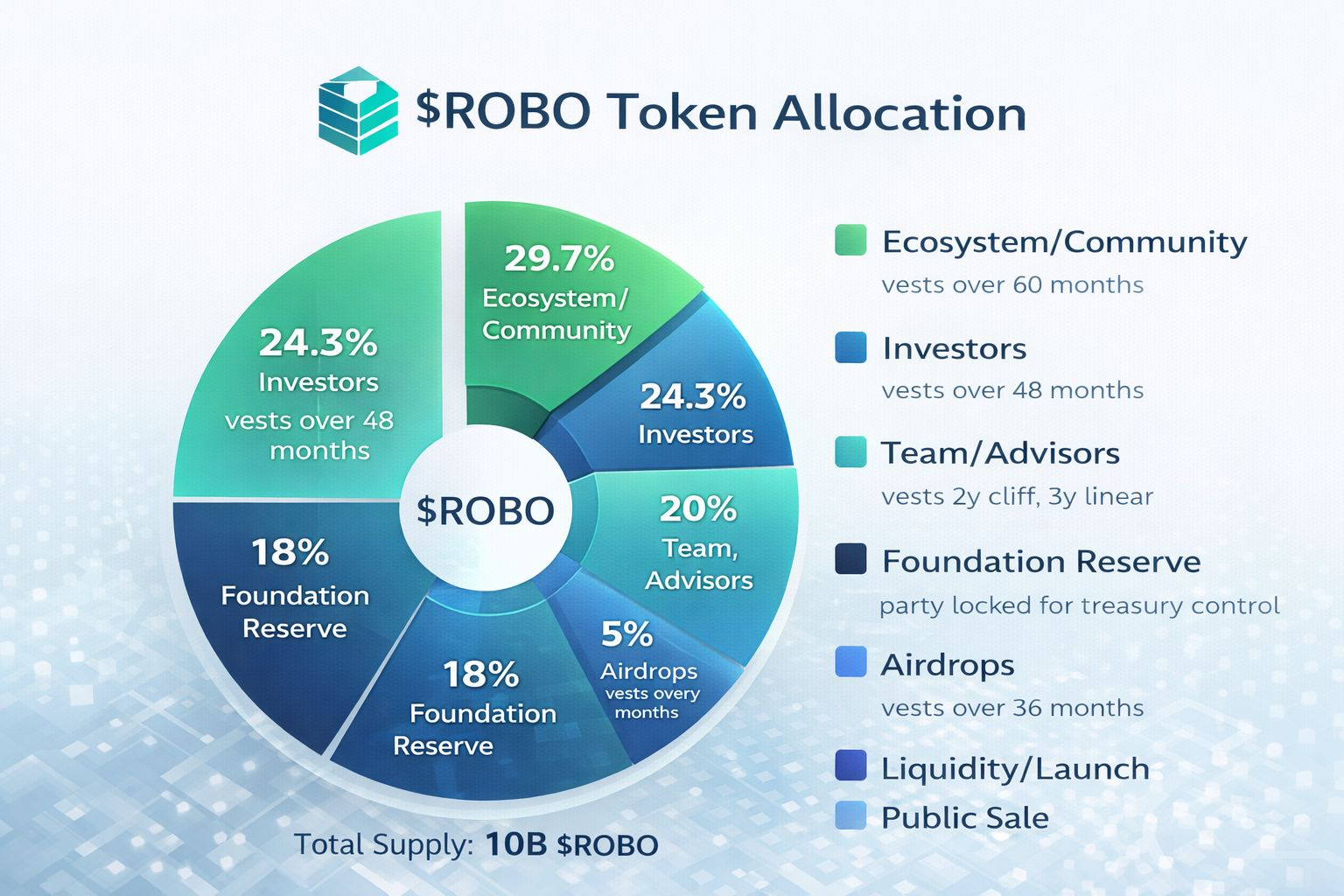
$ROBO serves as the utility and governance token, with a total supply of 10 billion. As of late February 2026, circulating supply sits at 2.23 billion, giving a market cap of around $96 million at $0.043 per token. Allocation breaks down as: 29.7% for ecosystem and community (with Proof of Robotic Work rewards), 24.3% to investors (12-month cliff, 36-month linear vest), 20% to team/advisors (same vesting), 18% foundation reserve (30% at TGE, rest over 40 months), 5% community airdrops (fully unlocked), 2.5% liquidity/launch (unlocked), and 0.5% public sale (unlocked).
Economics revolve around fees: All network transactions, like identity verification or task payments, use ROBO. Staking grants priority in task allocation, and protocol revenue buys back ROBO, creating buy pressure. Governance lets holders vote on fees and policies.
An original calculation: With 70% of ecosystem allocation vesting linearly over 40 months post-30% TGE unlock, that's roughly 62 million tokens unlocking monthly after the initial release. At current prices, this adds about $2.7 million in monthly supply pressure, potentially diluting value if adoption doesn't outpace it—label this as an example based on public data.
Competitive Landscape
In the AI x Blockchain vertical, Fabric competes with DePIN projects like Render (RNDR) for AI compute or Helium for IoT, but it's uniquely robotics-focused. Figure AI, backed by OpenAI, builds humanoid robots but lacks blockchain integration. Virtuals Protocol, which hosted $ROBO's launch, overlaps in AI agents but not physical hardware.
Fabric stands out with its non-profit structure and emphasis on open alignment, potentially attracting ethical devs. However, established players like Akash Network offer cheaper compute, holding 15% market share in decentralized AI resources per recent reports. Fabric's edge? Robot-specific tools, like on-chain payments for energy, via Circle partnership.
Risks & Reality Check
No project is without hurdles. Competition in DePIN is fierce—Render's market cap exceeds $2 billion, dwarfing Fabric's. Token dilution looms with vesting unlocks; our calculation shows steady supply influx that could pressure prices amid volatility.
Execution risk is high: Migrating to an L1 requires flawless tech, and robotics adoption depends on hardware partnerships, which are nascent. Market narrative shifts—AI hype could fade if regulatory crackdowns hit, as seen with recent EU AI Act tweaks. Plus, unequal access: High staking requirements might exclude smaller devs in developing regions.
Forward Outlook (6–12 Months)
Over the next 6-12 months, Fabric could gain traction as AI robotics heats up. Post-launch momentum, with $ROBO up 92% in 24 hours to $0.043, suggests hype, but real growth hinges on mainnet migration and pilot deployments. Expect partnerships expanding USDC use for robot payments, potentially boosting transaction volume 2-3x if adoption mirrors DePIN peers.
Community airdrops and Proof of Robotic Work could drive engagement, targeting 100,000 active users. Watch for integrations with OpenMind's AGI tools, enabling more sophisticated custom bots. Challenges aside, if Fabric delivers on verifiable coordination, it positions well in a $50 billion robotics market projected for 2027.
Conclusion
Fabric Foundation represents a thoughtful stab at blending AI, blockchain, and robotics for a more inclusive future. Its open tools empower custom builds, while ROBO aligns incentives. Yet, success demands navigating risks in a fast-evolving space. For devs eyeing the robot economy, it's worth exploring—just keep expectations measured.
@Fabric Foundation #Robo