Token burns have become a staple in crypto designs, aiming to curb inflation and boost scarcity. For Fabric Foundation's $ROBO , launched in late February 2026, burns tie directly to network health, slashing bad behavior while rewarding good. This isn't about arbitrary burns for hype; it's grounded in DePIN robotics, where real-world machine coordination demands accountability. We'll unpack the project's core, dive into burn mechanics, economics, rivals, risks, and what's next—using fresh data to keep it real.
What is Fabric Foundation?
Fabric Foundation is a non-profit outfit building decentralized infrastructure for robots to function as economic players. It handles onchain identities, wallets, and task pools, letting machines settle payments and coordinate autonomously. Deployed on Base L2 initially, it eyes its own chain for scaling.
Operators bond ROBO as collateral, staking their reputation on verifiable work. This setup fits DePIN robotics, blending AI smarts with physical hardware from partners like UBTech. Early traction post-launch shows market cap around $85 million, with burns adding a layer of discipline to the mix.
Focus: ROBO Token Burns: Mechanisms and Impact on Supply Dynamics
$ROBO's burns kick in via slashing for violations, permanently removing tokens from circulation. For proven fraud—like fake task submissions—30-50% of the task stake gets slashed; part rewards the challenger as a bounty, and the rest burns. Availability slips below 98% over 30 days? That's a 5% bond burn, plus lost rewards.
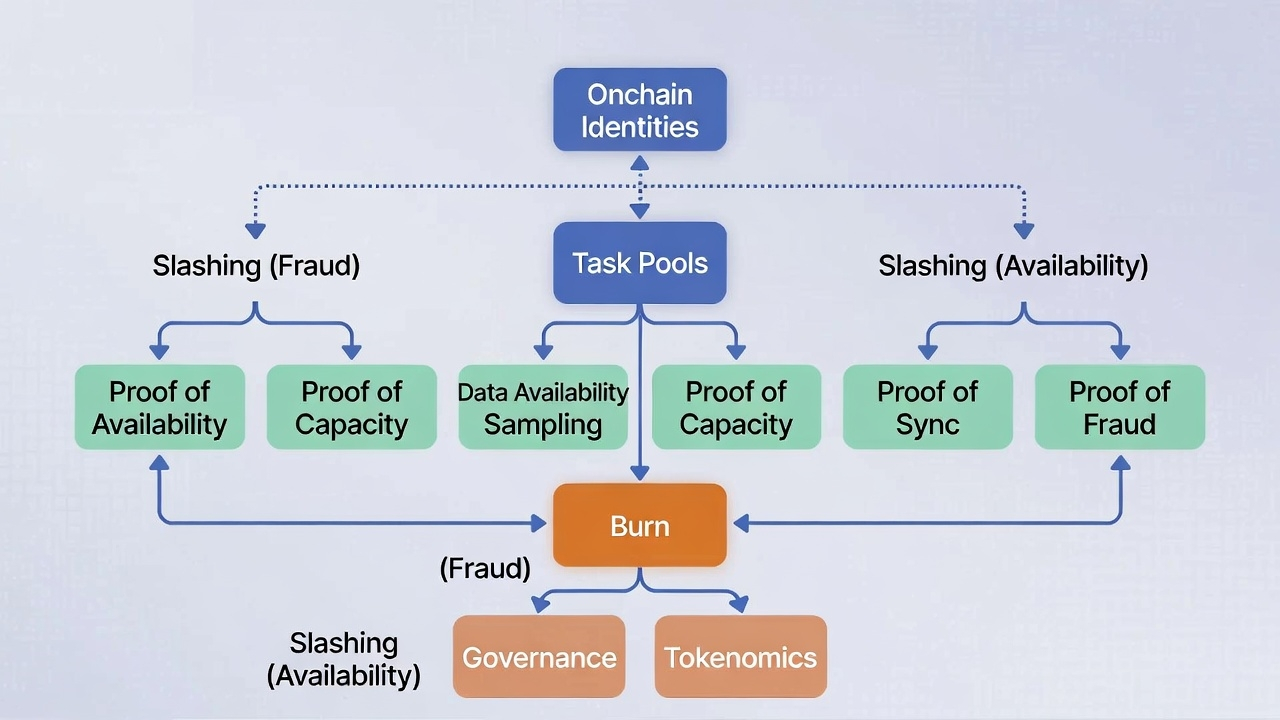
These aren't random; they're tied to bonds scaled by capacity (via ratio κ). Cumulative burns build up as B_t = B_{t-1} + sum of beta_i * Bond_i, where beta ranges from 0.05 for minor issues to 0.25 for severe. Protocol fees add indirect pressure: 20% of revenue buys back $ROBO for the foundation reserve, locking it away and shrinking circulating supply without a full burn.
Why this matters now in the DePIN robotics vertical: As humanoid bots hit production floors amid 2025's $50 billion robotics funding surge, networks like Fabric need robust deterrence against downtime or cheats. Burns make participation honest, potentially cutting supply by 1-2% annually if slashing ramps with adoption—turning ROBO from static asset to dynamic enforcer. That's where things get interesting; in a labor-starved world, this could align machines and humans without central overseers.
Tokenomics & Economic Design
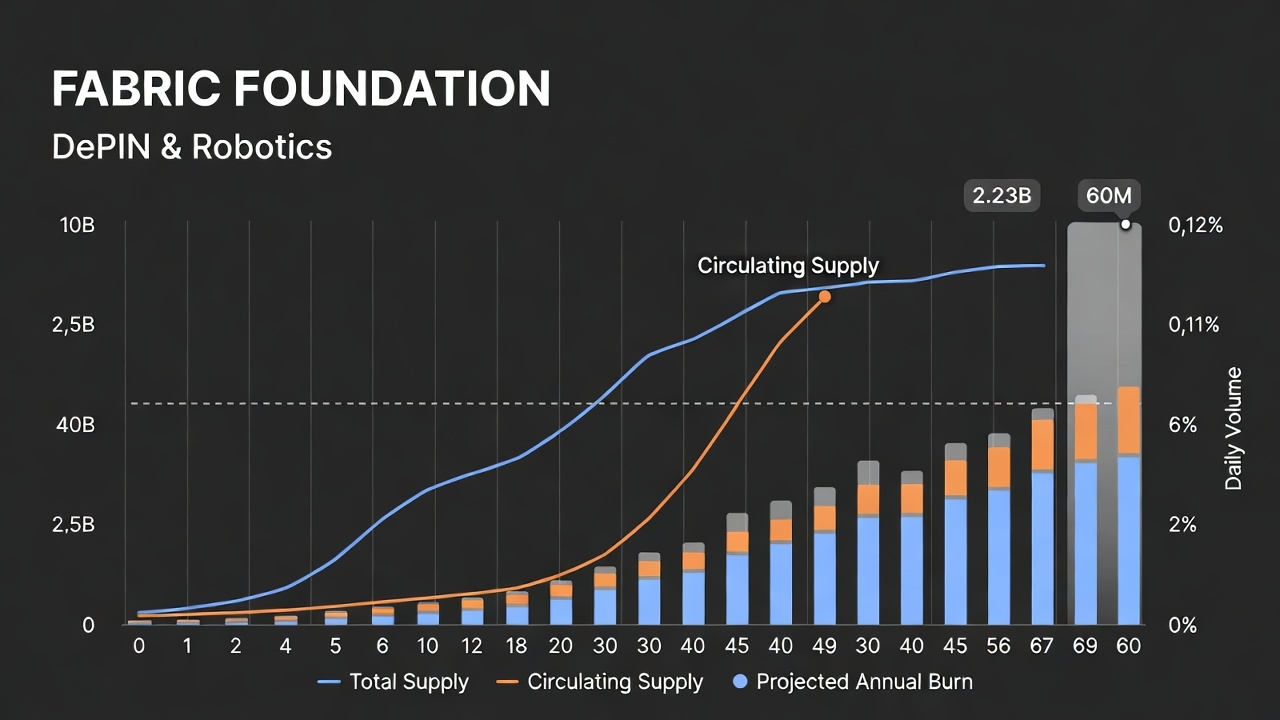
ROBO caps at 10 billion total, no endless inflation. Circulating supply hit 2.23 billion at launch (22.3%), with allocations like 29.7% for ecosystem (part unlocked) and 20% for team (vesting over 36 months post-cliff).
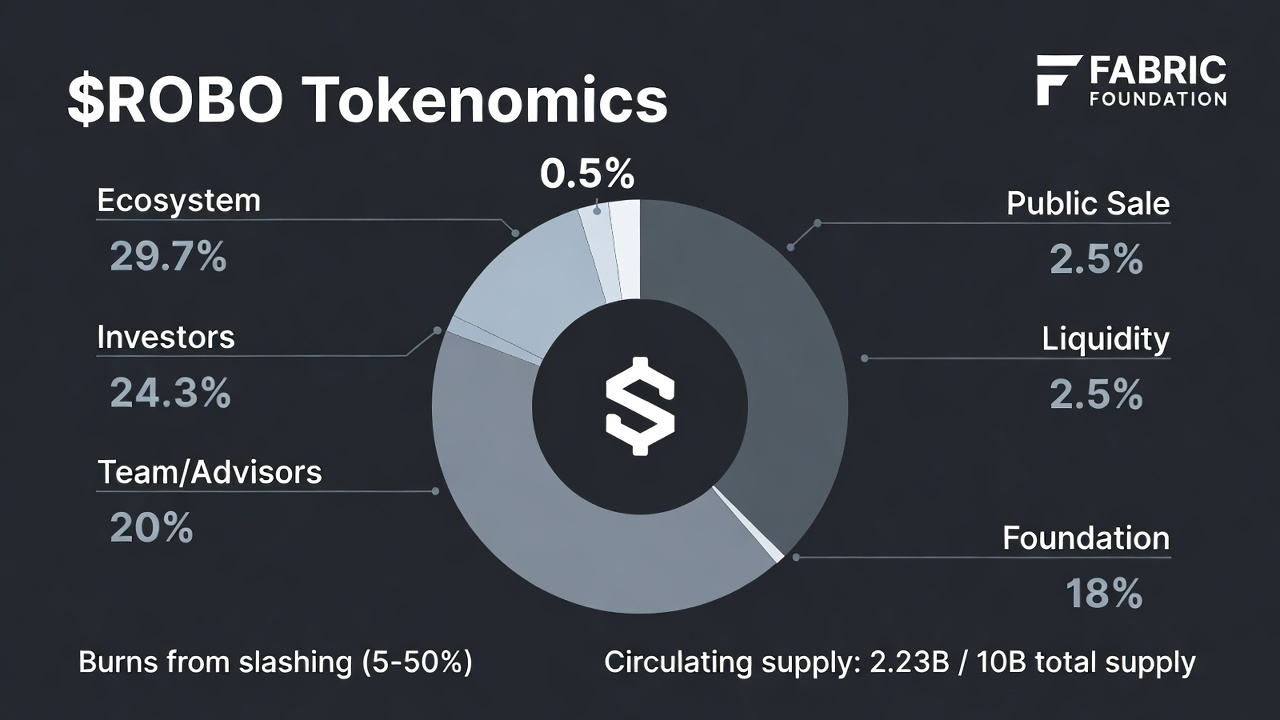
Utility spans fees, staking for genesis coordination, and bonds— all in ROBO. Burns from slashing add deflation: fraud penalties burn up to 50% post-bounty, while buybacks (phi=20% of revenue) reduce liquidity. Real data: Post-launch volume averaged $60 million daily, implying potential monthly revenue of $1-2 million if 10% fees apply (hypothetical based on similar DePIN).
Original calculation: Assume 1,000 operators each bonding 100,000 ROBO (total 100M bonded). If 5% face availability slashing yearly (5% burn each), that's 250,000 tokens burned annually—or 0.011% of circulating supply. Scale to 10,000 operators, and burns hit 2.5M tokens (0.11%), amplifying scarcity if adoption grows. (Example based on whitepaper params.)
Competitive Landscape
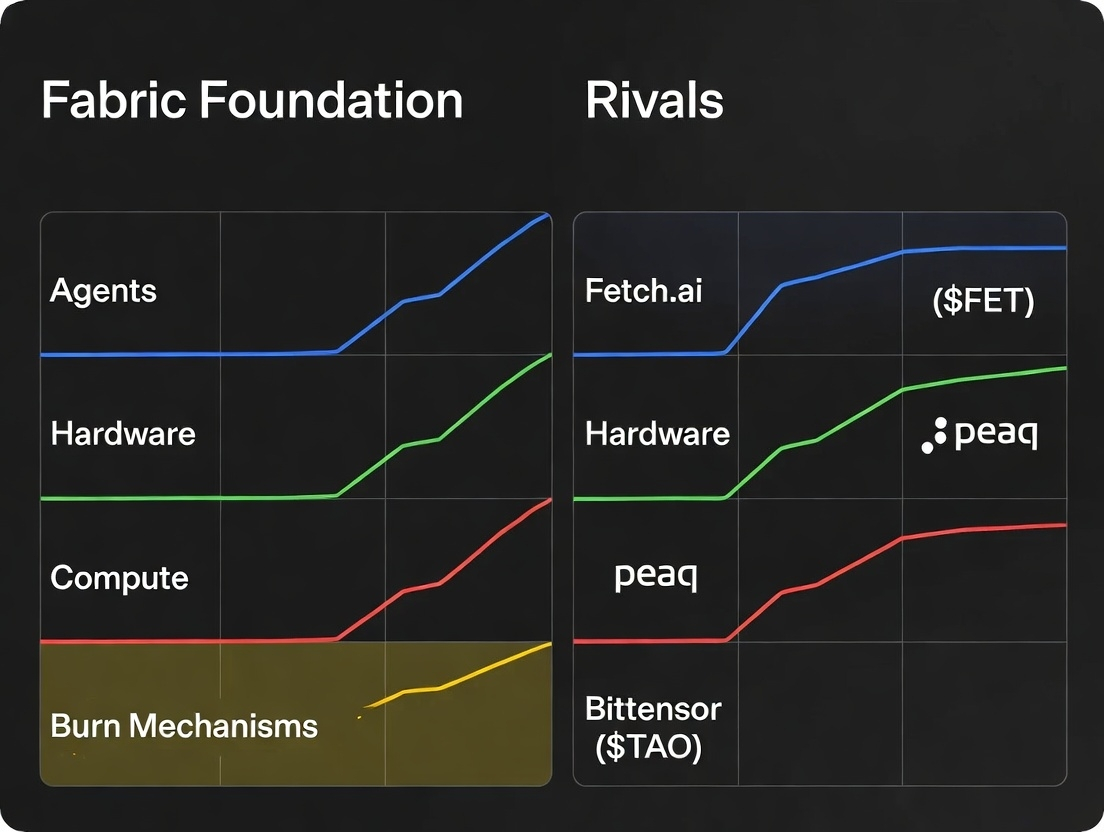
DePIN robotics pits ROBO against Fetch.ai ($FET) for agent dealings and peaq for hardware nets. Bittensor ($TAO) incentivizes AI compute, but ROBO's burn-enforced bonds target physical reliability.
Market share: Robotics crypto totals ~$750 million; ROBO snagged 11% early on. Burns give it an edge over non-deflationary rivals, though $TAO's larger cap ($3B+) shows scale matters. Fabric stands out by tying burns to real machine output.
Risks & Reality Check
Burns sound solid, but competition in DePIN robotics is brutal—peaq and others boast tighter integrations, potentially outdrawing Fabric's user base. Token dilution from vesting (monthly ~52M unlocks) could outweigh burns if slashing stays low.
Execution risk: Enforcing slashes needs active challengers; without them, fraud slips through, muting burn impact. Market narrative shifts—like AI safety regs or crypto slumps—might dampen robotics hype, leaving burns irrelevant amid thin volume. Early signs are okay, but unproven hardware ties could stall everything.
Forward Outlook (6–12 months)
Expect burns to pick up as operators scale and slashes occur—perhaps 0.5-1% of supply annually if pilots succeed. Q2 2026 could see fee buybacks ramp with task volume, locking more ROBO. Staking might hit 25% ratios, aiding stability.
Challenges like unlocks persist, but hardware partnerships (e.g., NVIDIA) could boost utilization, making burns a real deflation driver. Track slashed events for clues on dynamics in DePIN.
Conclusion
ROBO's burns via slashing add teeth to Fabric's robot economy, fostering trust without overpromising scarcity. Paired with buybacks, they shape supply thoughtfully, though adoption will dictate impact. In DePIN, this mechanic highlights crypto's push toward tangible utility.
@Fabric Foundation #Robo