
AI and crypto are often framed as complementary revolutions. One generates intelligence; the other guarantees trust. In theory, they fit neatly together. In practice, the stack is fragmented.
AI models run off-chain on centralized servers. Crypto applications operate on deterministic blockchains. Between them sits a fragile bridge — or sometimes no bridge at all.
That structural disconnect is what Mira is trying to address.
The problem isn’t raw compute. GPU networks already exist. The problem is trust, accountability, and dispute resolution once AI outputs start interacting with capital.
What is Mira?
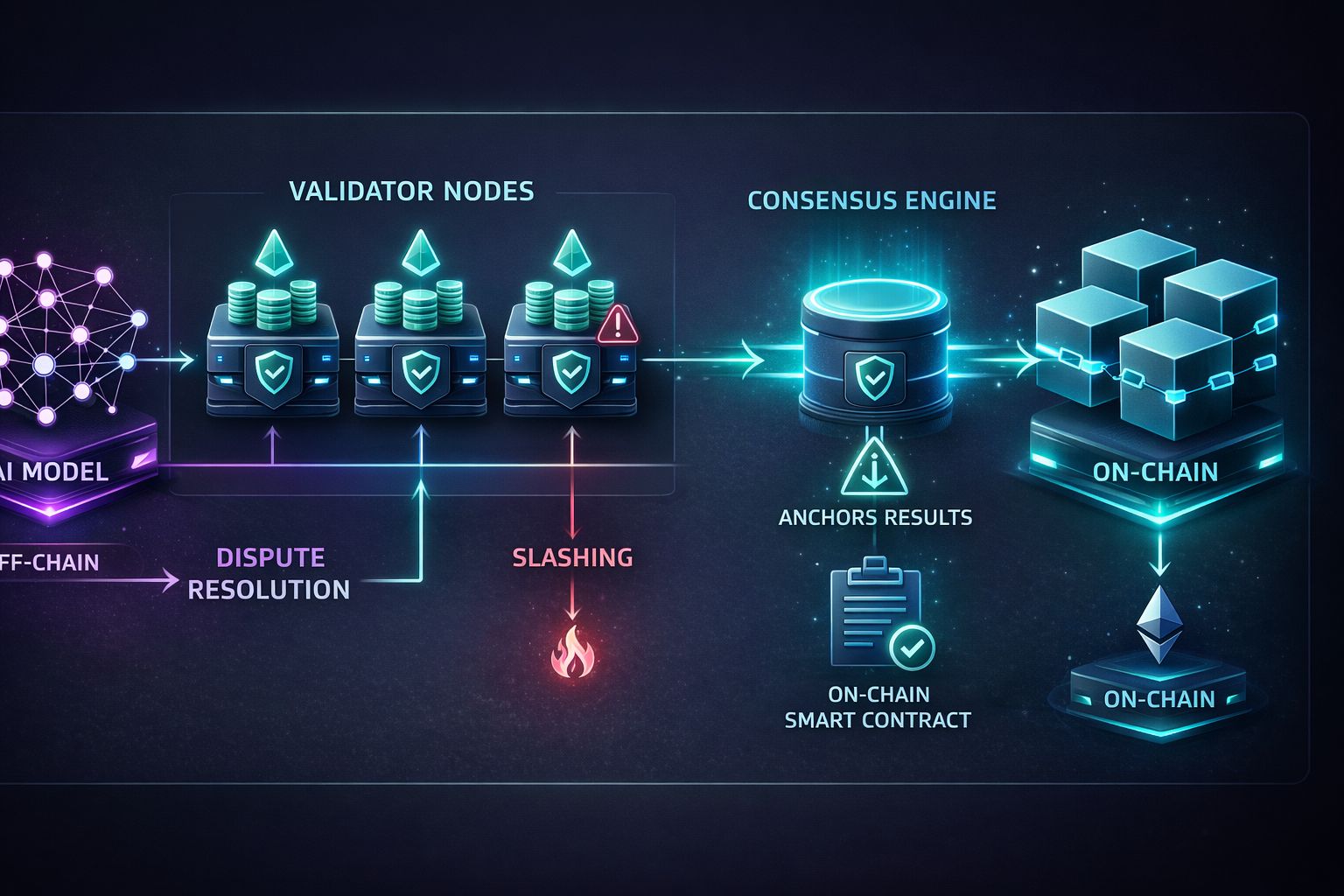
Mira is an AI verification network designed to make model outputs economically auditable. Rather than pushing inference fully on-chain — which is computationally impractical — it introduces a verifier layer secured by staking.
Independent validators evaluate AI outputs. Consensus determines acceptance. Slashing mechanisms penalize dishonest behavior. Final verification states anchor to blockchain.
This architecture reflects a simple reality: Ethereum processes roughly 15–30 transactions per second [source: ethereum.org], while modern AI models contain billions of parameters and require significant off-chain compute. The mismatch isn’t subtle.
Mira’s approach doesn’t fight that mismatch. It formalizes it.
Focus: What Mira Is Actually Trying to Fix in the Current AI × Crypto Stack
The current AI × crypto stack has three structural weaknesses:
Opaque AI outputs interacting with on-chain capital
No standardized verification layer for AI decisions
Incentive misalignment between model providers and users
Today, if an AI agent executes a DeFi trade, liquidates collateral, or allocates treasury funds, users must trust the model provider. There’s limited recourse if outputs are faulty or manipulated.
Mira introduces a middle layer where outputs are reviewed by staked validators before final acceptance. Instead of trusting a single model provider, the system distributes verification.
That’s where things get interesting.
If 40% of total token supply is staked (example calculation), and consensus requires >60% of staked weight to approve outputs, then attacking the system would require controlling at least 24% of total supply (0.40 × 0.60). In a 1B max supply structure, that equates to 240M tokens.
Security becomes economic rather than purely technical.
Why This Matters Now
AI agents are moving from passive tools to active participants in crypto markets. Automated trading bots, AI-based credit scoring, governance assistants — they’re no longer experimental.
As these systems handle more capital, trust becomes systemic. A single opaque decision can move millions in value.
Verification layers like Mira are early responses to that shift. Not glamorous. Necessary.
Tokenomics & Economic Design
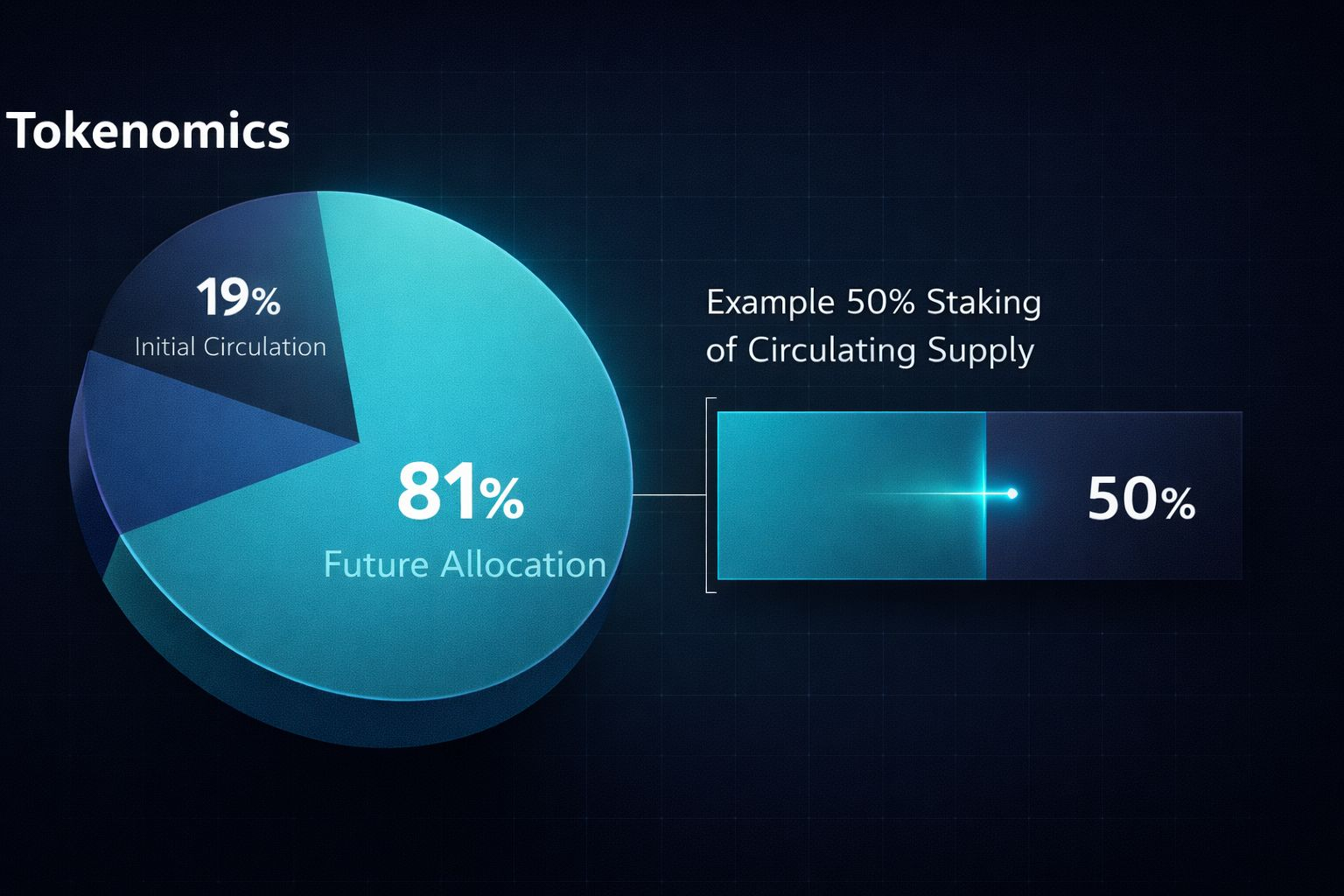
Mira reportedly has a maximum supply of 1 billion tokens, with approximately 19% initially circulating [source: MEXC guide]. That leaves roughly 81% allocated to ecosystem incentives, team, or future distribution.
This distribution profile introduces two important dynamics:
1. Staking Participation Rate
If circulating supply equals 190M tokens and 50% of that is staked, then 95M tokens secure the network. Security strength scales with participation.
2. Unlock Pressure
If (example calculation) 100M tokens unlock annually over eight years, circulating supply increases by over 50% in the first year alone relative to initial float. Without proportional demand growth, dilution risk emerges.
Sustainable tokenomics require verification fees to gradually replace token emissions as validator incentives. Otherwise, long-term security weakens.
Economic design isn’t secondary. It is the security model.
Competitive Landscape
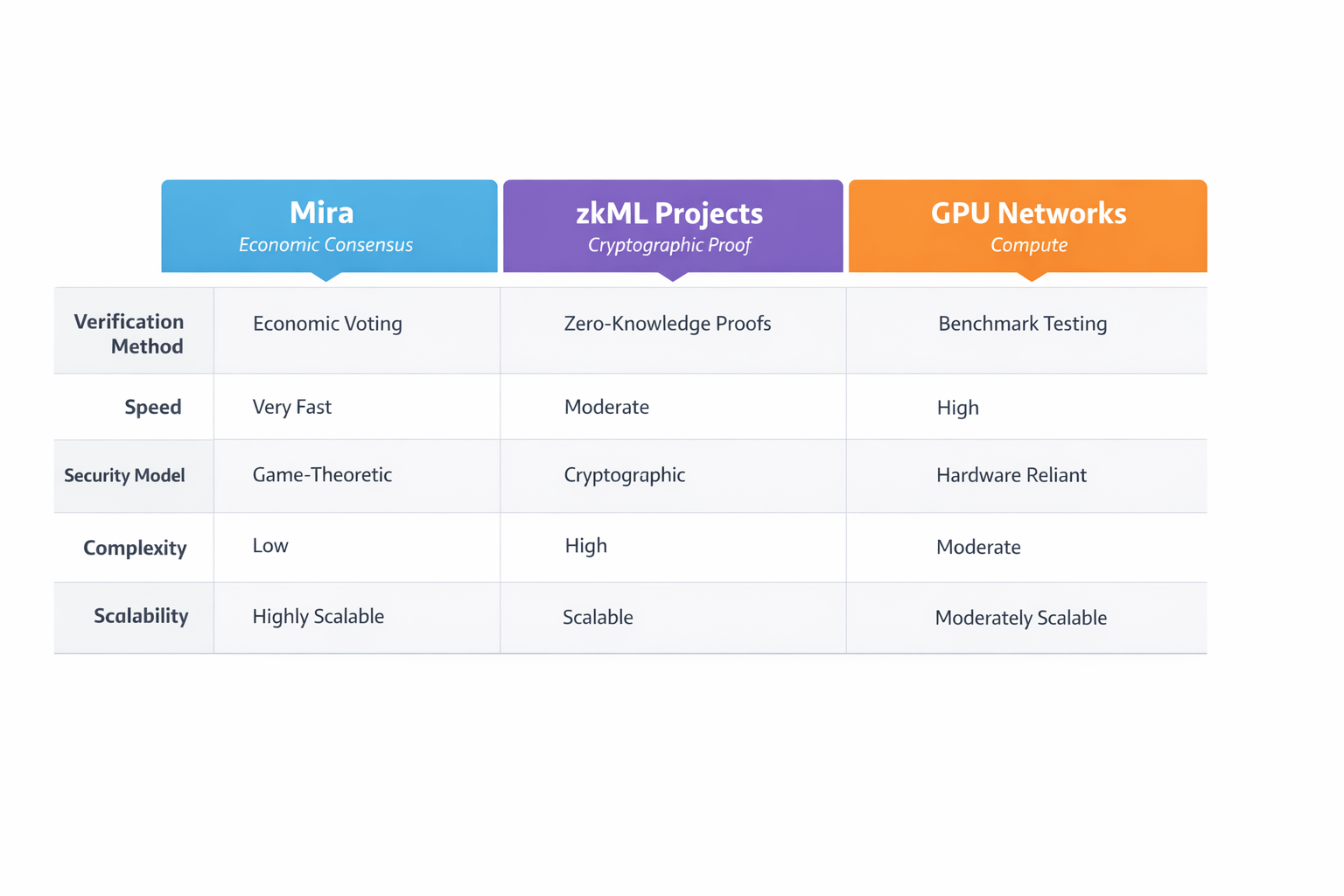
Mira sits between two dominant AI × crypto approaches:
Decentralized Compute Networks
These provide GPU infrastructure but don’t solve output verification.
Zero-Knowledge ML (zkML)
These aim to cryptographically prove AI execution correctness. However, zkML currently struggles with performance overhead and complexity at scale.
Mira’s multi-verifier economic consensus is lighter than full zk proofs but potentially more vulnerable to stake concentration.
Competition could also emerge from large AI API providers integrating directly with rollups or modular chains. If developers prioritize speed over decentralization, verification layers may be bypassed.
Crypto narratives shift quickly. Infrastructure projects must survive beyond hype cycles.
Risks & Reality Check
No system is immune to pressure.
Execution Risk:
Designing incentive-compatible validator systems is difficult. Cartel formation or validator concentration could reduce decentralization.
Token Dilution:
With ~81% of supply outside initial circulation, unlock schedules could impact market dynamics.
Competition:
zkML advancements may narrow Mira’s advantage if cryptographic verification becomes cheaper and faster.
Narrative Risk:
If AI hype cools or shifts toward centralized enterprise applications, demand for decentralized verification may stagnate.
Verification is a long-term infrastructure thesis. Markets often reward short-term narratives instead.
Forward Outlook (6–12 months)
Three indicators will determine progress:
Growth in active validator count
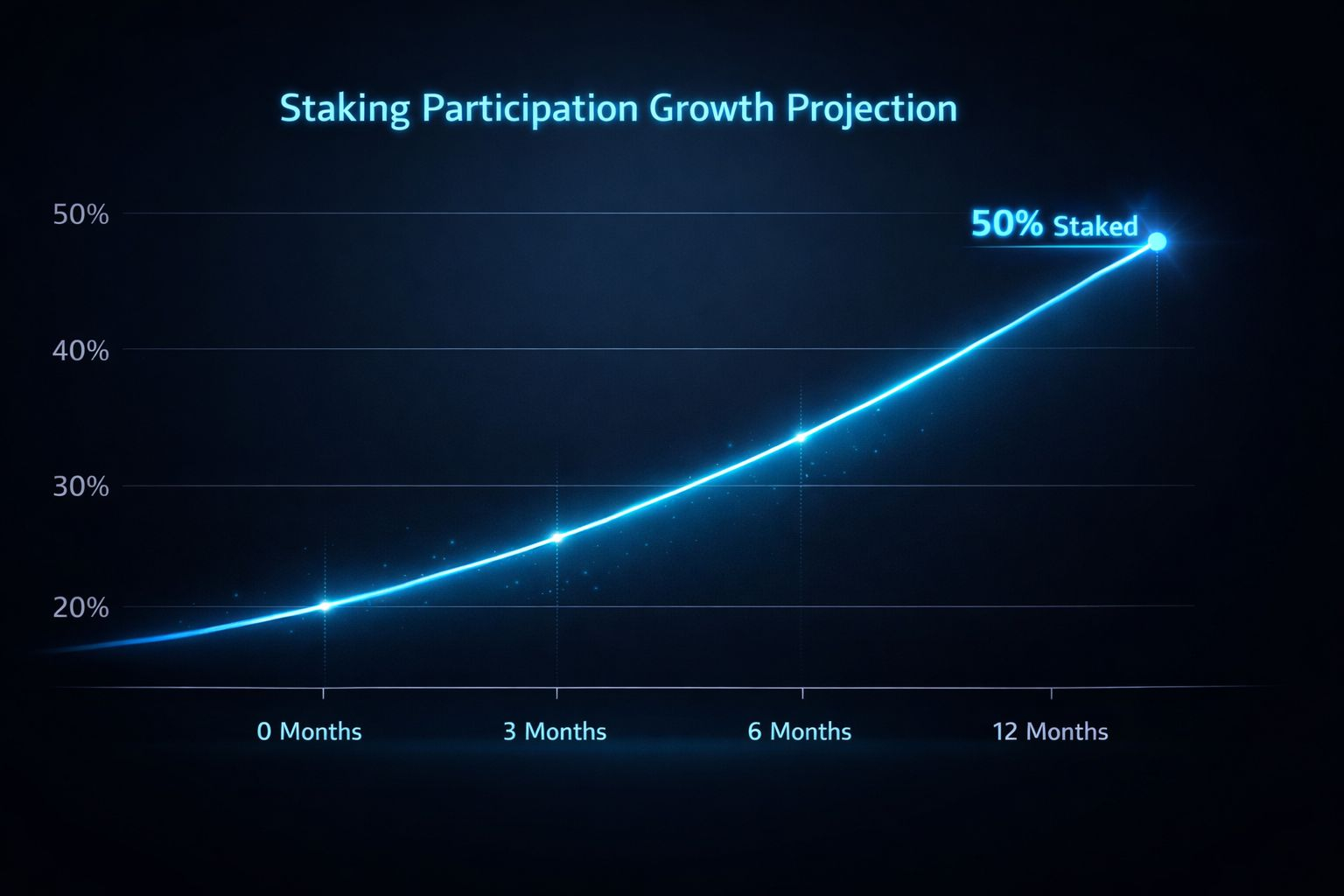
Staking ratio as % of circulating supply
Number of dApps integrating Mira verification APIs
If staking participation rises above 40–50% of circulating supply and integration expands beyond experimental pilots, the economic security model strengthens significantly.
If participation remains below 20%, the deterrence effect weakens.
Adoption metrics will matter more than social engagement metrics.
Conclusion
Mira isn’t trying to build better AI models. It’s trying to formalize trust between AI outputs and blockchain systems.
The current AI × crypto stack lacks a dedicated verification layer. Mira aims to fill that gap using economic incentives rather than pure computation.
Whether that model scales depends on validator economics, developer adoption, and token supply management.
Bridging infrastructure gaps rarely makes headlines.
But it often defines whether a system endures.

