
The period I tracked Fogo most closely was when the network was crowded, swaps were rising, bridges were busy, yet the community channels went quiet, like everyone was holding their breath. No one would guess that the simple feeling of “it still runs during peak hours” could reveal so much about where an ecosystem is actually strong.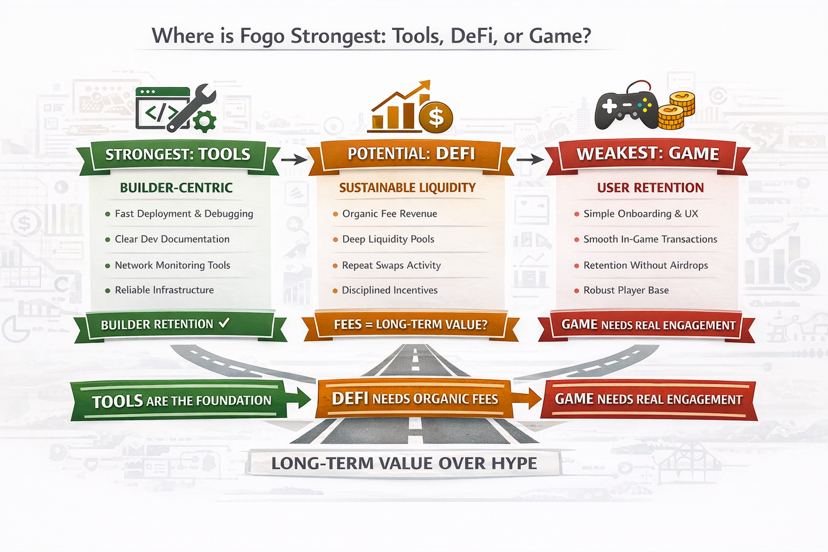
Here’s my blunt conclusion: the strongest segment right now is tools, the second pillar could become DeFi, and gaming isn’t a foundation yet. With Fogo, I don’t judge by how many projects slap their logos on a list. I judge by three very practical things: who is paying fees, what they are paying fees for, and whether they come back consistently. If you can answer those three questions, you’ll know which segment is truly strong, without needing any extra storytelling.
Tools are strong when builders feel less pain. I think Fogo is winning here if you can see signs like these: new developers can set up the environment, deploy, and track transaction status without losing a full week; errors are traceable; documentation isn’t written in a “figure it out yourself” style; and monitoring tools are clear enough to tell whether the problem sits in the app or the chain. Honestly, none of that creates hype, but it creates rhythm. And rhythm is what keeps a project alive through the boring seasons.
DeFi is strong when liquidity stays for real demand, not for rewards. On Fogo, I wouldn’t ask “how big is TVL,” I’d ask “where did that TVL come from, and when does it leave.” It’s ironic: a DeFi ecosystem that looks huge can be hollow, while one that looks modest but has steady fees, tight spreads, and repeat trading behavior can be a real base. Look at the share of fees coming from organic swaps, from pairs with genuine demand, and whether liquidity depth holds up after incentives get cut.
I also look at Fogo cash flow structure, because without a real money loop, DeFi is just a temporary stage. If fees are split to fund infrastructure, fund ongoing development budgets, and sustain liquidity incentives with discipline, then DeFi on Fogo can last. But if the system needs continuous rewards just to keep the numbers up, the moment the market shifts, it shows. So ask yourself: are users trading because it’s convenient and cheap, or because they’re being paid to trade.
I’m even stricter on gaming, because I’ve seen too many chains “call for gaming” and fall short. Gaming strength isn’t measured by a few studios signing partnerships, but by retention and end user experience. If gaming were truly strong on Fogo, you’d see frictionless onboarding, smooth deposits and withdrawals, in game transactions that don’t stumble, and most importantly, players returning because it’s fun, not because there’s an airdrop. If there’s no organic retention, I treat gaming as a hope, not a strength.
Another way to separate whether DeFi or tools is pulling the ecosystem: watch who stays when the market cools down. If it’s developers still building, docs still improving, and tooling getting better, then tools are the core. If it’s users still swapping, borrowing, and providing liquidity without large rewards, then DeFi has become the engine. Right now, I think Fogo leans toward the first case, which is why I rate tools as stronger than DeFi at this stage.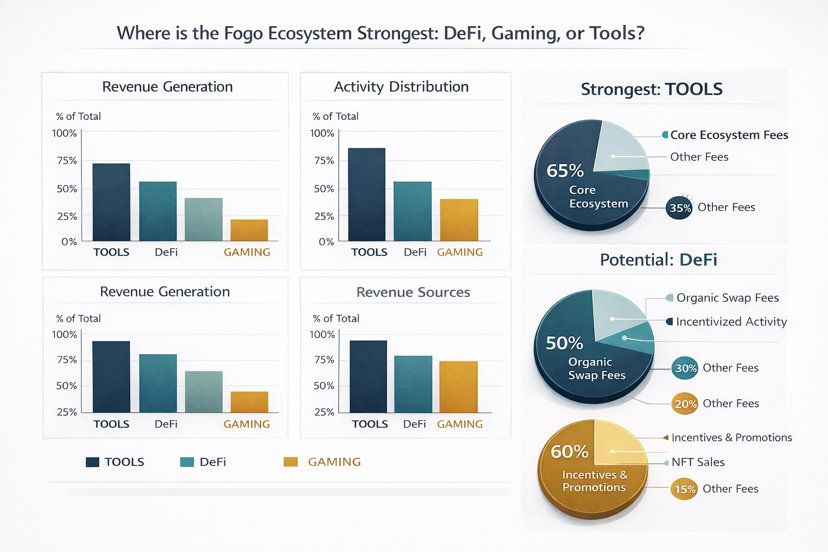
An ecosystem isn’t strong in the segment that sounds the best, it’s strong in the segment that creates durable habits. Fogo has a real shot because it seems to prioritize the foundation, and if that foundation is built right, it can pull real DeFi next, and only later bring gaming as a consequence. But the market is always impatient, while foundation building is slow. As someone who has watched this for years, I can only follow behavioral data, fee patterns, and the build cadence, instead of listening to slogans.
If you want an actionable answer: treat tools as the clearest current strength, treat DeFi as something to validate through organic fees and durable liquidity, and don’t believe in gaming until you see real retention. Which segment are you betting on, and how long are you willing to stay with it.
