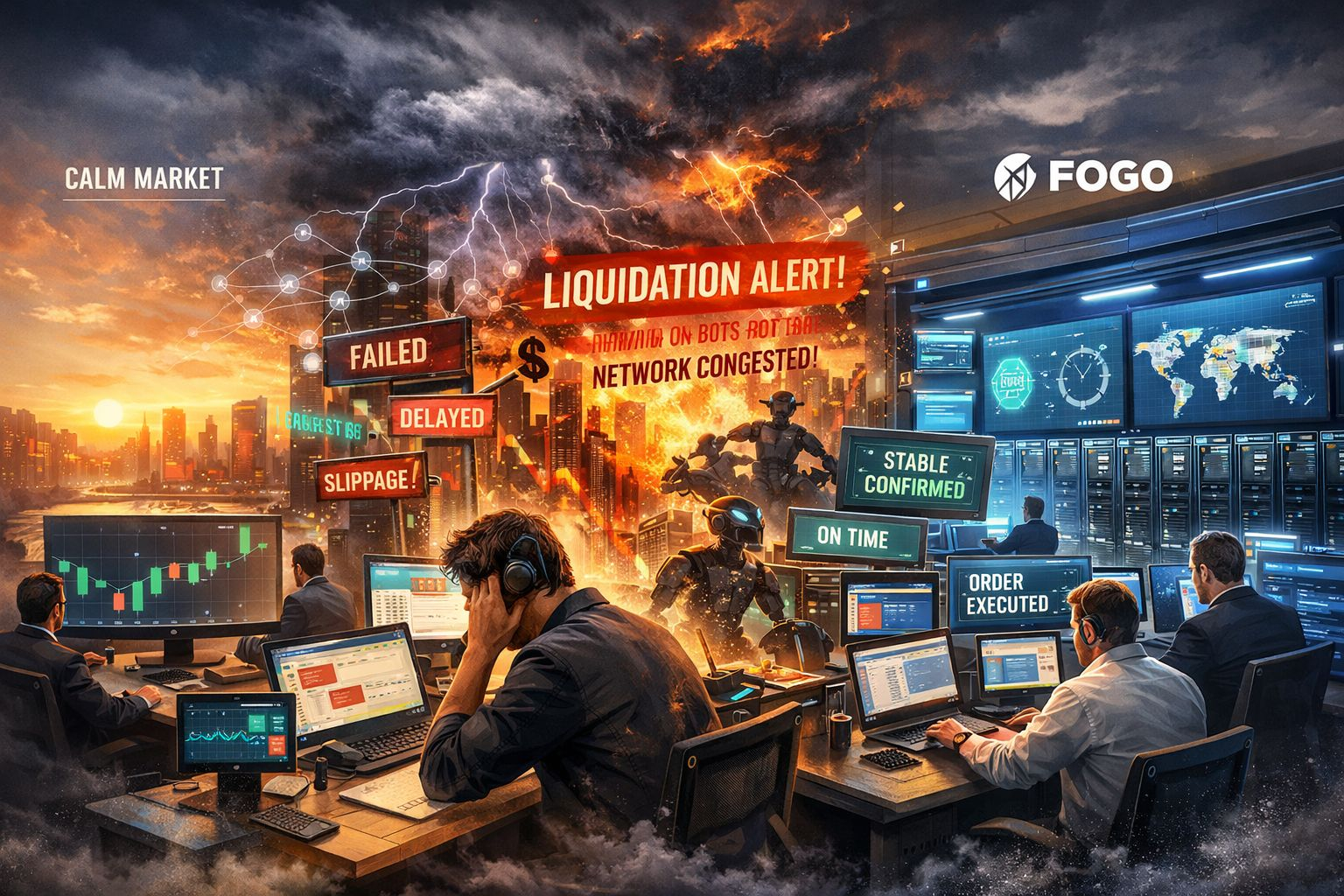
Fogo doesn’t strike me as a project obsessed with looking fast on paper. It feels more like a team asking a harder question: what actually breaks when markets get messy?
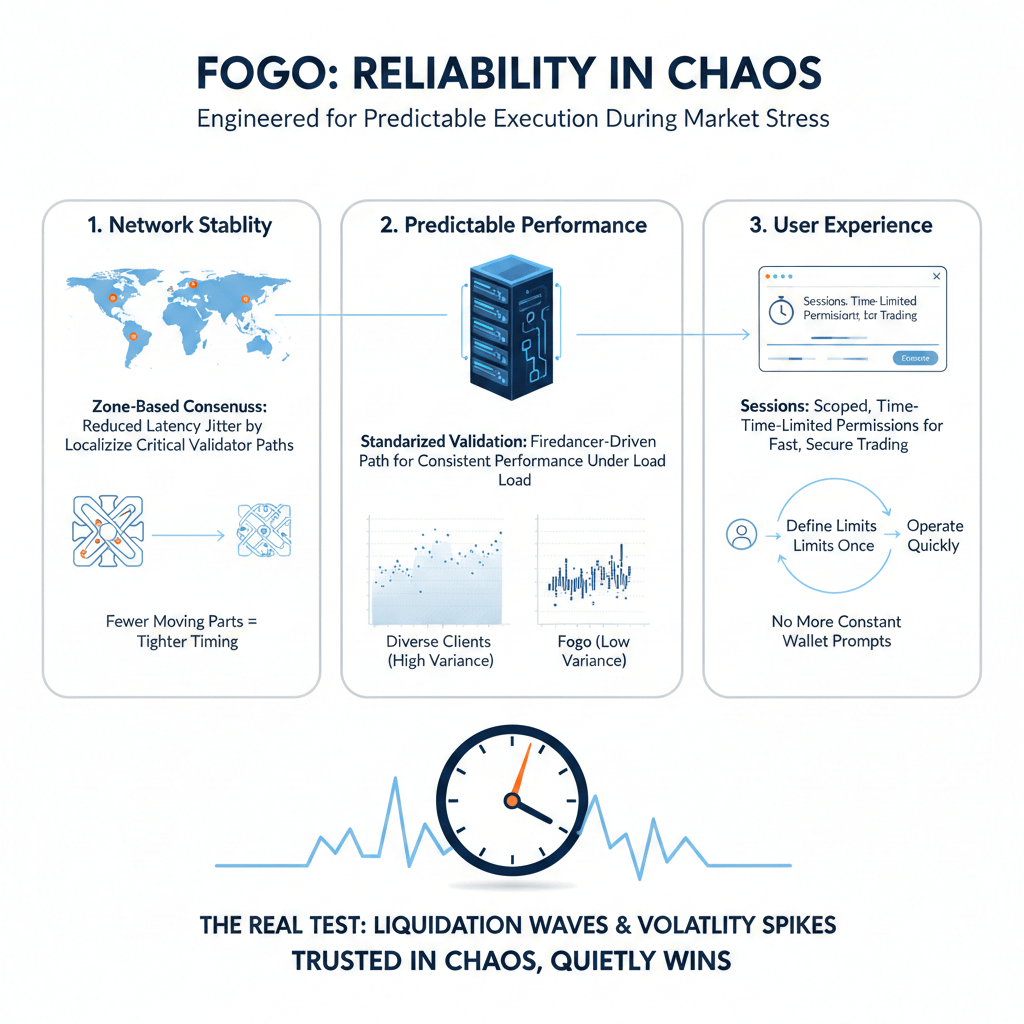
Most chains look great when conditions are calm. Blocks flow, transactions confirm, dashboards look clean. But anyone who has traded through real volatility knows the truth — the system is judged in the worst ten minutes, not the best average. That’s where things usually start to wobble.
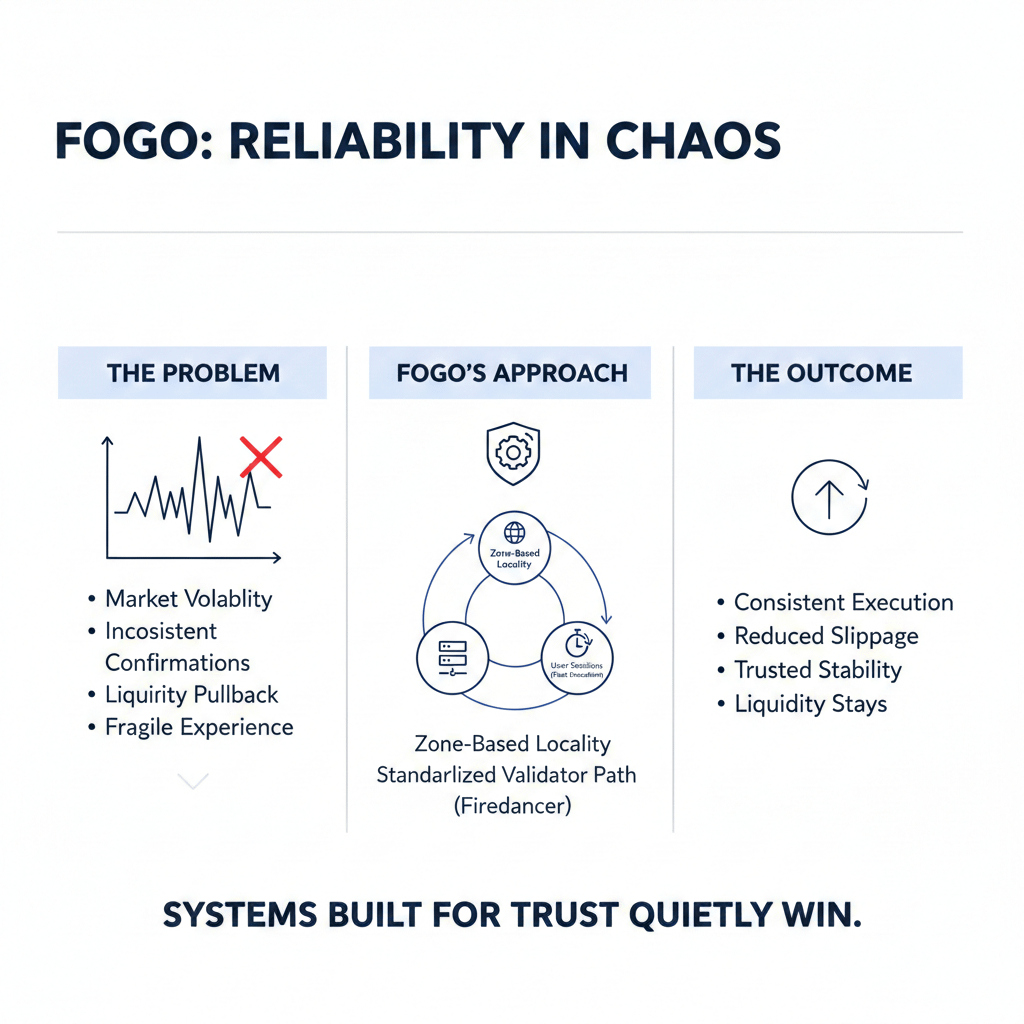
When confirmations become inconsistent or order updates lag, the change is subtle at first. Then liquidity quietly pulls back. Market makers widen spreads. Quotes get thinner. Regular users don’t always know why — they just feel the slippage, the missed entries, the “why didn’t that cancel in time?” moments. The chain might still be running, but the trading experience starts to feel… fragile.
What I find interesting about Fogo is that it seems built around this exact pain point. Instead of chasing the biggest throughput headline, the focus appears to be on reducing execution variance — making the system behave the same way on a chaotic day as it does on a quiet one.
A simple analogy: imagine a busy restaurant kitchen during dinner rush. Success isn’t about the chef who can cook one dish incredibly fast. It’s about whether the whole kitchen stays coordinated when twenty orders hit at once. Timing, consistency, and smooth handoffs matter more than peak speed. In on-chain markets, consensus and networking are that kitchen line. When coordination slips, everything backs up.
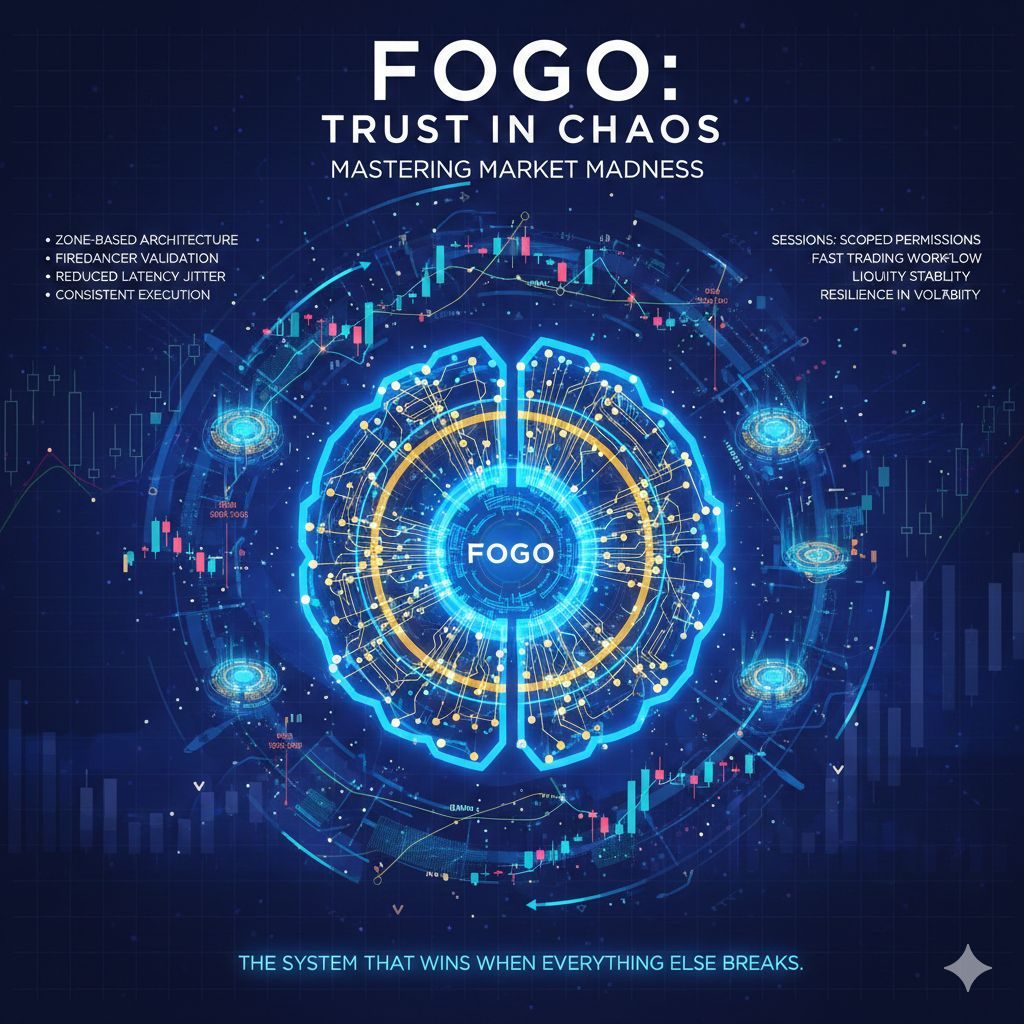
Fogo’s design choices reflect that mindset.
The zone-based approach, for example, looks like an attempt to control the physical reality of the network. By narrowing the critical validator path geographically during an epoch, the system tries to reduce latency jitter — one of the quiet killers of predictable execution. It’s a tradeoff, and not a small one. Anytime locality becomes part of the design, governance and operational discipline matter more. But from a market structure perspective, the logic is easy to understand: fewer moving parts often means tighter timing.
The emphasis on a Firedancer-driven validator path also fits the same philosophy. In theory, diversity of clients sounds great. In practice, under heavy load, uneven performance across different stacks can widen timing dispersion. If your goal is to make the system feel reliable during stress, standardizing performance starts to make practical sense.
Then there’s the user experience side, which many infrastructure conversations ignore. In fast markets, friction isn’t just annoying — it’s dangerous. Repeated wallet prompts and constant signing slow people down exactly when speed matters most. The Sessions concept — scoped, time-limited permissions — is clearly aimed at that real trading workflow problem. It tries to move the experience closer to how serious trading systems actually work: define your limits once, then operate quickly within them.
Of course, none of this matters if it only works in theory.
The real test for Fogo won’t be calm conditions or clean dashboards. It will be the ugly moments — liquidation waves, sudden volatility spikes, bot traffic surges. That’s when timing discipline either holds or cracks. That’s when liquidity decides whether to stay comfortable or switch into defensive mode.
If Fogo can keep behavior tight when pressure rises, the market will notice on its own.