
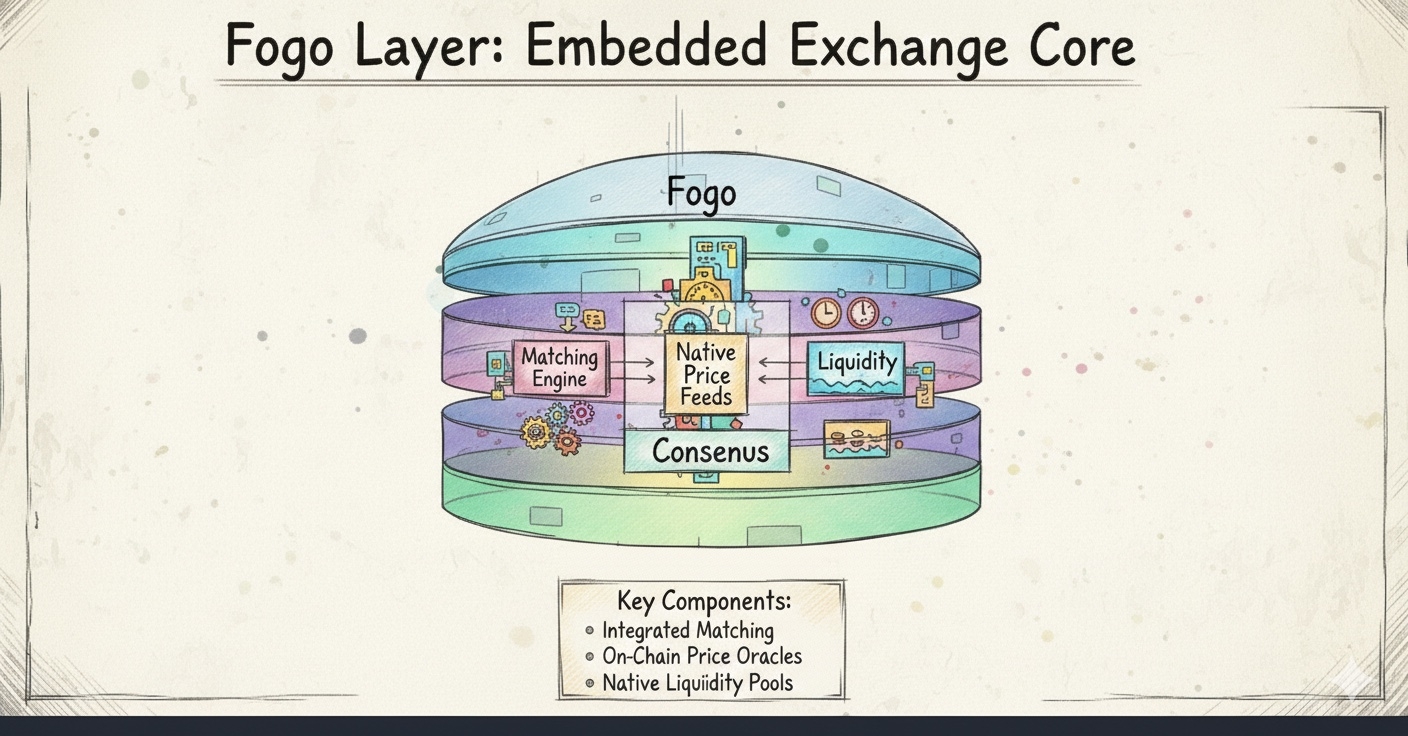
I kept comparing it to other chains at first. That was the mistake.
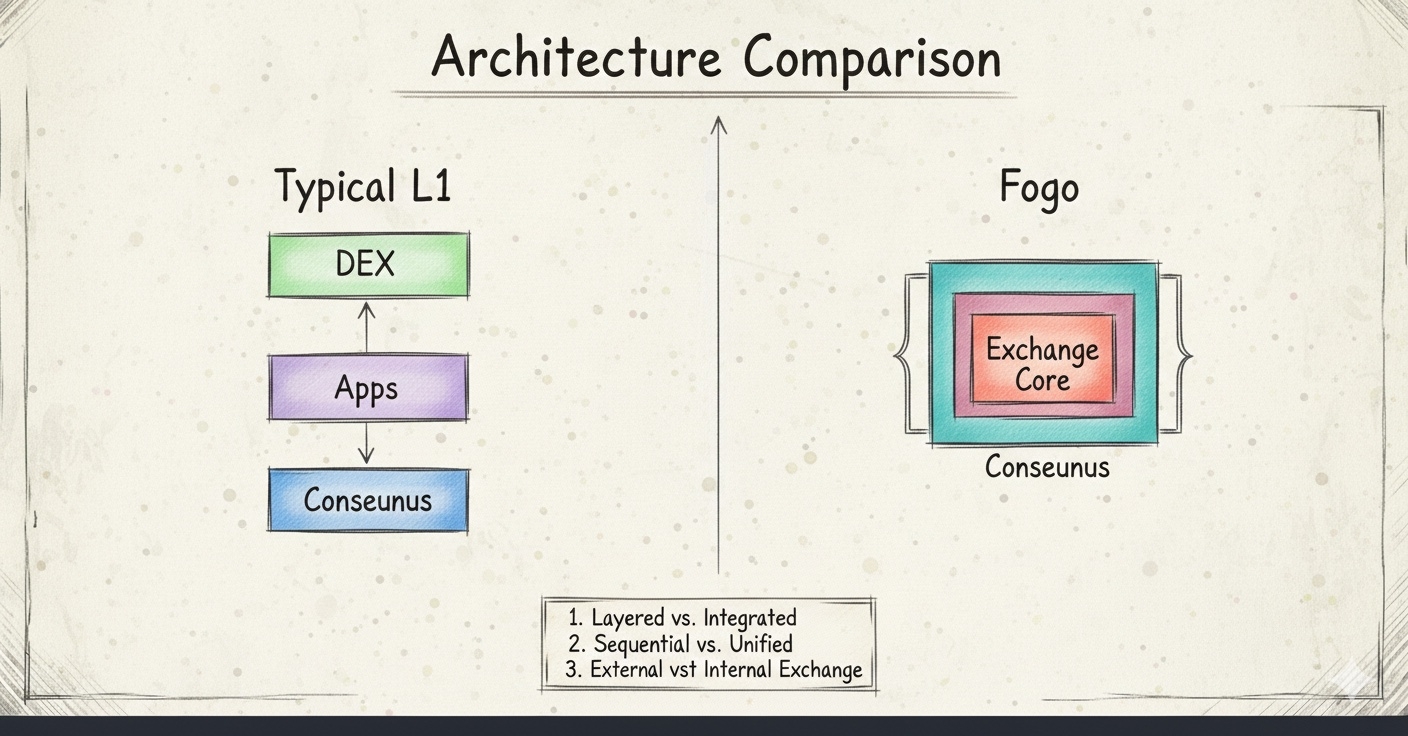
Most L1s feel neutral. They expose throughput. They let someone deploy a DEX. Liquidity fragments across contracts. Oracles arrive from somewhere else. Validators secure blocks. Markets just happen to exist on top.
Fogo does not separate those layers.
The exchange logic is not renting blockspace. It lives inside it. Native price feeds are not pulled across timing gaps. Liquidity providers are not scattered hoping propagation behaves. Validator eligibility itself is shaped around execution quality. That detail changes how the system breathes.
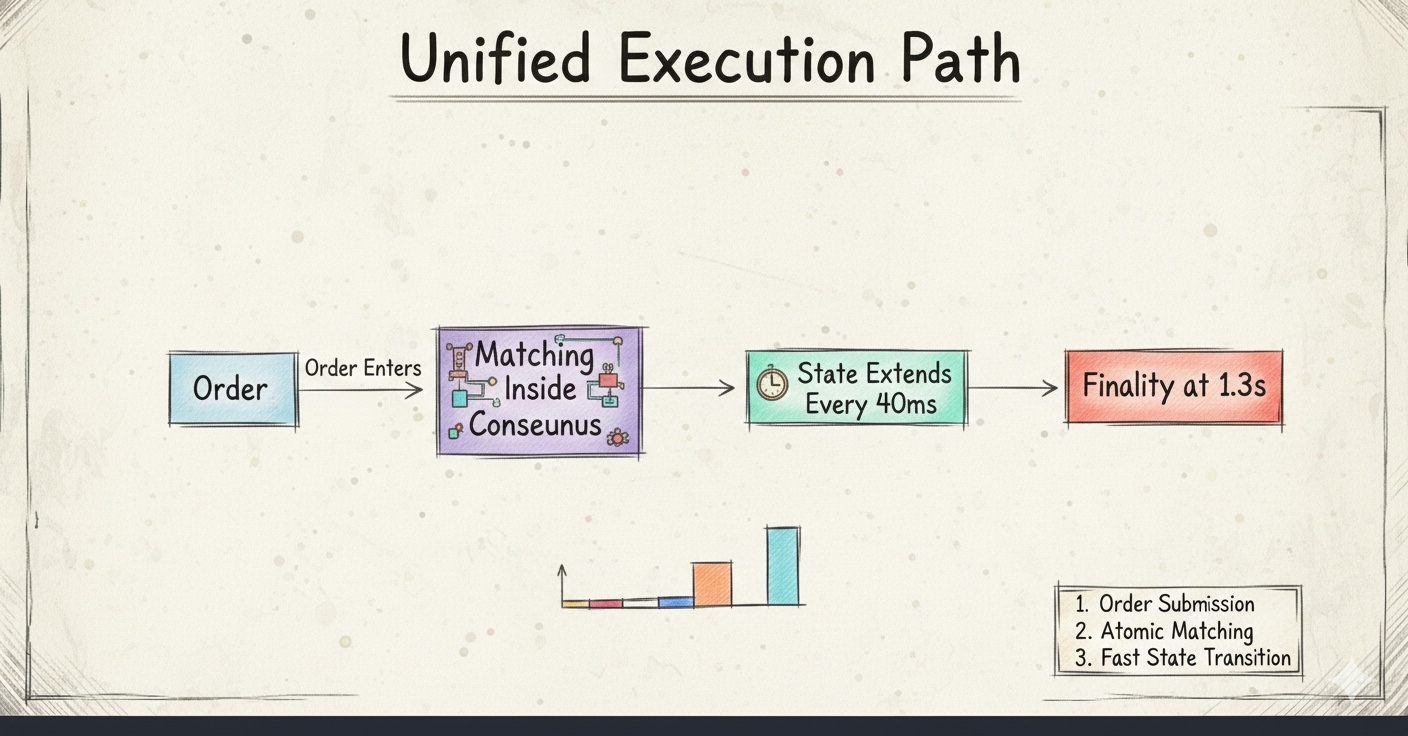
When a block rotates every 40ms, matching is not waiting behind an application boundary. Settlement is not a second act. Multi local consensus extends the ledger and the venue at the same time. Turbine compresses the propagation path so state converges before debate forms. At 1.3s finality the result is anchored without ceremony.
I noticed something uncomfortable.
If the exchange is enshrined, neutrality shifts. The validator set is no longer abstract infrastructure. It becomes part of venue design. Colocation is not just performance optimization. It is topology shaping execution quality. Geography influences the surface where price discovery lives.
Most chains host markets and call it permissionless.
Fogo integrates the market into consensus and calls it infrastructure.
That distinction is subtle on paper.
Under stress, it will not be subtle.
It does not feel like a chain waiting for traders.
It feels like a venue that already decided what kind of traders it wants.
And that decision sits inside the protocol.
#Fogo @Fogo Official $FOGO #fogo
