

The real problem in AI today is not generation. It is continuity.
Models can answer. Agents can execute. Systems can scale.
But very few can remember.
The next phase of AI infrastructure will not be defined by speed alone, but by persistence. And Vanar is positioning itself precisely at that structural fault line where stateless execution becomes durable intelligence.
This is not a branding narrative. It is an architectural shift.
Reframing the Problem: Stateless Is the Bottleneck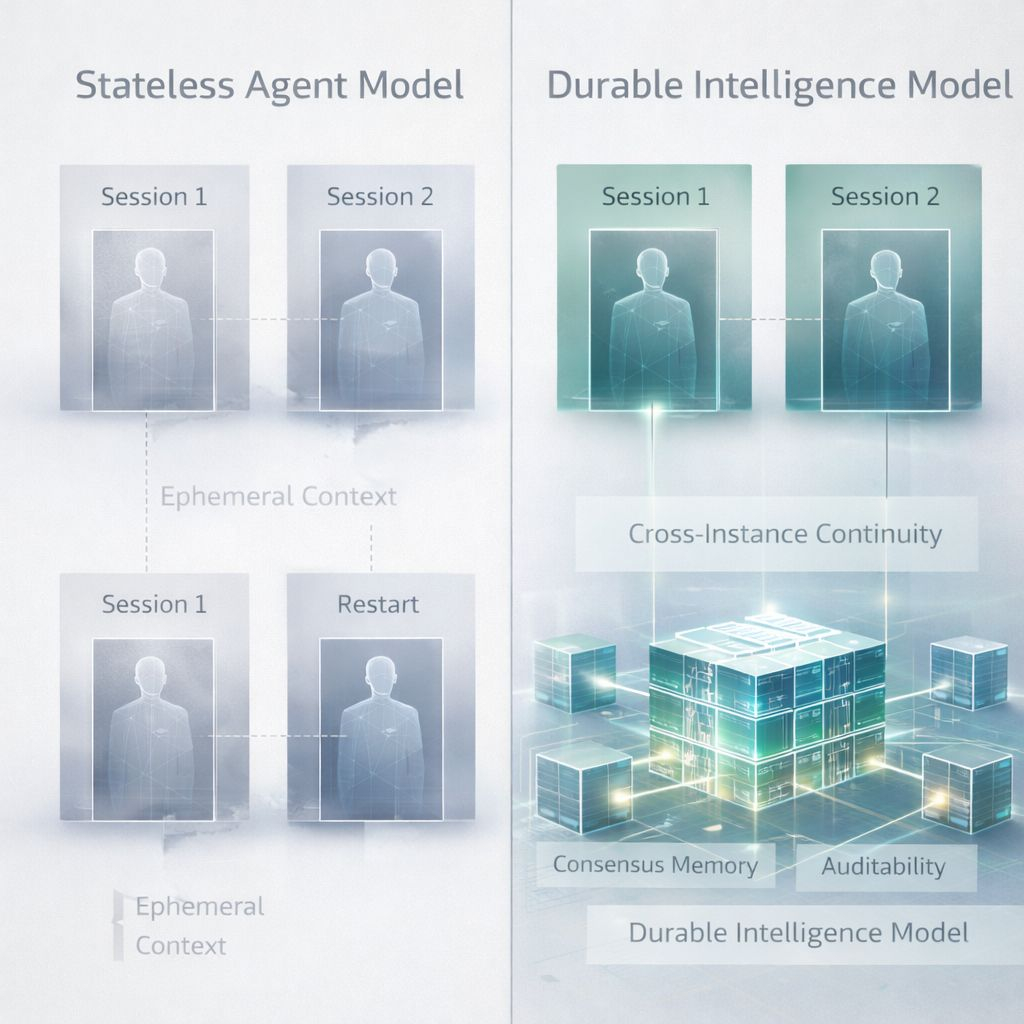
Most AI agents today operate like goldfish with extraordinary vocabulary.
They can reason within a session, complete tasks within a process, and even coordinate across APIs. But restart the instance, migrate the machine, or redeploy the container and context disappears.
That fragility is not cosmetic. It is systemic.
If intelligence cannot survive process death, it is not infrastructure. It is a tool.
Vanar reframes the problem correctly:
The bottleneck is not inference speed. It is memory durability.
And durability changes everything.
From Blockchain to Intelligence Layer
Vanar did not approach this from a “faster chain” angle. The architecture leans into a more deliberate idea: blockchain as a persistence layer for intelligent systems.
Blockchains are, at their core, machines for durable state.
They are optimized for consistency across nodes, resistance to tampering, and survival beyond individual machines.
Now place that capability into an AI agent ecosystem.
Suddenly, memory is not a database attached to a server.
It becomes a verifiable, portable, process-independent layer.
That is the conceptual pivot.
Vanar is not trying to make agents smarter.
It is making their intelligence survive.
The Neutron Memory Layer: Product Through Function, Not Marketing
When Neutron’s Memory API is introduced into OpenClaw agents, the messaging is straightforward: agents now remember permanently.
Strip away the announcement language and examine the mechanics:
• Memory survives restarts
• Memory survives new machines
• Memory survives new instances
• Memory survives redeployments
This is not session caching.
This is durable state anchored beyond runtime.
That distinction matters.
In distributed systems, ephemeral memory is cheap.
Durable consensus-backed memory is not.
Vanar’s contribution here is not merely hosting data. It is structuring agent memory as an asset that outlives the execution environment.
Intelligence that outlives the process.
That phrase is not poetic. It is architectural.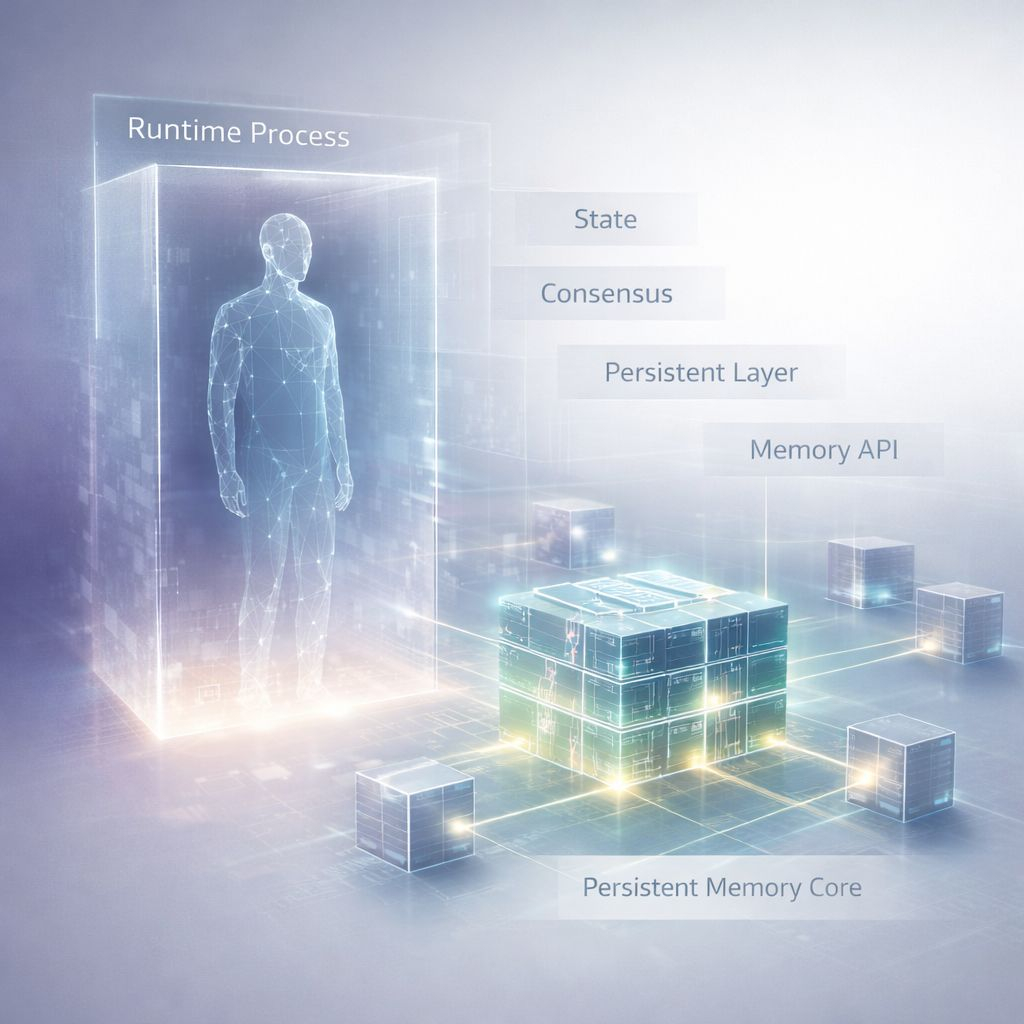
Why This Matters for Builders
Let’s step out of announcement mode and into developer reality.
If you are building AI agents today, you deal with:
• Context windows that reset
• Stateful services that break during scaling
• Databases that are detached from identity
• Infrastructure that forgets under stress
Persistence is always an afterthought.
Vanar moves persistence to the center.
When memory is anchored at the infrastructure layer rather than the application layer, the developer’s mental model changes. Agents no longer simulate continuity. They actually possess it.
That reduces fragility.
It simplifies architecture.
It opens new categories of application:
Autonomous financial agents with verifiable transaction memory
Multi-session research agents that accumulate insight across months
Cross-device assistants that maintain identity continuity
Enterprise workflows where auditability is native, not retrofitted
The design implication is subtle but profound:
Agents become entities, not sessions.
Concept Reframing: From Speed Chains to State Chains
The industry conversation around blockchains has been dominated by throughput metrics — TPS, latency, gas optimization.
Vanar’s positioning suggests a different framing.
Speed is performance.
State is infrastructure.
Performance wins benchmarks.
Infrastructure wins decades.
By focusing on memory durability for AI agents, Vanar aligns with a structural trend rather than a temporary narrative. AI systems are becoming more autonomous. Autonomy requires memory. Memory requires persistence. Persistence requires consensus.
This is the stack.
Not hype. Not abstraction. Just layered design logic.
Product Lens: What Vanar Is Actually Building
Viewed through a product lens, Vanar is constructing three interlocking components:
A blockchain layer optimized for secure, verifiable state.
A memory interface (Neutron) designed specifically for agent continuity.
Integration pathways (OpenClaw agents) that demonstrate applied use.
The sequencing is intentional.
First, establish a durable substrate.
Second, expose structured memory APIs.
Third, prove the concept with live agents.
This is not theoretical positioning. It is product-backed architecture.
And product-backed architecture is what separates infrastructure from narrative.
The Subtext Most People Miss
There is a deeper implication here.
If AI agents store persistent memory on-chain, then:
Memory becomes portable.
Memory becomes inspectable.
Memory becomes interoperable.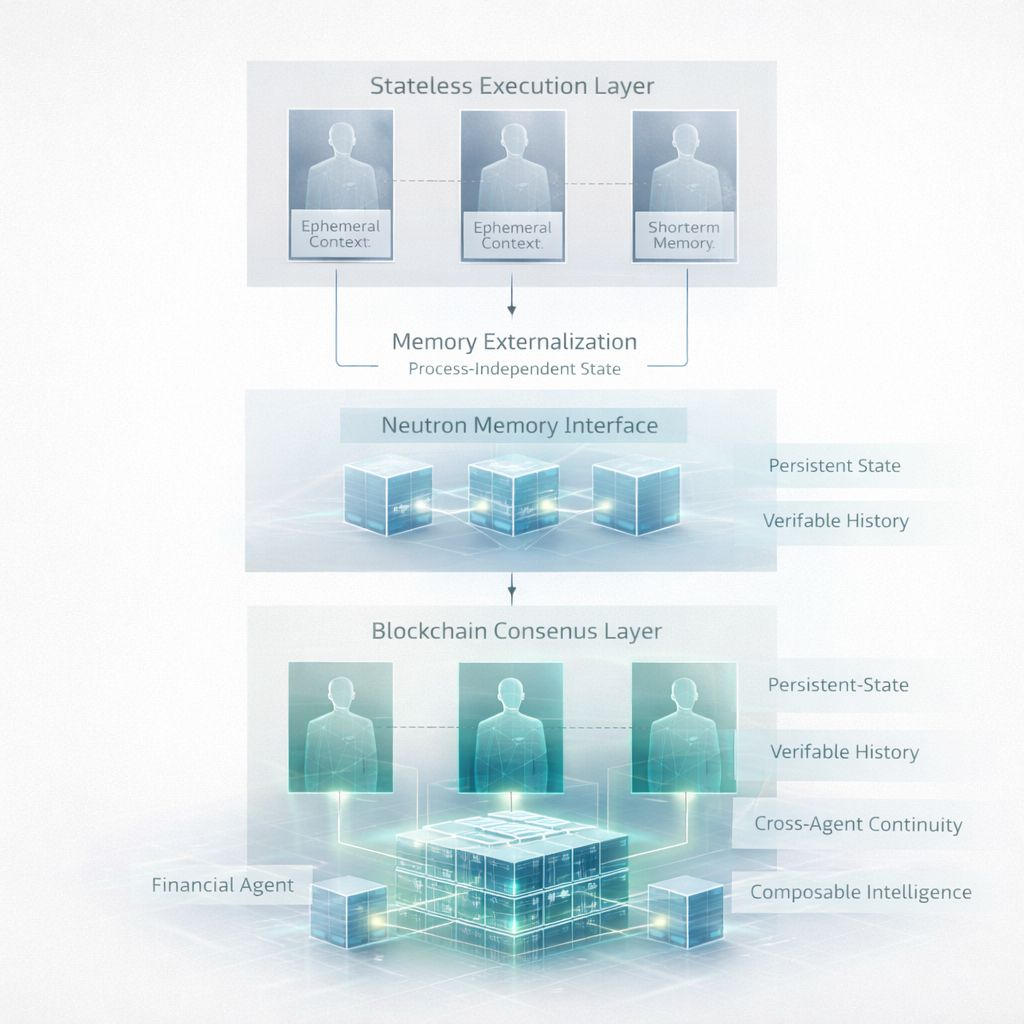
We move from siloed intelligence to composable intelligence.
That is the real unlock.
In a composable ecosystem, one agent’s memory can inform another. Cross-application continuity becomes possible. Identity, state, and behavior converge into a shared infrastructure layer.
This is not about replacing databases.
It is about standardizing durable intelligence primitives.
Vanar’s strategic move is entering that layer early.
Repetition as Architecture
Let me state it again because it matters:
Intelligence that survives restarts.
Intelligence that survives migration.
Intelligence that survives redeployment.
In distributed computing, survival equals robustness.
Robustness equals trust.
Trust equals adoption.
The rhythm is not rhetorical. It mirrors system design.
Professional Assessment
From a technical and strategic standpoint, Vanar’s AI-memory positioning is aligned with three macro trends:
The shift from prompt-based AI to agent-based AI.
The demand for auditability in autonomous systems.
The convergence of blockchain and AI at the state layer.
Many projects talk about AI integration.
Few address structural persistence.
That difference is visible.
Vanar is not trying to compete with foundation models.
It is building the rails those models may eventually depend on.
And infrastructure rarely looks dramatic in its early stages. It looks precise. Measured. Technical.
That is exactly how this reads.
We are entering a period where AI systems will operate continuously managing assets, negotiating transactions, executing workflows, and learning over time.
Stateless agents cannot sustain that future.
Durable agents can.
Vanar’s approach is not about louder announcements.
It is about deeper architecture.
If intelligence is going to scale beyond demos and into long-lived systems, memory must be treated as infrastructure.
That is the pivot.
That is the design logic.
That is why Vanar matters.
