
I almost scrolled past Fogo. Honest. Another SVM L1 announcement? Yawn. The feed is flooded with "revolutionary" chains promising moonshot TPS and zero compromises. Most fizzle before mainnet. I gave @Fogo Official a quick glance SVM-based, fast, DeFi-focused and closed the tab. But something pulled me back. Again. And again. Turns out, that nagging feeling was the rarest thing in crypto: a project that actually gets what builders want.
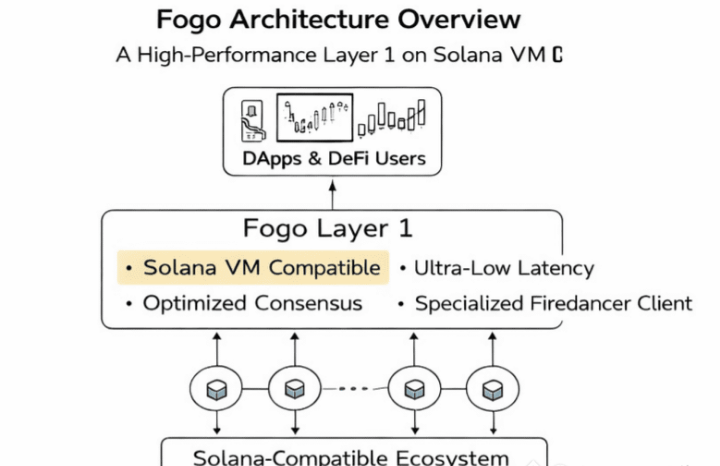
Most L1s scream "We're completely new! Forget everything!" They force rewrites, new languages, alien tools. Fogo does the opposite. It says: Bring what you already know. Use the same patterns, same code, same workflows but run it on infrastructure that doesn't choke when real demand hits.
That's builder-centric thinking. Developers hate learning new frameworks for marginal gains. They want existing skills to unlock better performance without drama. Fogo isn't flashy for clout; it's reliable in ways Solana devs have begged for. Full Solana Virtual Machine (SVM) compatibility means you deploy the same .so binaries, Anchor contracts, CLI commands. Wallets like Phantom or Backpack work out of the box. Point your RPC to fogo.io (mainnet live since early 2026), and you're building.
From the docs (docs.fogo.io): Deploy programs with Solana CLI just swap the cluster config. Anchor? Same setup. Metaplex for NFTs, Squads for multisig, Wormhole for bridging all plug in seamlessly. No three-week Rust crash course like some chains demand. No architectural overhauls. This lowers migration friction to near-zero for Solana-native teams. Ethereum devs chase Monad or Eclipse; Solana builders? Fogo feels like home, but upgraded.
The Solana problem nobody wants to name in polite company: congestion isn't rare it's systemic during peaks. NFT mints, arb wars, memecoin frenzies clog the network. Priority fees explode, txs drop or delay, priority queues turn into lotteries. Builders ship dApps assuming smooth ops, then watch users rage-quit when the chain hiccups. Solana's global validator spread maximizes decentralization but sacrifices predictable latency physics wins. Speed-of-light limits mean distant nodes add 100-200ms round-trips, jitter spikes under load.
Fogo fixes this without pretending it's perfect. Enter Multi-Local Consensus: Validators co-locate in high-performance zones (think NY, London, Tokyo data centers). Blocks produce in ~40ms because packets travel millimeters, not continents. Consensus leadership rotates "follow-the-sun" across zones minimizing global latency while spreading jurisdictional/infra risk over time. No more theater of "max decentralization" that crumbles in reality. Curated validator set (performance-first, not open to anyone) ensures stability. Tradeoff? Explicit: reliable speed over broad geo-spread. But for builders shipping products that need to work 24/7, that's the honest choice.
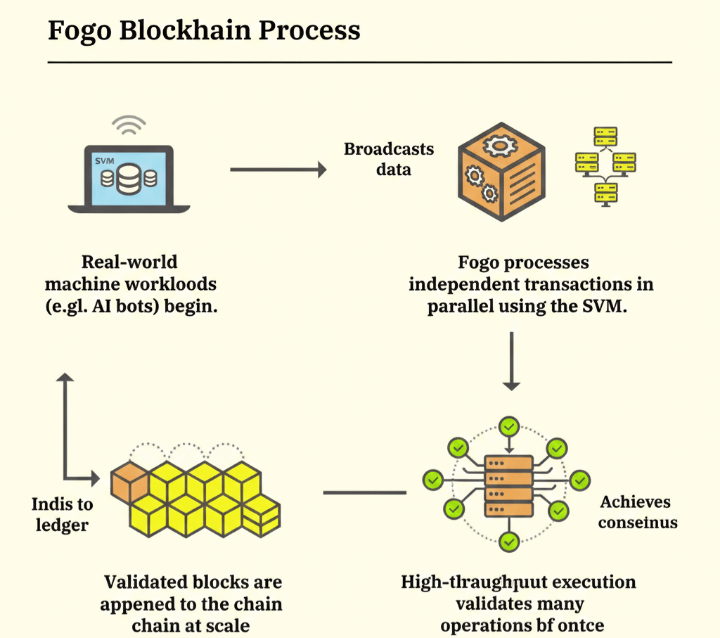
Pair that with pure Firedancer client Jump Crypto's high-performance Solana implementation. Fogo standardizes on one optimized client (no heterogeneous mix dragging averages down). This squeezes max throughput and predictability. Real-world: ~1.3s sub-second finality, stable under load. No reorg roulette, no limbo txs. For DeFi apps on-chain perps, order books, liquidations milliseconds compound into real edge.
Team background seals it: Ex-Jump, Citadel, Morgan Stanley, Pyth/Douro Labs. TradFi quants who lived inventory risk, tight spreads, HFT demands. They built Fogo for microsecond DeFi: reduce reorg/inventory exposure, enable arb/HFT/liquidations on-chain, tighten spreads with predictable execution. Not web3 dreamers people who know speed = product.
But speed without UX is a ghost town. Enter Fogo Sessions : Chain-level primitive for gasless, session-signed trading. One-time wallet connect, approve scoped session keys (time/duration/limits), then trade/cancel/liquidate without pop-ups, gas, or repeated signatures. Apps cover fees via paymasters truly gasless for users. Self-custody intact, no central server risks. This bridges CEX smoothness to on-chain custody. Builders integrate via React SDK (FogoSessionProvider, SessionButton, useSession hook). Friction drops; onboarding soars. For trading dApps, it's killer: no wallet fatigue in volatility, bots run uninterrupted.
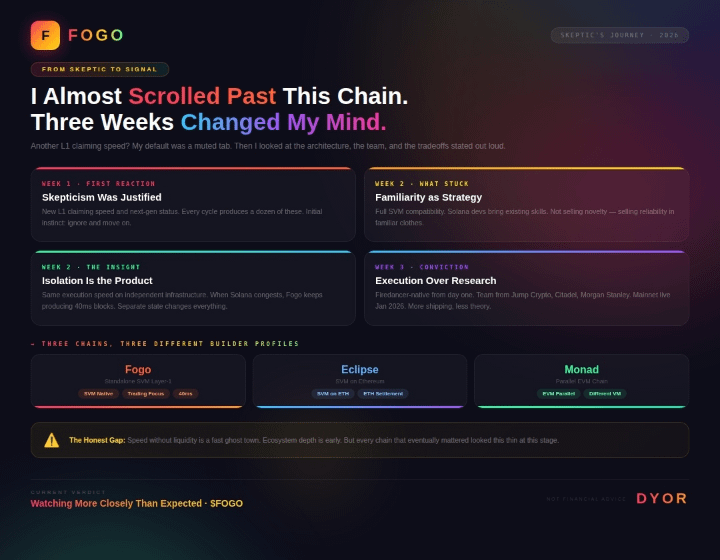
Comparisons miss the point. Eclipse? SVM rollup on Ethereum great for ETH devs curious about parallel execution. Monad? Parallel EVM targets EVM ecosystem with high TPS. Fogo? Standalone SVM L1, laser-focused on Solana devs wanting Solana strengths without the congestion lottery. Different builder audiences, different gravity. Fogo pulls Solana ecosystem projects needing reliability.
Liquidity question haunts every new chain. Speed is useless in an empty block. Early ecosystem is thin Ambient Finance building on-chain perps, Pyth integration (shared history via Douro Labs), Wormhole bridging, Goldsky indexing. Not mass adoption yet. But timestamp: Every chain that mattered started sparse. Solana 2021 looked thin too. Fogo's architecture (Firedancer + multi-local + curated set) + trader-native team + Sessions UX creates pull for liquidity. Early movers get uncrowded blocks, tight spreads, real edge. Gravity builds as dApps launch and traders chase performance.
Honest assessment after weeks digging: Fogo isn't "the new Solana." Unfair comparison. It's the chain that evolves Solana's playbook fixes pain points builders complain about privately. Transparent tradeoffs, no hiding behind buzzwords. Docs are clear, team communicates realities.
If you're a builder tired of Solana congestion killing launches, or scaling issues forcing compromises test Fogo. Deploy a simple program, integrate Sessions, feel the difference. RPC: fogo.io. Tools: same as Solana. Early days mean opportunity low competition, high upside.
What about you? Solana dev considering migration? Or skeptical of another L1? Drop your thoughts below. Let's talk real builder pain points.
