
@Vanarchain The first time I examined VANAR closely, it didn’t create the usual feeling of encountering something that was trying to disrupt the world overnight. Instead, it felt more like observing a system that was trying to make itself dependable before making itself important. That difference may sound subtle, but it reflects a deeper philosophical stance. Most blockchain projects arrive with urgency, presenting themselves as replacements for existing systems. VANAR, by contrast, seems more focused on making itself quietly usable, almost as if its primary goal is not to compete loudly, but to remain present and stable long enough to become part of routine digital life.
To understand why that matters, it helps to remember how the blockchain industry has evolved. Earlier generations of projects were driven by the belief that speed, scale, and decentralization alone would naturally attract meaningful usage. The assumption was simple: if infrastructure became powerful enough, applications would inevitably follow. But reality has been less direct. Infrastructure improved dramatically, yet most systems still struggled to integrate into the everyday workflows of individuals and organizations. They functioned well as technical environments, but they rarely became environments people depended on continuously.
VANAR appears to enter this landscape with a slightly different awareness. It doesn’t treat infrastructure as the final destination. Instead, it treats infrastructure as a foundation that must disappear into the background. This is an important shift. When infrastructure becomes invisible, people stop thinking about it as technology and start experiencing it as capability. The system stops feeling like something separate from their activity and starts feeling like part of the activity itself.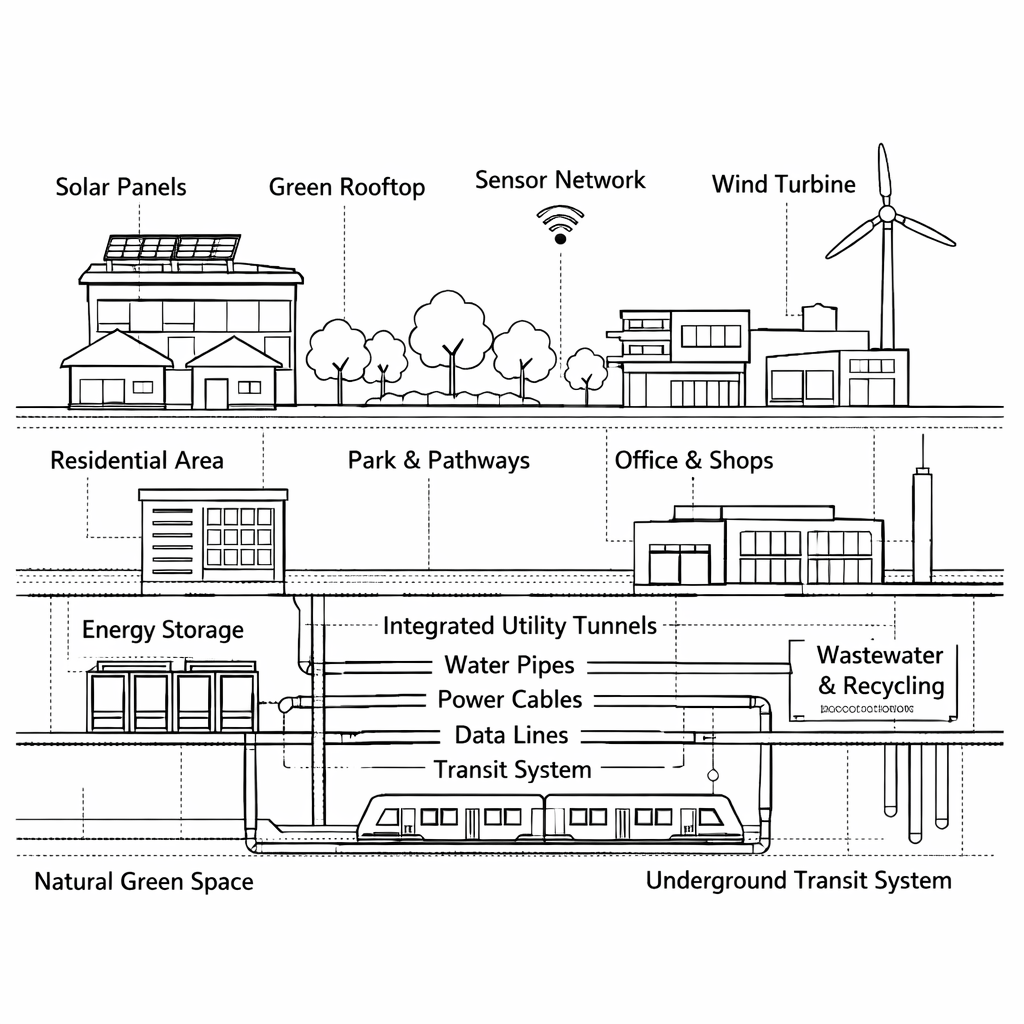
One of the ways this philosophy reveals itself is in how VANAR structures its internal layers. Rather than presenting isolated features, it seems to emphasize continuity between them. The base layer focuses on maintaining consistency. This consistency is not just about technical reliability, but about emotional reliability. Users and developers need to trust that their interactions will behave the same way tomorrow as they did today. Predictability, in this sense, becomes more valuable than raw performance. Fast systems that behave unpredictably create hesitation. Slower systems that behave consistently create confidence. VANAR appears to prioritize the latter.
As additional layers build on top of this foundation, the intention becomes clearer. The system begins to shift from simply recording activity to preserving context. Context is one of the most fragile elements of digital life. Information can exist in abundance, but without continuity, it loses its usefulness. People spend much of their time recreating context that already existed but was never properly carried forward. VANAR’s structure suggests an attempt to reduce this friction. Instead of treating each interaction as isolated, it tries to allow interactions to accumulate meaning over time.
This approach aligns more closely with how successful software systems have evolved historically. They did not succeed because they introduced entirely new capabilities, but because they allowed existing capabilities to persist in useful ways. They reduced the cognitive burden required to maintain continuity. VANAR appears to apply a similar principle, but within an environment where continuity can be verified rather than simply assumed.
At the same time, this direction introduces natural constraints. Systems built around continuity tend to evolve more slowly, because continuity itself requires stability. Rapid experimentation can introduce instability, which undermines the very trust the system is trying to establish. This creates a delicate balance. The system must improve without disrupting the behaviors people have come to rely on. It must evolve without appearing inconsistent. This kind of gradual evolution rarely attracts immediate attention, but it often produces more durable outcomes.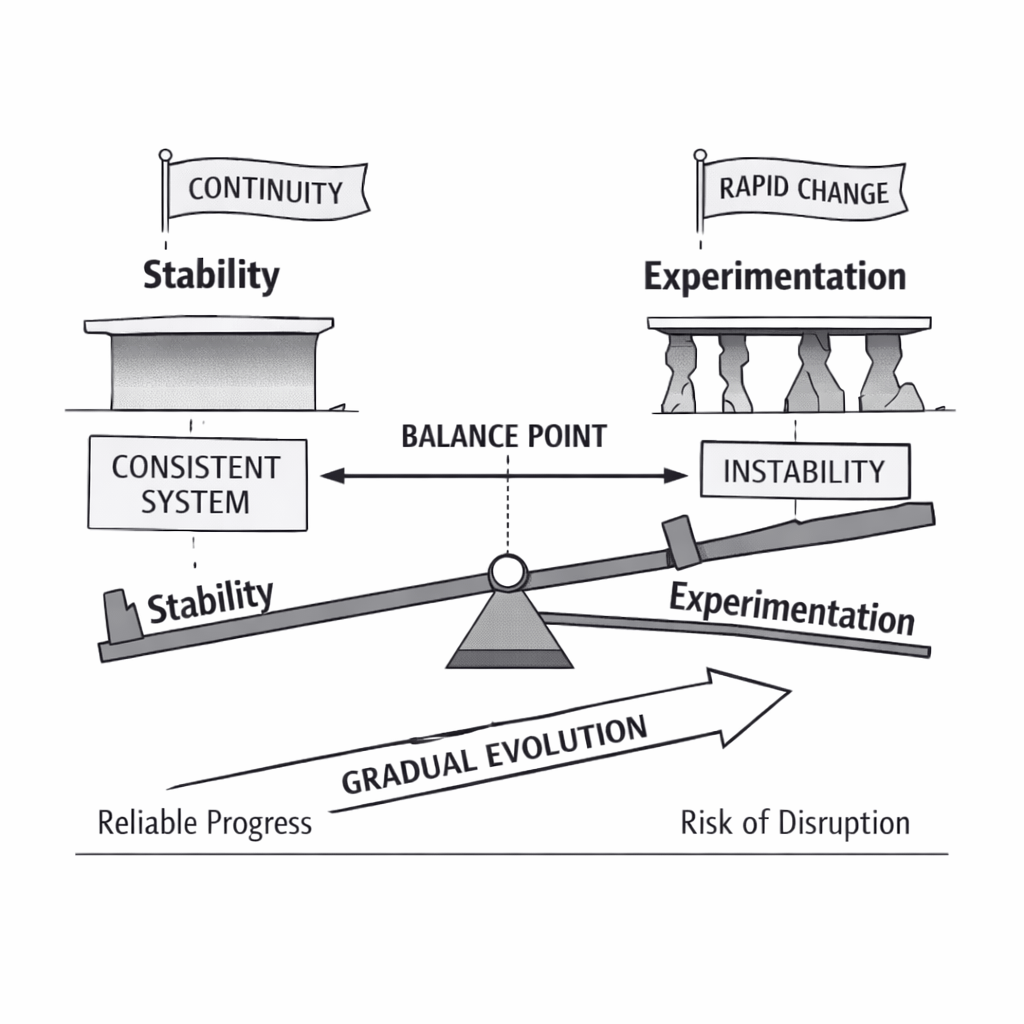
Another important aspect of VANAR’s approach is what it chooses not to emphasize. It does not rely heavily on abstract narratives about transformation. Instead, it focuses on making its internal structure coherent. This coherence may not generate headlines, but it creates the conditions for organic relevance. Systems that remain internally coherent are easier for others to build upon. They provide a stable reference point in an environment that is often defined by volatility.
Still, there are questions that remain unresolved. One of the central uncertainties is whether structural stability alone is enough to drive meaningful adoption. Stability makes systems easier to use, but it does not guarantee that people will choose to use them. Human behavior is influenced by habit, familiarity, and convenience as much as technical design. VANAR’s success will depend on whether its stability translates into genuine convenience rather than simply theoretical elegance.
There is also the question of scale, not in the technical sense, but in the social sense. As more participants interact with the system, new patterns of behavior will emerge. These patterns may reinforce the system’s strengths, or they may expose weaknesses that were not visible earlier. The system’s ability to adapt without losing its internal coherence will be a critical test of its maturity.
Despite these uncertainties, there is something notable about VANAR’s overall posture. It does not appear to rely on constant reinvention to remain relevant. Instead, it focuses on refining its existing structure. This refinement suggests a belief that long-term relevance comes from reliability rather than novelty. Reliability does not attract immediate excitement, but it creates lasting trust.
Having observed multiple cycles of technological enthusiasm and decline, one pattern becomes increasingly clear. Systems that endure are rarely those that promise the most dramatic change. They are the ones that quietly align themselves with the realities of human behavior. They make themselves useful in ways that do not require constant attention. They become part of the background, supporting activity without demanding recognition.
VANAR has not yet reached that level of quiet indispensability. It is still in the process of defining its place within a broader digital ecosystem. But its design choices suggest an awareness of what that place might require. It is not trying to become important all at once. It is trying to become dependable first.
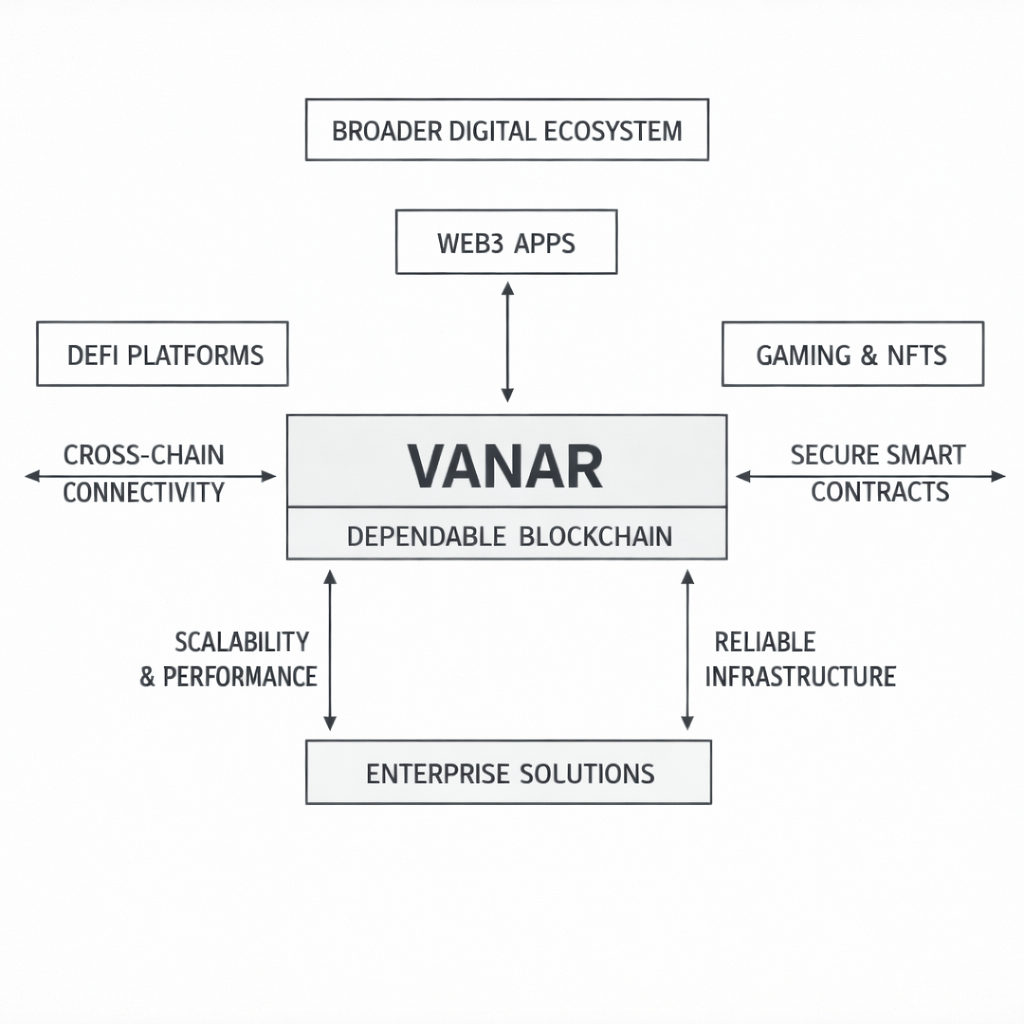
That distinction may ultimately matter more than any individual feature or milestone. Importance can be temporary. Dependability, if achieved, tends to persist. VANAR’s path forward will depend on whether it can maintain its internal consistency while gradually expanding its role. For now, it remains a system in transition no longer just an idea, but not yet fully settled into its long-term identity. And in that unfinished state, it reflects something rare: a willingness to prioritize continuity over attention, and substance over spectacle.
