

Since Trump, it seems that celebrity token launches have become a new business model. On March 2, the famous retired football star Ronaldinho also announced the launch of his personal token $STAR10 on the BSC chain.
Author: Frank, PANews
Since Trump, it seems that celebrity token launches have become a new business model. On March 2, the famous retired football star Ronaldinho also announced the launch of his personal token $STAR10 on the BSC chain. Despite a peak circulating market value of $32 million under a sluggish market, it still fell far short of the expected rush to buy. Instead, social media exposed many conspiracy theories regarding this token, with scandals about a Shenzhen token issuance team, unblocked liquidity pools, unrenounced minting rights, and insider players running away early all coming to light, even Binance founder CZ, who shared the launch information, was once caught in a user siege. Is the business model of this celebrity token craze really a one-way harvesting wealth code?
Has the football genius become a harvesting tool? Questions arise about the professional team's operations.
Ronaldinho, once hailed as the most talented Brazilian football star in history, is generally referred to as Xiao Luo by fans. He was beloved by fans during his career and was known as the football elf. However, rising to fame at a young age, lacking self-discipline, and indulging in a lavish lifestyle led to the ruin of his career, followed by a reckless spending spree that resulted in bankruptcy, ultimately using his fame to make money. Like many talented athletes from poor backgrounds, Xiao Luo unfortunately chose such a script.

After trying various ways to make money, the crypto industry's rapid harvesting capability seems to be a better choice for him.
On February 22, Xiao Luo posted on Twitter, "Here, cryptocurrencies look good," beginning to preview his token issuance plan. However, with the continued downturn in the crypto market, the final token was officially launched ten days later.
During these ten days, the crypto market experienced a significant decline, and the previously hot Solana chain has also shown signs of decline, while the BSC chain, amid CZ's frequent interactions, is trying to become a new MEME hotbed. From Xiao Luo's final choice, it can be seen that there may be a team behind him that is well-versed in the changing laws of the crypto market.
On February 28, Twitter user @R10coin_ revealed that behind Xiao Luo's token launch was a token issuance team from Shenzhen, and this informant claimed to be from another professional token issuance company that had first negotiated a $6 million cooperation agreement with Xiao Luo for the joint token sale. However, another Shenzhen token issuance team intercepted with a $10 million offer, prompting the informant to expose the matter and share some email information and signed documents from Xiao Luo. The community generally views this as a black-eat-black farce, but it seems that such insider operations have become commonplace. Previously, the token launch farce of President Milei also exposed these insider dealings to the public. As of March 4, the user's Twitter account had been suspended.
Due to the fact that the user has not disclosed more substantial insider information, the content regarding the team behind Xiao Luo's token issuance remains unknown. According to PANews investigation, the official website domain of the $STAR10 token is hosted by the well-known domain service provider GoDaddy, and there are two deployed IP addresses. These two IPs, when reverse-queried, originate from Amazon Web Services, and this IP has resolved over 80,000 domains, making it impossible to prove that the same person controls it.
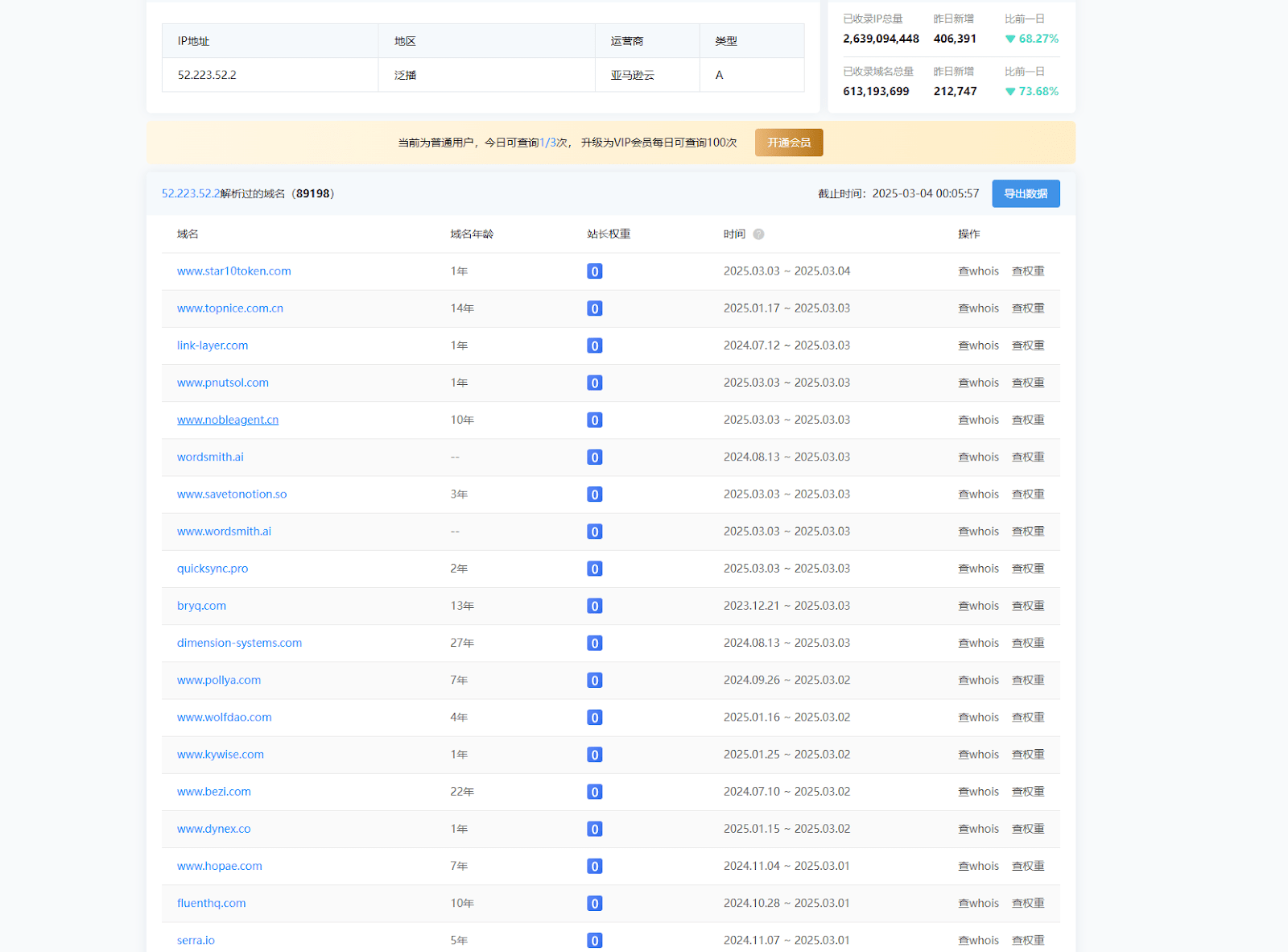
Interestingly, in the parsing list of this IP, another well-known MEME coin, PNUT's official website address appeared. PNUT is also one of the MEME coins that went live on Binance last year. However, based on the current evidence chain, there is no direct evidence to indicate that there is a conspiracy group behind the issuance of the $STAR10 token as claimed on social media.
The contract hides secrets: Backdoor privileges trigger a trust crisis.
However, during the token issuance process, people still seem to feel the insincerity of the $STAR10 token issuance. According to GoPlus Security monitoring, the contract owner of the $STAR10 token still retains the authority to destroy tokens, and the lock-up period for the liquidity pool is only one month.

This backdoor-like operation has led many users to believe that the project team is preparing for harvesting. This has triggered a collective outcry on social media. Binance founder CZ initially retweeted Ronaldinho's token launch tweet without noticing this loophole, stating that it was not an endorsement, just a thank you for choosing to launch on the BNB Chain, but was subsequently met with a collective backlash from users.
However, perhaps under pressure from the community, the team behind Ronaldinho later stated on Twitter that they had given up the minting rights and extended the lock-up period to 255 years until 2281.
However, this remedial action seems to have gained little recognition from the community. As of March 4, the number of token holding addresses on the chain was about 9,500, far less than the 640,000 of TRUMP, and even fewer than the 27,000 addresses of LIBRA.
Mouse warehouse profits 282 times, is it an insider player laying out in advance?
In addition, the mouse warehouse scheme is also one of the tactics often exposed in celebrity token launches. Similar signs appeared during the issuance of $STAR10. According to Onchain Lens, an insider purchased 20 million $STAR10 tokens for 49 BNB (worth $29,000) before the token issuance. As of March 4, this address had sold $350,000 worth of tokens and still held over $2.6 million in unsold tokens.

According to PANews calculations, the user's average cost is about $0.0014, with a peak increase of about 282 times, and the maximum holding value can reach $8.26 million, almost a quarter of the circulating market value. More suspiciously, Xiao Luo's token issuance time on Twitter was at UTC, March 2 at 22:17, while the buying time for this address was at 22:17:08. This time was even earlier than Xiao Luo's posting time. It is unclear how this address's player chose to invest $29,000 in a gamble without confirming the source of the tokens. PANews found through investigation that the initial funds for this address came from Binance's hot wallet.
Overall, Xiao Luo's token issuance seems to be another failed case. Similarly, NBA legend Scottie Pippen, who launched his token in August last year, saw his token $BALL have a market value of only $4.5 million, with about 1,400 holders, a 24-hour trading volume of $2,300, and only five transactions, which can be described as a mess.
Moreover, the recently controversial LIBRA and MELANIA have also been exposed as the work of a conspiracy group. People seem to have become accustomed to this harvesting routine and no longer blindly buy in. As of March 4, the market value of $STAR10 has only 11.5 million dollars left, down 66% from its peak.
From an investment perspective, the celebrity tokens so far have been almost a "complete failure," and for those celebrities attempting to quickly monetize through crypto token issuance, this exploitative harvesting model seems increasingly unsustainable.
Author: Frank

