
The crypto industry is entering a new era where artificial intelligence is no longer optional — it’s becoming core infrastructure. Binance, one of the world’s largest digital asset platforms, is increasingly embedding AI across its ecosystem to improve security, trading efficiency, compliance, and user experience.
🚀 Why This Shift Matters
1️⃣ Smarter Security
AI systems can monitor millions of transactions in real time, detecting suspicious behavior faster than traditional methods. This strengthens fraud prevention and protects user funds — a critical priority as crypto adoption grows.
2️⃣ Data-Driven Trading
With AI analyzing massive datasets, traders gain access to more advanced insights, predictive analytics, and improved liquidity conditions. The result: faster, more informed decisions in highly volatile markets.
3️⃣ Personalized Experiences
AI enables tailored dashboards, smarter notifications, and learning tools adapted to each user’s behavior. This helps beginners onboard more easily while giving experienced traders deeper analytics.
4️⃣ Enhanced Compliance
As global regulations tighten, AI helps automate risk monitoring, KYC checks, and anomaly detection — allowing the platform to scale while staying responsive to regulatory demands.
🧭 The Bigger Picture
Binance’s AI integration reflects a broader transformation happening across fintech and Web3:
Exchanges evolving into intelligent financial platforms
Automation becoming a competitive advantage
AI and blockchain converging to power more autonomous markets
This convergence could reshape how digital assets are traded, managed, and secured in the coming decade.
⚠️ Challenges Ahead
While the benefits are significant, the transition also raises key questions:
How will user data be protected?
Can AI decisions remain transparent and fair?
Will increased automation shift the balance of control toward platforms?
Addressing these issues will be essential to sustaining trust.
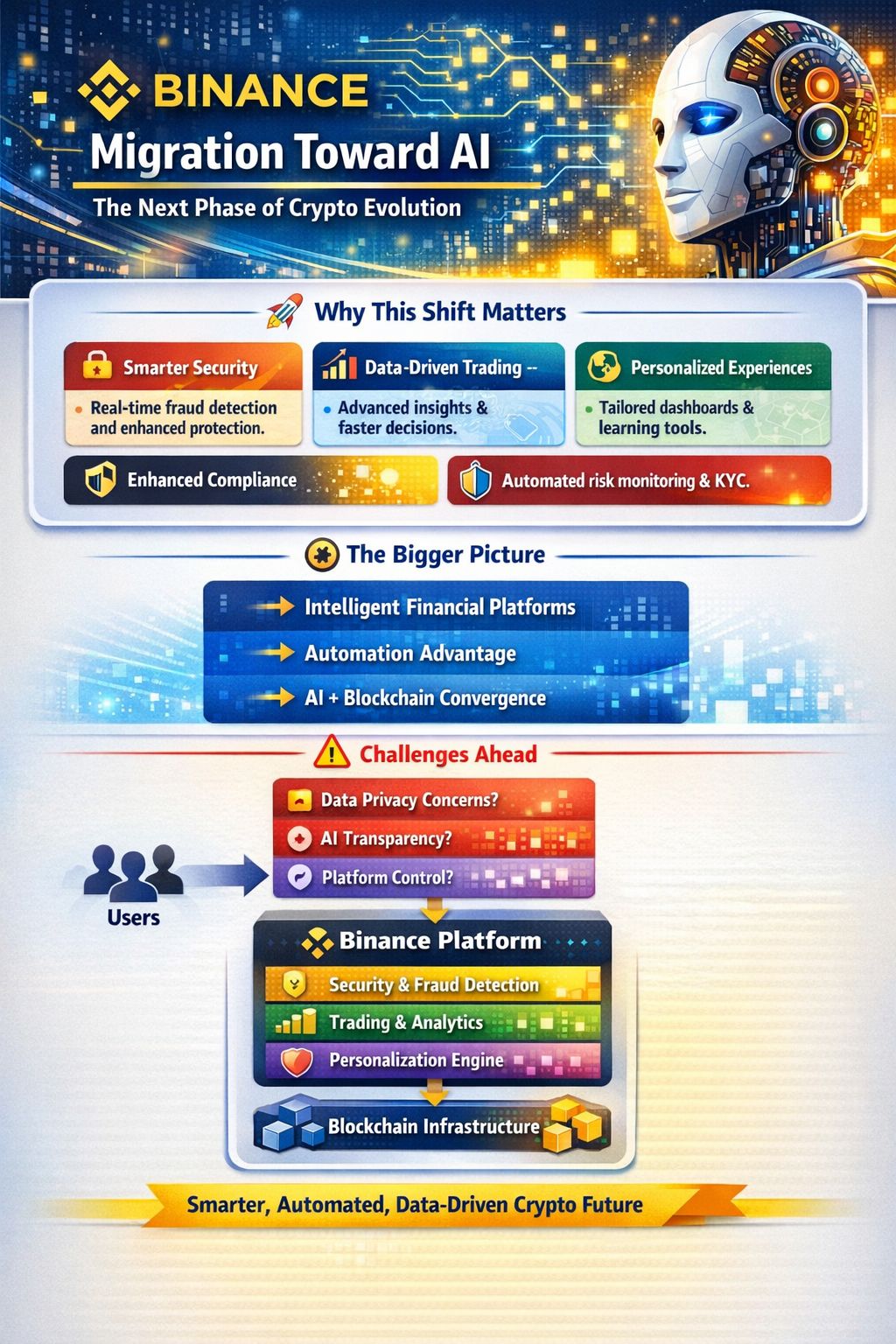
🔰Bottom Line : Binance’s push into AI signals where the crypto industry is heading — toward smarter, more automated, and data-driven financial ecosystems. For users and investors alike, understanding this shift will be key to navigating the next wave of innovation.