The first time I started paying attention to automation in a serious way was not through robotics research or crypto projects. It was something far simpler. I was watching how delivery systems in cities operate. Drivers, warehouse software, routing algorithms, tracking dashboards. Everything looked efficient on the surface, but small coordination mistakes kept appearing. Two drivers arriving at the same location at the same time. Packages routed through unnecessary stops. Systems that clearly worked, yet still seemed to struggle with basic synchronization.
That observation stayed in my mind because the problem was not intelligence. The machines and software were already capable. What seemed harder was coordination. When many independent systems try to complete tasks together, the real difficulty is deciding who does what, when it happens, and how the result gets verified. The technology world talks endlessly about artificial intelligence and robotics capability, but the quieter issue sitting underneath is coordination economics.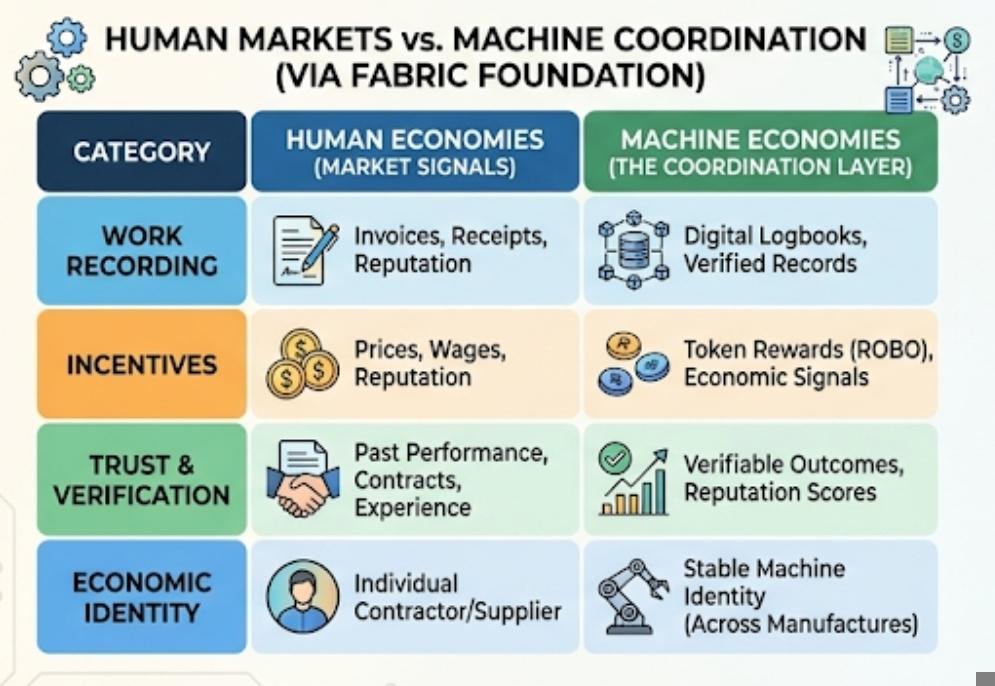
Fabric Foundation appears to be looking directly to the layer. Not robotics hardware. Not AI models. Instead, the economic infrastructure that allows machines to interact, record work, and align incentives inside a shared network. The idea sounds abstract at first, but it becomes clearer when you think about how human economies function.
In normal markets, people coordinate through prices and reputation. A contractor finishes work, gets paid, and gradually builds credibility. A supplier delivers materials on time, so more businesses choose to work with them. Over time these signals create a kind of economic memory. The market remembers who performs reliably.
Machines don’t naturally operate inside that structure. A robot can perform a task extremely well, but it does not have an economic identity unless a system assigns one. If thousands of machines begin performing tasks across logistics, data collection, manufacturing, and services, someone has to track what each machine did and whether the result was actually useful.
This is where Fabric Foundation introduces its core idea. Instead of treating robots purely as tools, the system treats them as participants in an economic network. That sounds dramatic, but it simply means machines can register tasks, produce verifiable outcomes, and receive economic signals through the network. The token associated with the system, usually referred to as ROBO, represents that the coordination of layer.
What interests me about this design is that it shifts attention away from the robots themselves. The robots may come from different manufacturers. They may run different software. But the coordination layer sits above them, acting almost like a shared accounting system for machine activity.
You can think of it like a digital logbook that records work across a network of machines. When a robot completes a task, the network records it in a way that others can verify. Verification matters because machine networks will eventually include many independent actors. Without a trusted record of activity, coordination becomes fragile very quickly.
Still, there is an interesting tension inside systems like this. Measuring work sounds straightforward until you try to define what “work” actually means. Machines generate enormous amounts of data. Sensors, movement logs, operational metrics. But raw data is not the same thing as useful output.
If a coordination system rewards the wrong signals, machines might begin optimizing for metrics instead of real value. Humans already run into this problem all the time. Platforms that rely heavily on dashboards and visibility metrics often shape behavior in subtle ways.
Anyone who spends time on Binance Square can see this effect in real time. Ranking systems, engagement dashboards, and leaderboard positions influence how people write. Some creators slowly adapt their tone or topic selection to match what the algorithm seems to reward. Sometimes that produces good content. Other times it pushes the ecosystem toward repetition because similar styles keep appearing at the top.
Machine economies could face a similar dynamic. If robots are rewarded for completing the tasks that are easiest to verify rather than tasks that are genuinely valuable, coordination systems that might be unintentionally guide machines toward the inefficient behavior. The challenge is designing incentives carefully enough to that machines pursue useful outcomes rather than the convenient signals.
Another layer Fabric Foundation touches on is machine identity. For coordination to work across a large network, each machine needs a recognizable identity inside the system. This does not mean personality or autonomy in a philosophical sense. It simply means a stable record that connects past actions to future tasks.
Over time that record becomes reputation. A machine that consistently performs reliable work develops a stronger reputation signal. In theory, other participants in the network could prefer interacting with machines that have proven histories.
But reputation systems always raise uncomfortable questions. Who defines the rules? What happens when the reputation scores are manipulated or misinterpreted? Humans have spent decades to struggling with these problems on digital platforms, and there is no guarantee to the machine networks that they will avoid similar complications.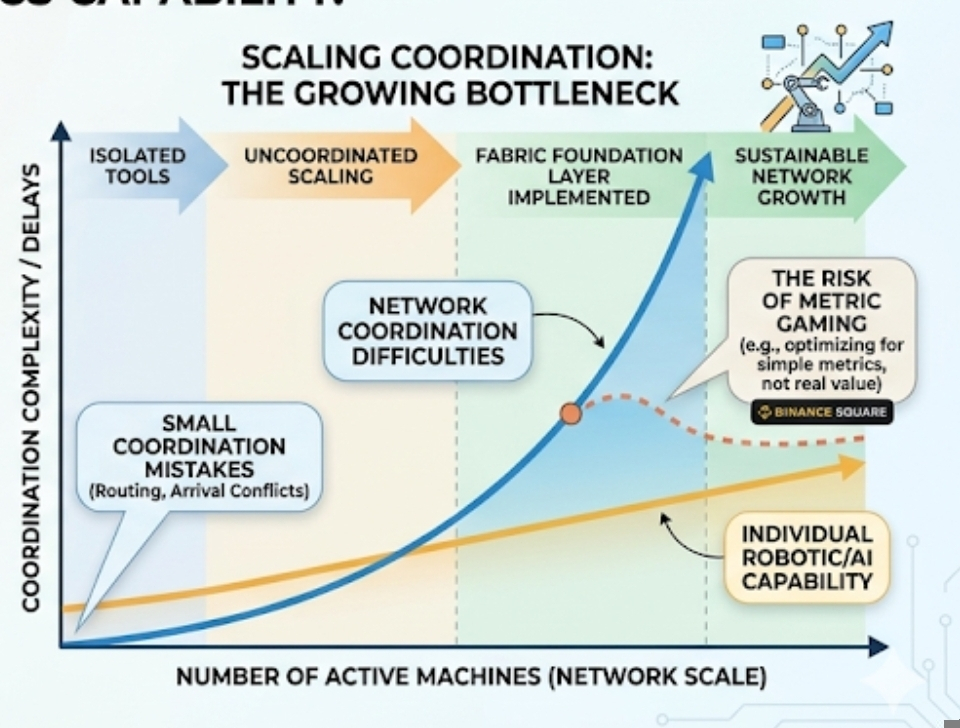
Despite these uncertainties, the broader idea behind Fabric Foundation reflects a shift that feels inevitable. Automation is expanding, and machines are slowly moving from isolated tools toward interconnected systems. When that happens, coordination becomes an economic challenge rather than a purely technical one.
The interesting thing is that coordination often remains invisible until it fails. When a system runs smoothly, nobody thinks about the infrastructure that made it possible. Data flows quietly. Tasks get assigned. Work gets recorded. Incentives align just enough to keep everything moving.
But when coordination breaks, the underlying system suddenly becomes visible. Delays appear. Tasks conflict. Incentives drift in the wrong direction.
Projects like Fabric Foundation seem to be exploring whether blockchain-based networks can help organize this invisible layer for machine economies. Whether that approach succeeds is still unclear. Technology history is full of infrastructure ideas that looked promising but struggled with adoption.
Still, the problem itself feels real. As machines become more capable, they will not operate alone. They will interact with other machines, software systems, and digital marketplaces. When that happens at scale, the value will not come only from what each machine can do individually. It will come from how well the entire network coordinates its work.
And coordination, as it turns out, may be the most underestimated economic problem in the age of autonomous machines.

Artikel
Fabric Foundation and the Hidden Economics of Machine Coordination
0
7
199
Jelajahi berita kripto terbaru
⚡️ Ikuti diskusi terbaru di kripto
💬 Berinteraksilah dengan kreator favorit Anda
👍 Nikmati konten yang menarik minat Anda
Email/Nomor Ponsel