March 13, 2026
For years, the crypto industry has treated privacy like a dirty secret.
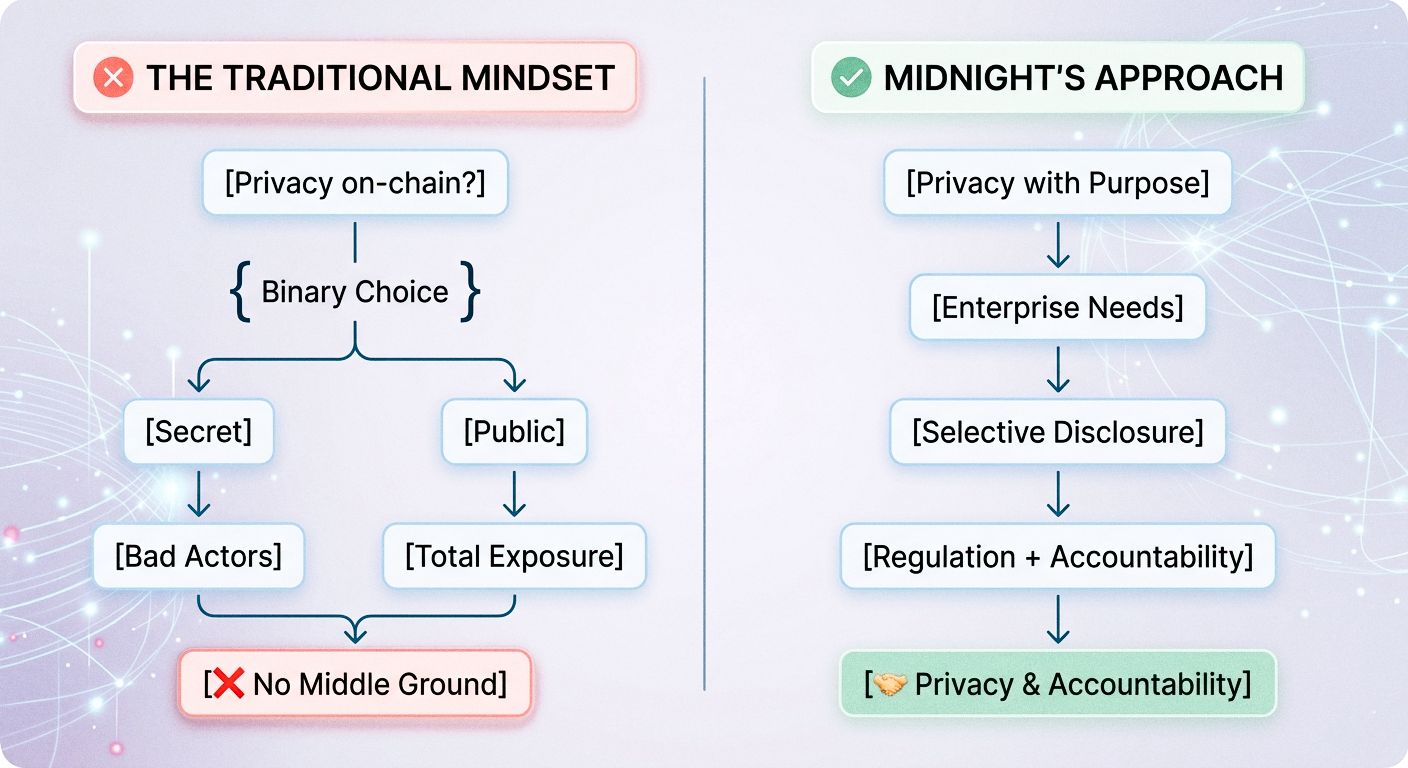
If you wanted to transact anonymously, you were either a criminal or a hardcore cypherpunk. There was no in-between. Midnight, the soon-to-launch partner chain of Cardano, is betting that this binary view is not only wrong but that it has kept the entire industry from growing up.
When the mainnet goes live in the last week of March, we won't just be getting another blockchain. We'll be watching a live experiment in whether big business and big privacy can actually coexist.
The MoneyGram Gambit
You have to look at the list of who is backing this thing to understand why it's different. MoneyGram isn't a crypto company. They move remittances for people in Dallas sending money to Manila and grandmothers in Mexico City. They deal with regulators every single day. If they touch your data, they need to prove they kept it safe.
So why did MoneyGram sign up to run a federated node on a privacy chain? According to sources close to the partnership, the appeal wasn't the ability to hide money. It was the ability to prove compliance without exposing everything.
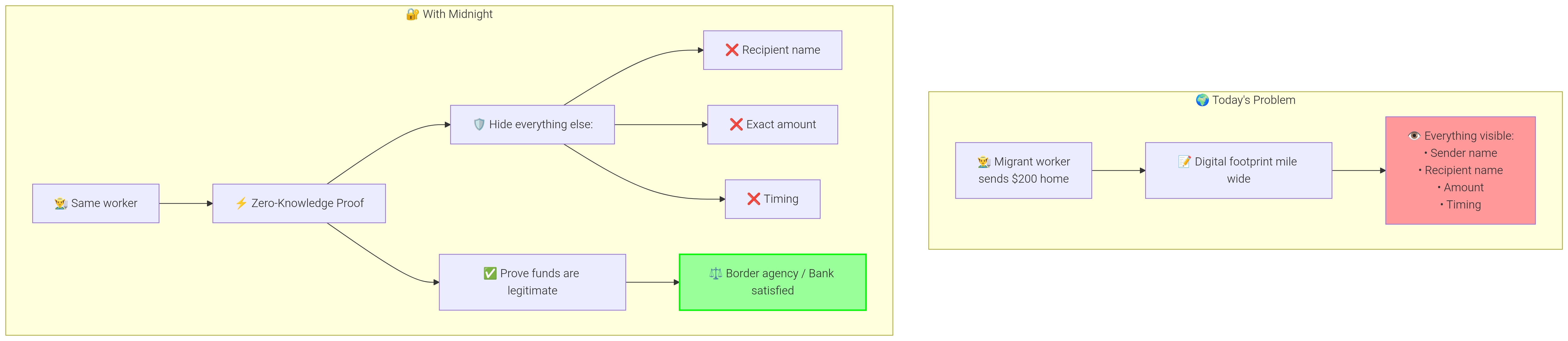
Imagine a migrant worker sending $200 home. Right now, that transaction leaves a digital footprint a mile wide. With Midnight's architecture, the worker could prove to a border agency or a bank that the funds are legitimate perhaps by revealing a specific credential or a zero-knowledge proof while keeping the recipient's name, the amount, and the timing completely hidden from the public ledger.
That is what the team calls "selective disclosure." It is privacy with an escape hatch for the law.
The Vodafone Angle That Changes Everything
Then there is Vodafone, or more specifically, Pairpoint the joint venture they run with Sumitomo Corporation. This is where Midnight stops sounding like crypto and starts sounding like the internet of the future.

Pairpoint is building the "Economy of Things." Think about your car paying for its own tolls. Your refrigerator negotiating electricity prices with the grid while you sleep. These machines need to authenticate themselves and transact without you babysitting them.
Right now, that is a security nightmare. If a smart meter broadcasts its identity publicly, it can be spoofed, hacked, or tracked. Vodafone sees Midnight's zero-knowledge proofs as a way to give these devices a digital mask. They can prove they are who they say they are, pay for what they need, and reveal nothing else about their location or usage patterns. It is subtle, but it is the kind of utility that could bring blockchain to billions of devices most people will never even touch.
What the Binance Listing Really Means
When Binance listed the NIGHT token for spot trading on March 11, the price popped. That was expected. But the mechanism behind it was more interesting.
Binance is airdropping 240 million NIGHT tokens to BNB holders. But the token itself is only half the story. The real fuel of the network is a secondary resource called DUST.
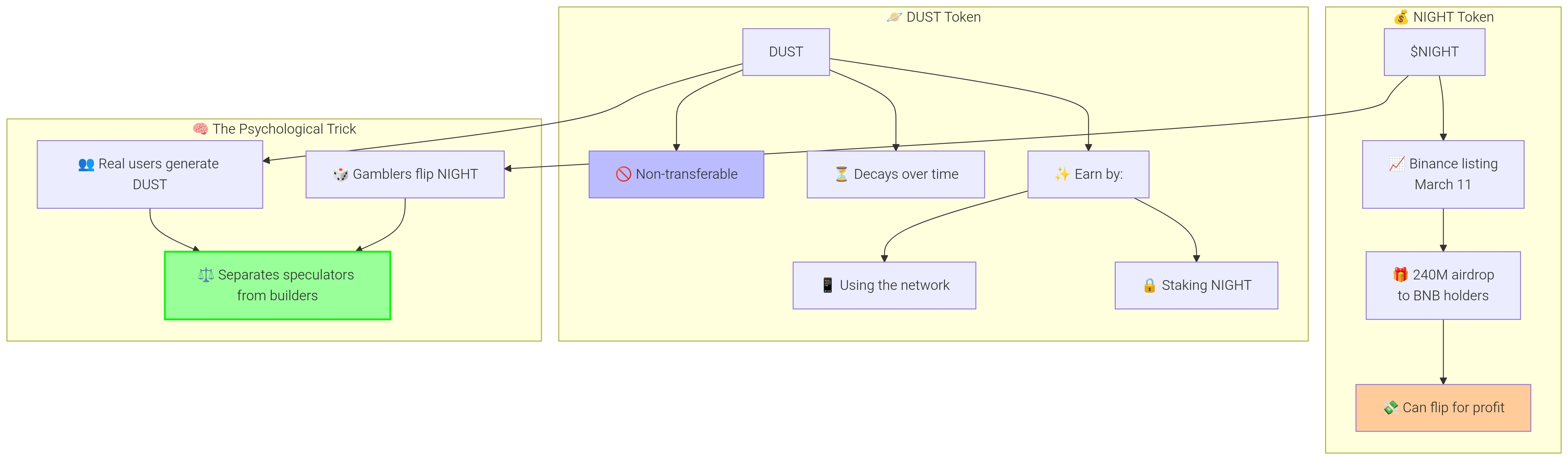
It is non-transferable. It decays over time. You cannot speculate on it; you can only earn it by using the network or by staking NIGHT.
This is a psychological trick as much as a technical one. It separates the gamblers from the users. If you want to flip NIGHT for a quick profit, go ahead. But if you want to actually use Midnight for private DeFi or identity management, you need to hold NIGHT long enough to generate DUST. It creates a friction that encourages retention over speculation.
The Three Acts of Midnight
The roadmap laid out by Input Output Global (IOG) is refreshingly modest. No promises of world domination on day one.
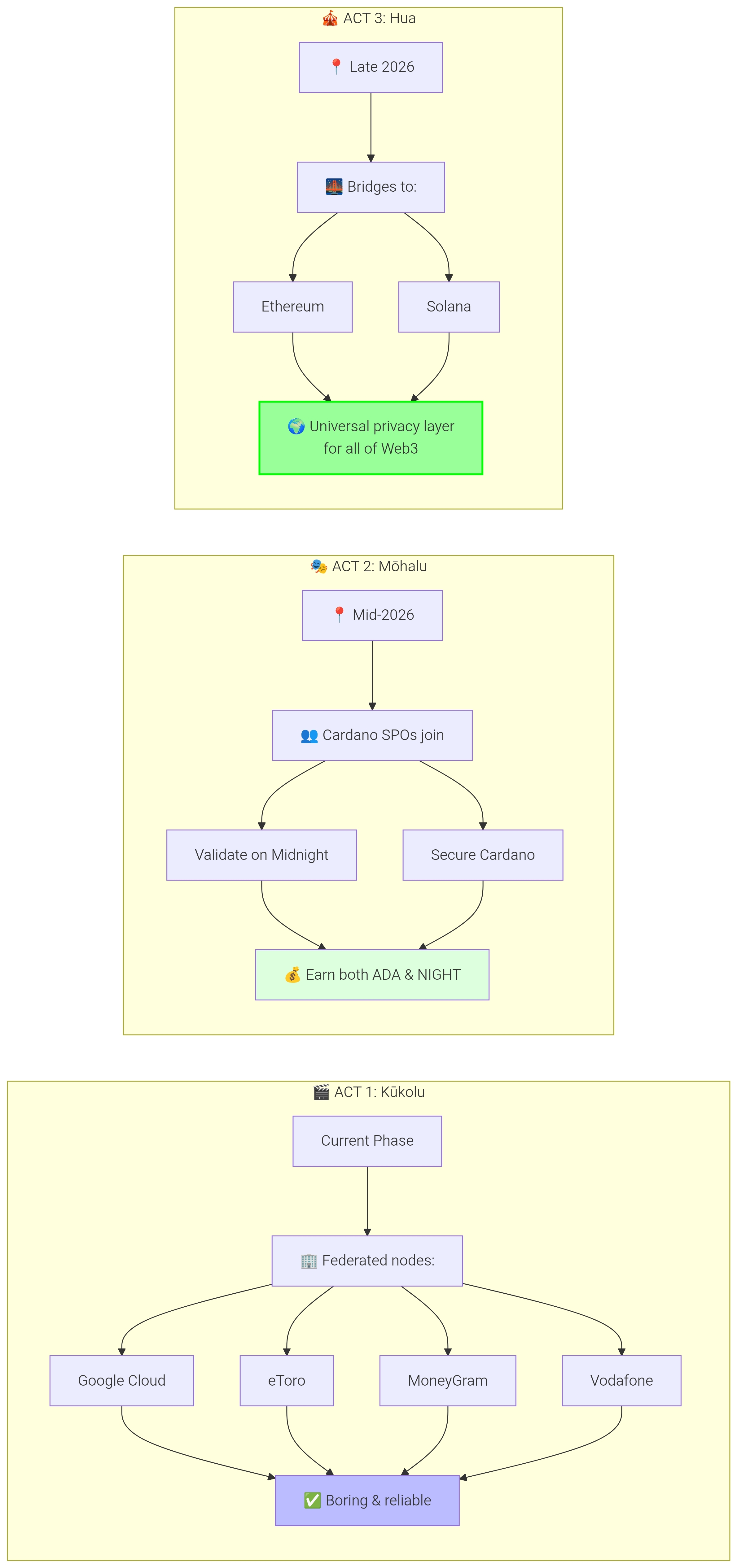
It starts with Kūkolu, the current phase. The federated nodes run by Google Cloud, eToro, MoneyGram, and Vodafone keep the network boring and reliable. No surprises. No 51% attacks from unknown miners.
Then comes Mōhalu around mid-year. This is where Cardano's stake pool operators get invited to the party. They can validate on Midnight while also securing Cardano, earning rewards in both ADA and NIGHT. It turns the two chains into economic siblings rather just distant cousins.
Finally, Hua arrives late in the year, aiming to bridge to Ethereum and Solana. If Midnight succeeds there, it stops being a Cardano thing and becomes a universal privacy layer for all of Web3.
The Honest Question
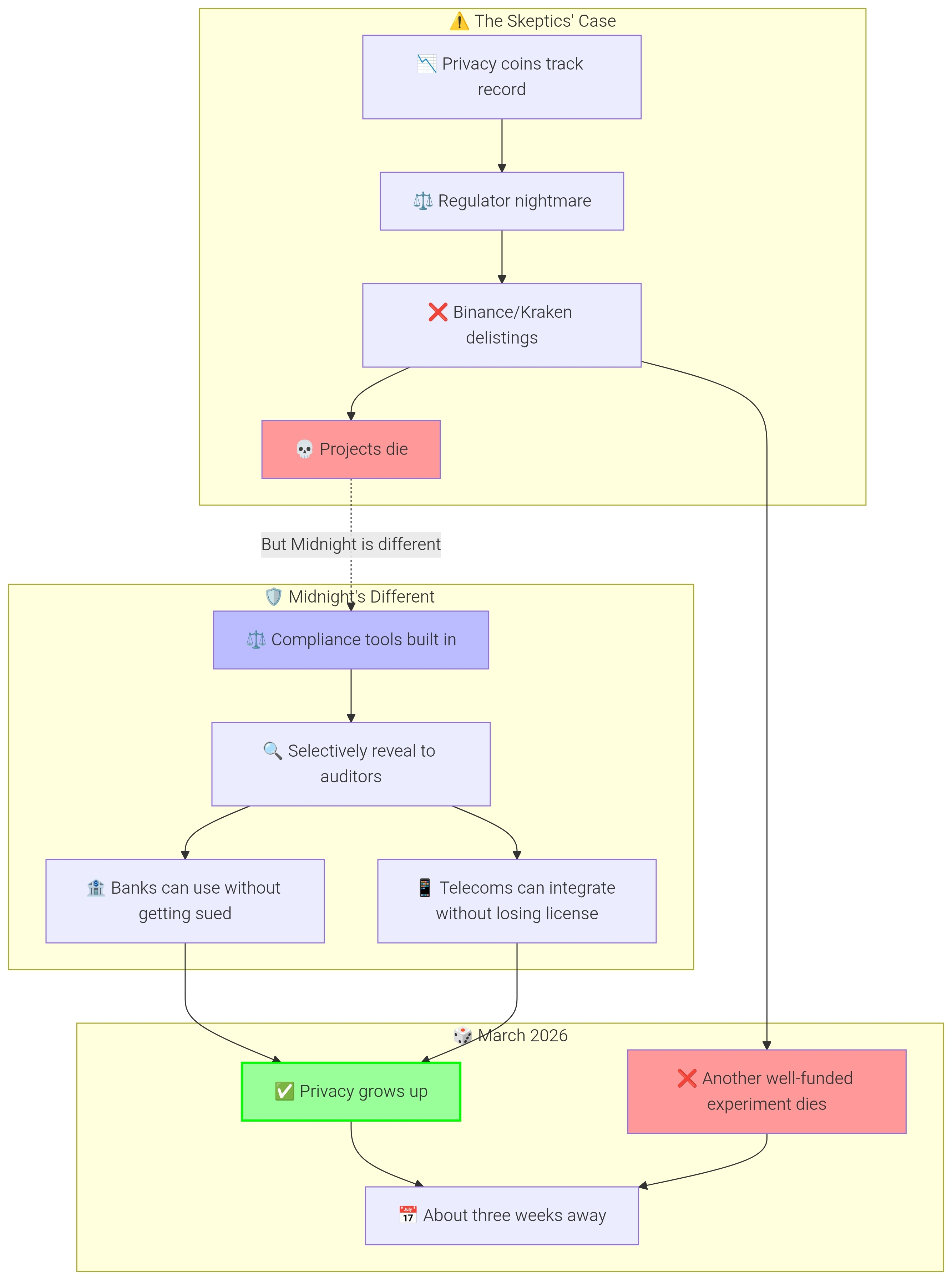
Can it work? The skeptics have a point. Privacy coins have a terrible track record with regulators. Even the threat of a Binance or a Kraken delisting has killed projects before.
But Midnight is playing a different game. By embedding compliance tools like the ability to selectively reveal data to auditors directly into the protocol, they are trying to make privacy boring. They want it to be something a bank can use without getting sued, something a telecom can integrate without losing its license.
If they pull it off, we might look back at March 2026 as the month privacy finally grew up. If they don't, it will just be another well-funded experiment that couldn't escape the shadow of regulation. The answer is about three weeks away.