
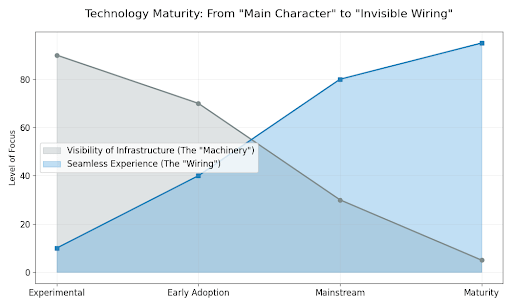
I’m waiting and watching the quiet shifts happening inside the apps people use every day. I’m looking at those tiny moments where something complex disappears behind a single button. I’ve noticed how often the real work happens somewhere out of sight, and I focus on those interactions where the user feels nothing except a smooth response. It makes me think about how the most powerful systems eventually become invisible, quietly doing their job without asking for attention.
When I open a normal app today, everything feels effortless. You tap once, the screen updates, and the task is finished. That smooth rhythm didn’t happen by accident. Years of design decisions pushed complexity into the background so users could stay focused on what they actually wanted to do. The system handles the details quietly while the person simply moves forward.
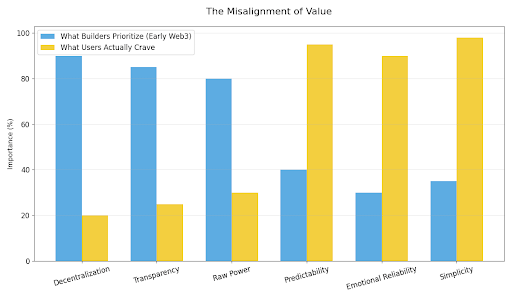
Web3 tools often feel different. The moment someone tries to perform a simple action, extra steps appear. A wallet window opens, a fee must be confirmed, and another screen asks for approval. None of those steps are meaningless, but they break the natural flow people are used to. Instead of finishing a quick task, the user suddenly has to think about networks, balances, and confirmations.
That interruption changes the emotional experience of using an app. Even if the system is technically powerful, the friction creates hesitation. A person begins to wonder whether they are doing something wrong or whether the process might fail. That small feeling of uncertainty can be enough to push someone away from the technology entirely.
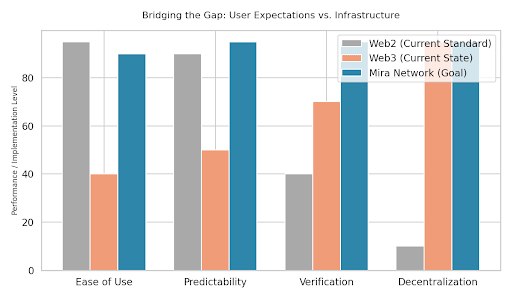
I once watched a simple test that showed how different things can feel when the complexity disappears. A user opened an app that looked like any familiar Web2 interface. They pressed a clean “Confirm” button and immediately saw a small visual response telling them the action succeeded. The entire interaction lasted less than a second.
What the user didn’t see was the activity happening underneath. The system quietly recorded a state change, triggered a verification process, and launched an automated action based on the result. Multiple components worked together in the background, yet the user experienced only one smooth moment. For them, it felt no different than saving a file or sending a message.
That moment stayed with me because it showed how infrastructure can exist without demanding attention. When the layers beneath an application behave predictably, people stop thinking about them. They don’t ask how the system works; they simply trust that it will.
Speed often gets most of the attention in conversations about technology, but reliability seems far more important. A system that responds the same way every time builds quiet confidence. Even if it isn’t the fastest system in the world, predictability creates a sense of calm that users quickly grow comfortable with.
This is where the problem of artificial intelligence becomes interesting. AI can generate answers quickly, but those answers are not always reliable. Sometimes the system hallucinates information or introduces subtle bias. When AI begins influencing real decisions, that uncertainty becomes a serious challenge.
Projects like Mira Network approach this challenge from a different direction. Instead of trusting a single model, they transform AI outputs into claims that can be verified by multiple independent models. Through decentralized consensus, the network determines which information holds up under scrutiny and which pieces fail verification.
If systems like this succeed, the most noticeable result might actually be their invisibility. Applications will look ordinary, buttons will behave normally, and users will simply receive dependable outcomes without thinking about how those results were validated. The real question that lingers in my mind is whether this invisible layer of reliability can mature quickly enough before builders and users lose patience with the complexity that still exists today.