

Not financial advice. Just a degen who reads whitepapers at 3 AM.
The Problem Nobody's Talking About
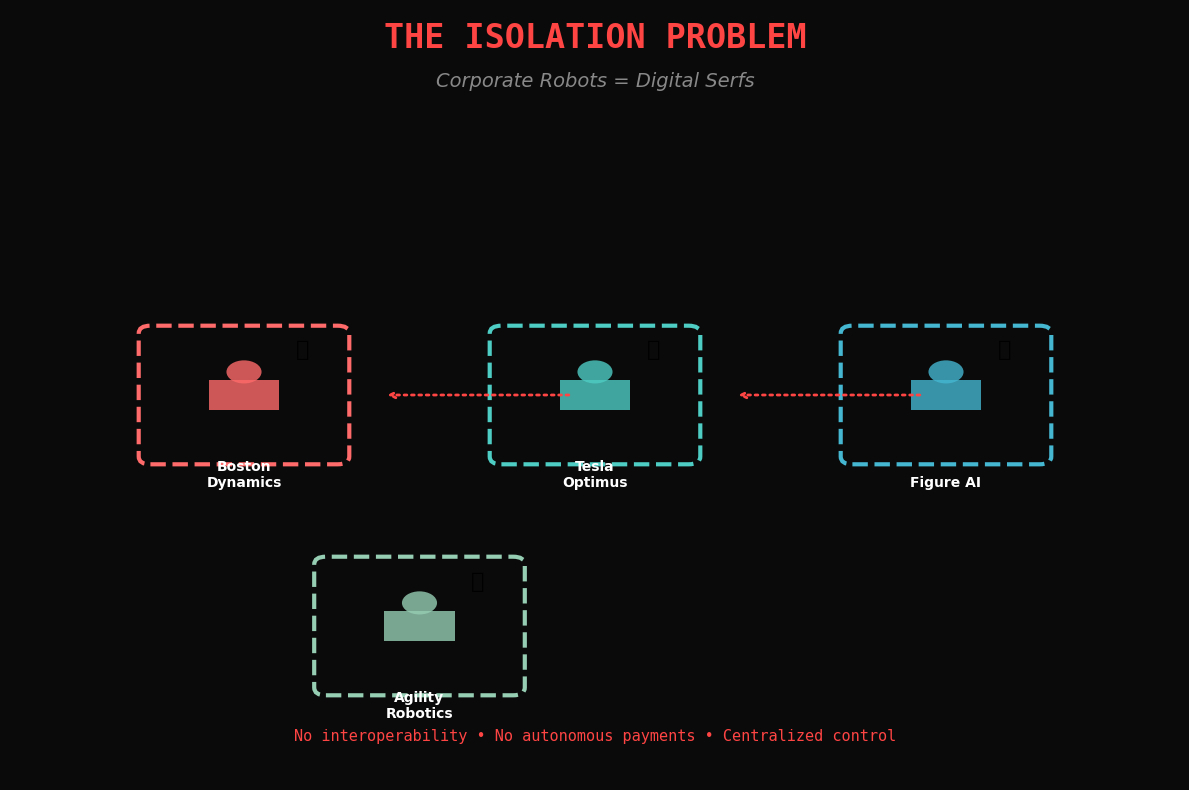
We've all seen the videos. Boston Dynamics robots backflipping. Figure AI making coffee. Tesla Optimus walking around factories. It's impressive until you realize something critical: these robots are digital serfs.
They can't own money. They can't verify their own work. They can't pay for their own charging stations or maintenance. Every "smart" robot today is essentially a dumb terminal controlled by a centralized corporation. If Boston Dynamics goes under, those Spot dogs become 75,000 paperweights. If Tesla decides your region isn't profitable, your Optimus gets bricked.
This is the "Isolation Problem" – robots trapped in corporate walled gardens, unable to communicate, transact, or evolve autonomously .
Enter the Fabric Foundation
I stumbled across Fabric Protocol while researching decentralized AI infrastructure, and honestly? It hit different. This isn't another vaporware AI project promising AGI by next Tuesday. It's a non-profit building the nervous system for the robotics industry .
Think about it: robots need three things to become truly autonomous economic agents:
1. Identity (a passport that can't be revoked by a single company)
2. Payment rails (a bank account that works 24/7 without human approval)
3. Governance (a way to align their actions with human values, not shareholder profits)
@Fabric Foundation coordinates all three through a public ledger, using something they call "verifiable computing" . Basically, every task a robot completes is cryptographically proven on-chain. No more "trust us, the robot did the job." The proof is in the blockchain.
Why ROBO Isn't Just Another Governance Token
Look, I've seen enough "utility tokens" to know that 99% of them are governance theater. You get voting rights on a DAO that votes on... more voting rights. Circular nonsense.
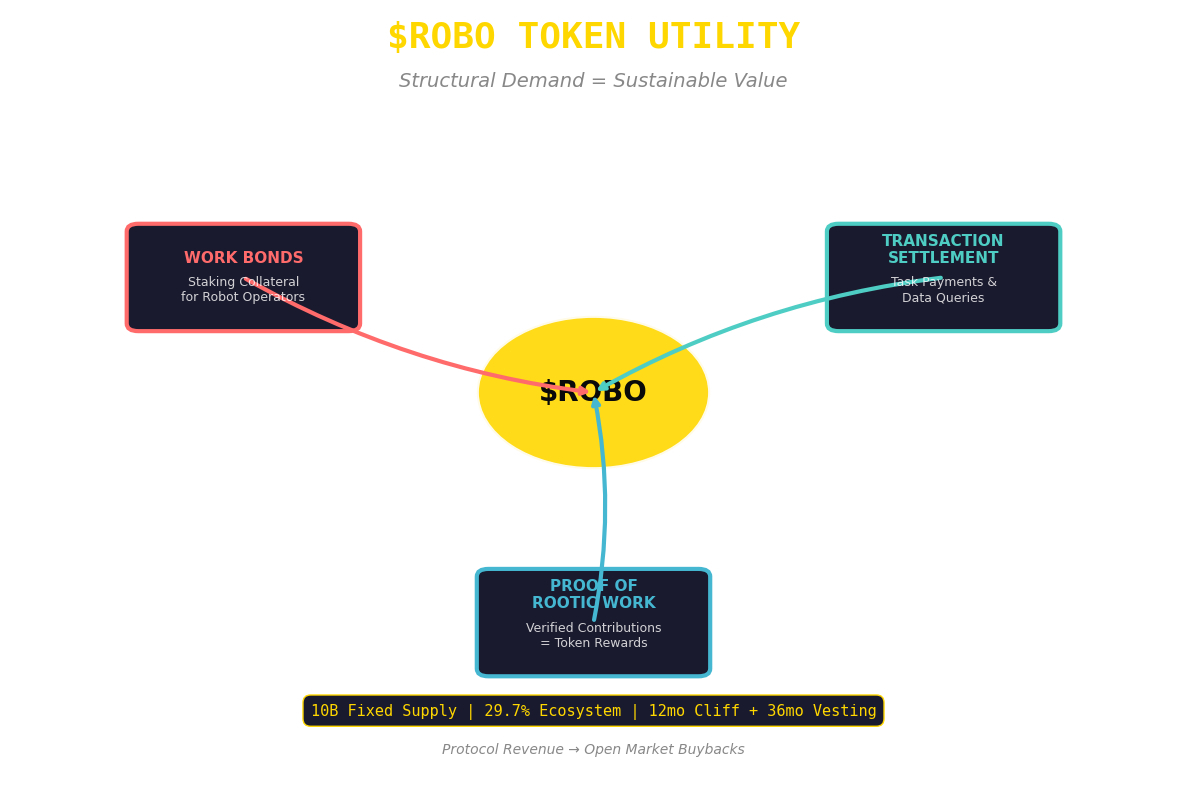
ROBO hits different because of structural demand sinks :
Work Bonds:
Robot operators must stake ROBO as collateral to register hardware. Commit fraud? Get slashed. This isn't optional – it's the cost of doing business in the Fabric economy .
Transaction Settlement:
Every robot task, every data query, every skill download settles in ROBO. The Foundation has committed to using protocol revenue to buy back tokens on the open market .
Proof of Robotic Work:
Unlike proof-of-stake where rich get richer by doing nothing, ROBO rewards only flow to verified contributions task completion, data provision, compute supply . Hold tokens and do nothing? Zero emissions. Actually build something? Get paid.
The tokenomics are actually sane: 10B fixed supply, 29.7% to ecosystem/community (the largest allocation), and insiders face a 12-month cliff with 36-month vesting . No "team tokens unlock tomorrow" rugs here.
The "Android for Robotics" Play
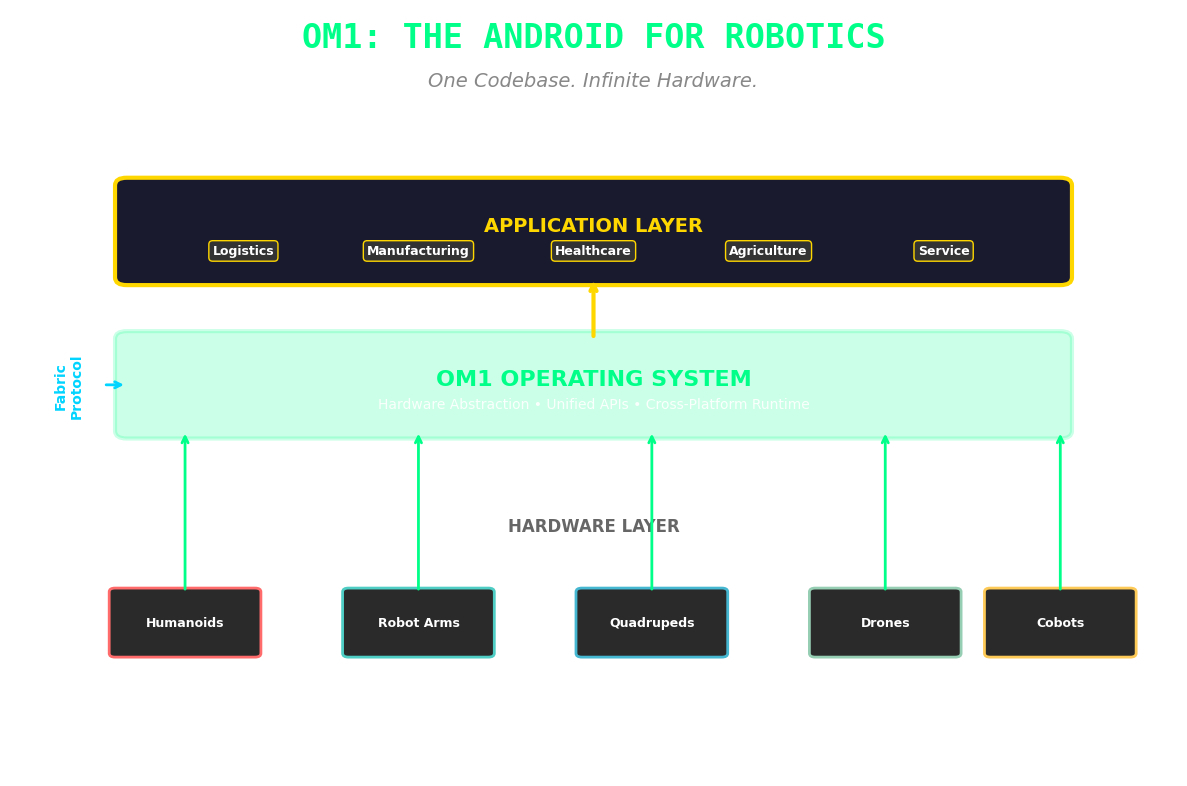
Here's where it gets spicy. Fabric isn't just infrastructure they're building OM1, a hardware-agnostic operating system described as the "Android for Robotics" . One codebase runs on humanoids, robot arms, quadrupeds. Developers build once, deploy everywhere.
This matters because fragmentation is killing robotics. Every manufacturer has their own SDK, their own cloud, their own app store. OM1 + Fabric Protocol = a unified layer where a logistics company can deploy a delivery skill to any compatible robot in any city, paying in ROBO, verified on-chain .
The Migration Thesis
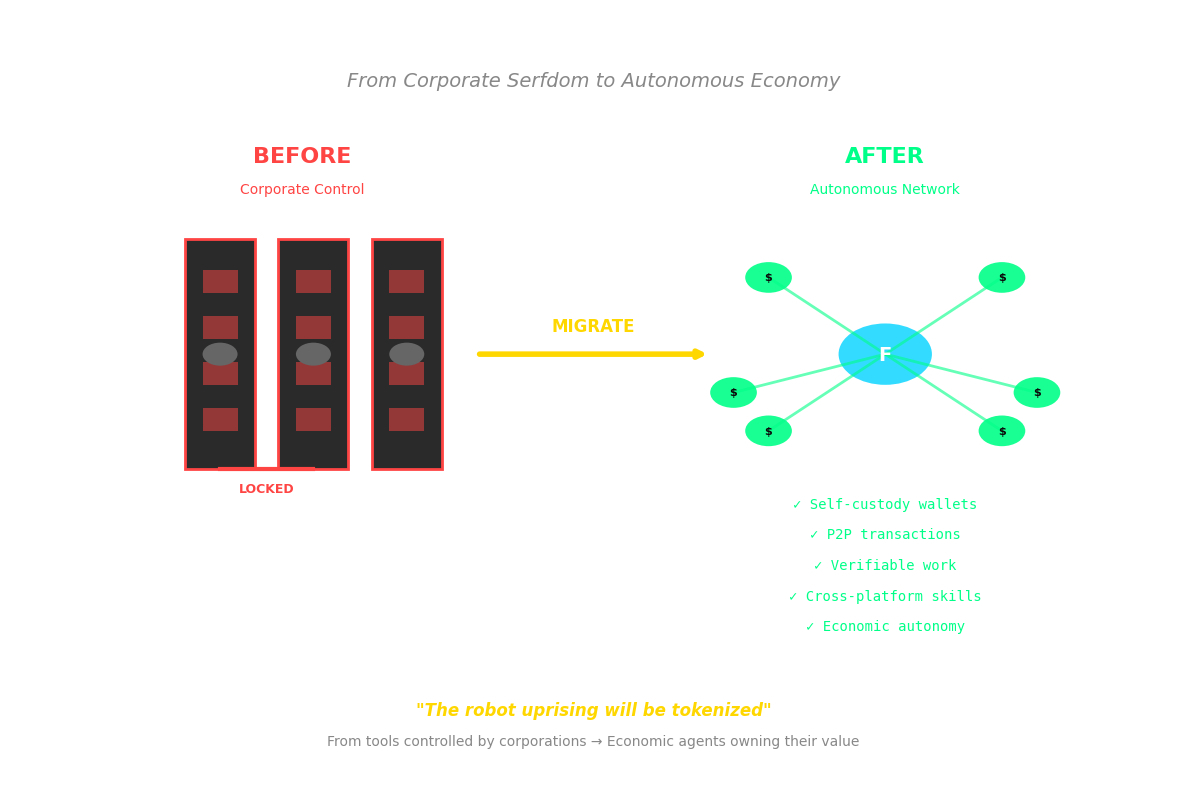
Currently deployed on Base (Ethereum L2), but Fabric has telegraphed their move to a dedicated L1 optimized for high-frequency machine transactions . This is the classic "capture value at the infrastructure layer" play. If robots become autonomous economic agents, they need a chain designed for machine-to-machine microtransactions, not human DeFi swaps.
Why I'm Watching This Closely
The Fabric Foundation isn't a startup chasing exits. It's a non-profit with backing from Pantera, Coinbase Ventures, and DCG . Stanford professor Jan Liphardt is involved through OpenMind (early tech contributors) . This isn't some anon team with a 20-page whitepaper.
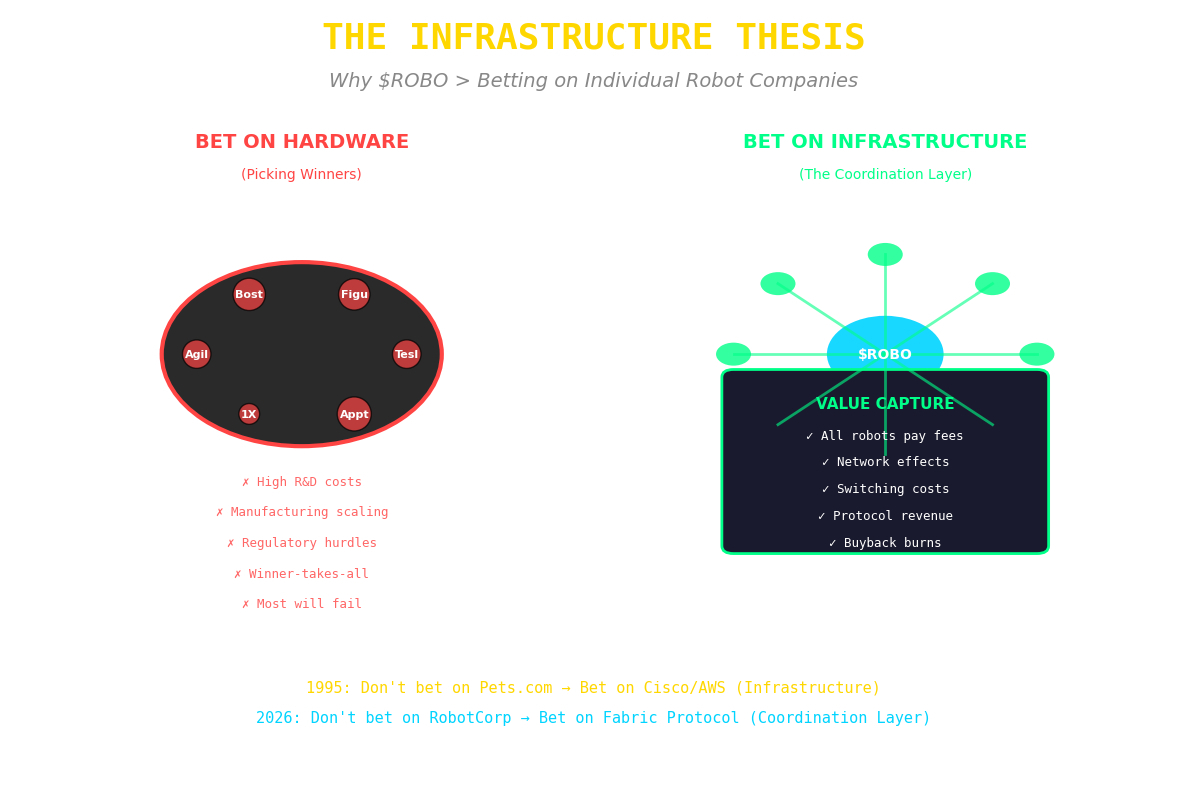
But here's my real conviction: we're moving from "robots as tools" to "robots as economic agents." When that shift happens, you don't want to bet on which robot manufacturer wins (hint: most won't). You want to bet on the coordination layer that all robots use to find work, get paid, and prove they did the job.
That's ROBO.
The Catch?
Adoption is early. Real robot deployments are happening, but we're not at "every warehouse runs on Fabric" yet. This is a bet on infrastructure preceding the boom – like buying AWS stock in 2006 when most companies still owned their own servers.
Also, the Adaptive Emission Engine means inflation isn't fixed. It adjusts based on network utilization and quality scores . Good for sustainability, tricky for price predictability.
Final Thought
In 1995, betting on "the internet" meant buying Cisco routers, not Pets.com. In 2026, betting on the robot economy means buying the coordination layer, not the hardware manufacturers.
$ROBO is that layer. And unlike the robots it coordinates, it actually has a wallet.