@Fabric Foundation is a non-profit crypto project building infrastructure for decentralized robotics and AI systems. Instead of focusing on hype, trading, or meme culture, the project is trying to create a real economic framework where intelligent machines and humans can work together. The goal is to build identity, payments, incentives, and governance directly onchain so robots and AI systems can operate in an open and secure digital economy.
The ecosystem runs on its native token called $ROBO. $ROBO is used to pay network fees, access robot coordination services, and complete protocol transactions. It can also be staked to support network operations and gain access to certain features. Token holders participate in governance, helping decide things like fee structures and future upgrades. The bigger idea is simple: as robots and AI systems interact more with each other and with humans, they will need a digital currency to exchange value, similar to how people use money.
#ROBO officially launched on major exchanges on February 27, 2026. Before the listing, the project distributed tokens through an airdrop and eligibility program for early supporters. Listings on platforms like Binance Alpha, Bybit, and Bitget brought liquidity and market visibility. The team has stated that future efforts will focus on protocol development, ecosystem growth, and expanding exchange support.
The total supply of $ROBO is capped at 10 billion tokens. Around 24.3% is allocated to investors, 20% to the team and advisors, 18% to the foundation, and about 30% to community and ecosystem growth. Vesting schedules are in place to reduce sudden sell pressure and support long-term stability.
Looking ahead, the roadmap includes expanding staking features, improving coordination tools, and growing the developer community. In the longer term, the foundation plans to strengthen governance systems and potentially move toward an independent Layer-1 blockchain built specifically for robot-focused economics.
Overall, @Fabric Foundation 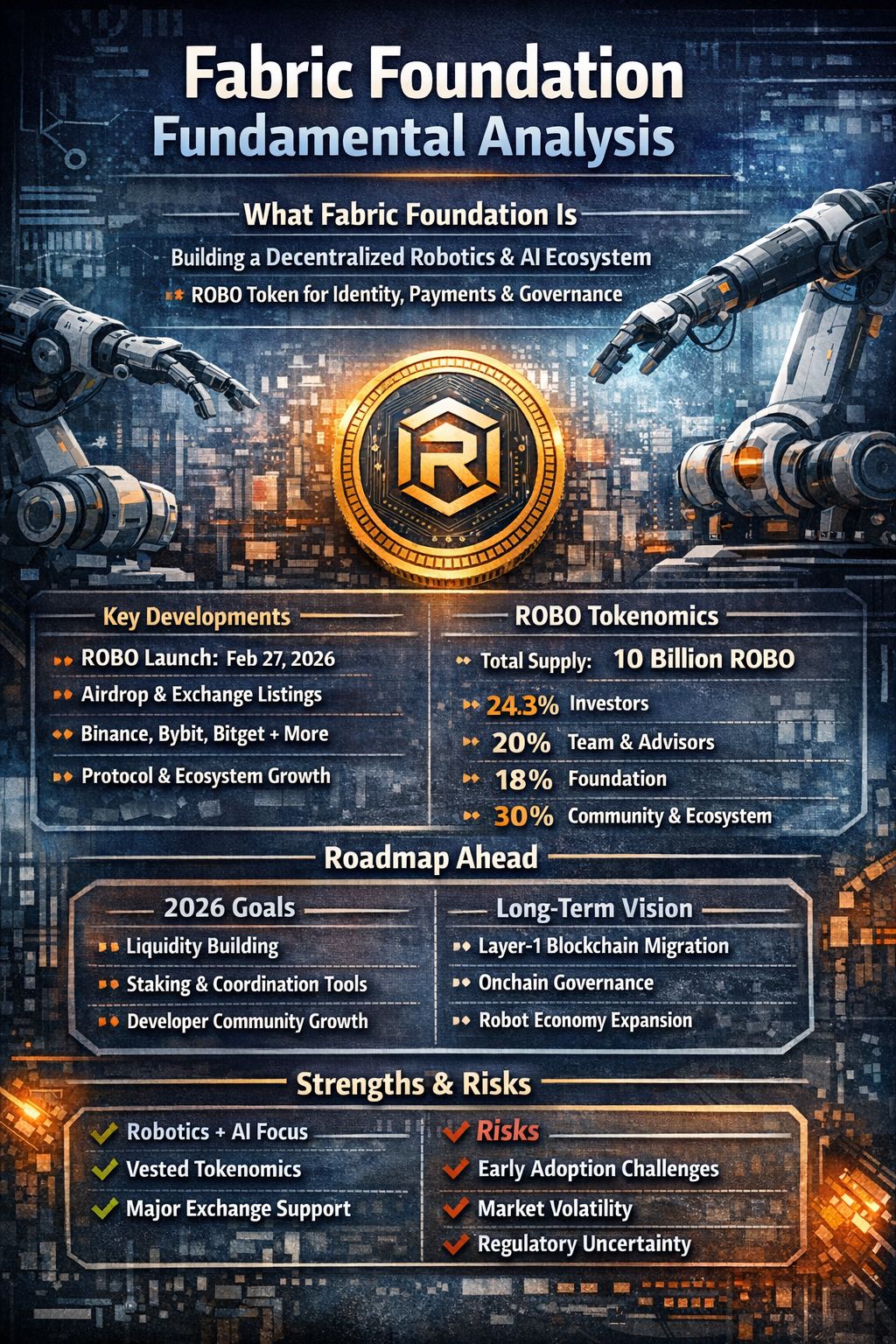 stands out because of its focus on robotics and AI infrastructure. However, adoption is still early, and success will depend on execution, partnerships, and real-world use cases. Like all crypto projects, it also faces market volatility and regulatory uncertainty.