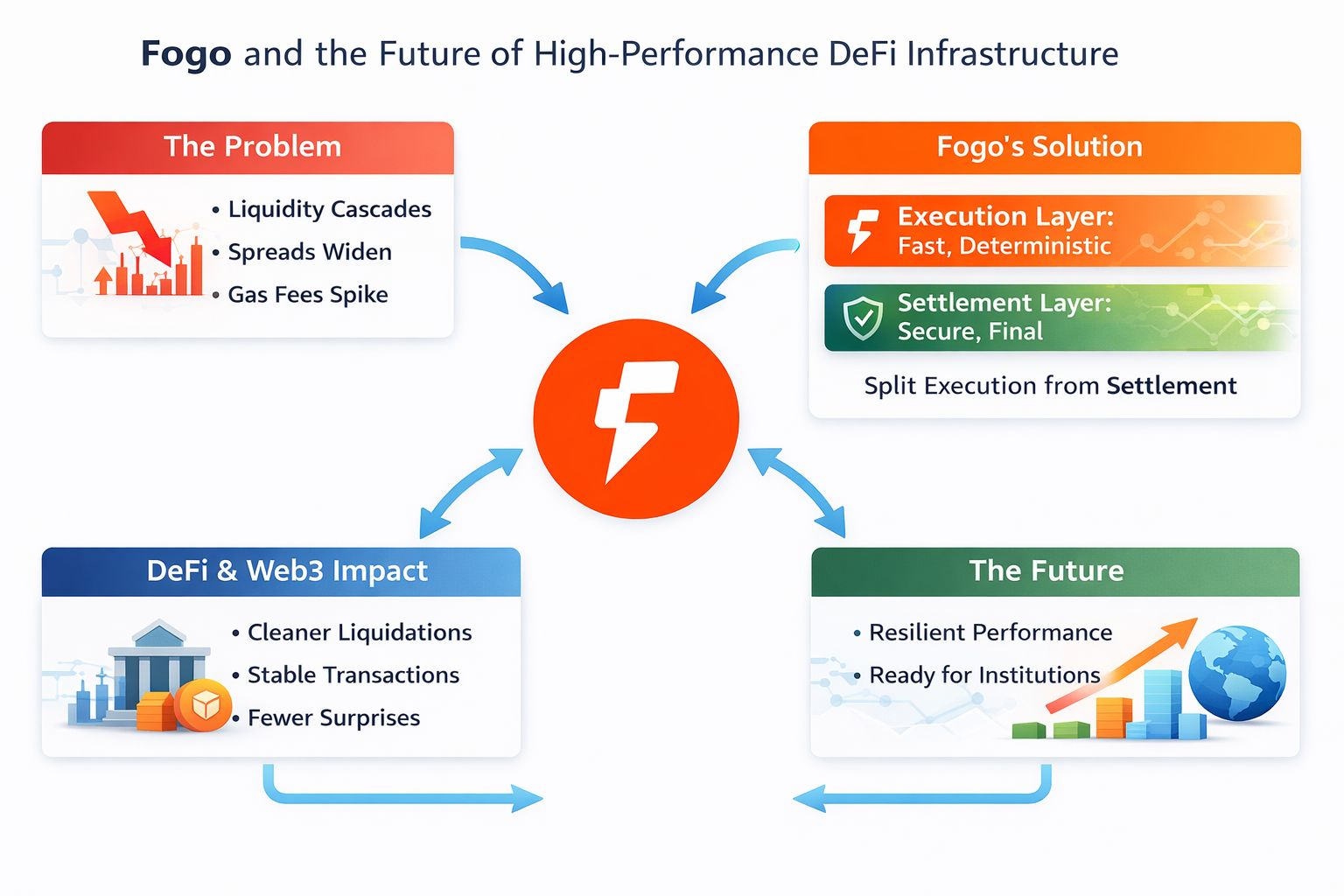
Crypto markets don’t stumble because they’re slow.They stumble because their foundations aren’t tough enough.Most trading platforms centralized or decentralized bundle execution and settlement into one tight process.That seems fine until things get hairy.When markets get volatile,this setup cracks.In leveraged environments,volatility starts to feed on itself.One liquidation sets off another,spreads blow out,and network traffic makes losses even worse.Throughput isn’t the real problem.The real threat is synchronization risk.
This fragility isn’t just an exchange problem it runs through DeFi and Web3 apps,too.When gas fees explode during market swings, users get failed swaps,late liquidations,and random confirmation times.Active traders end up with slippage.DeFi protocols rack up bad debt and oracle updates go out of sync. For anyone hoping to see crypto go mainstream,these are big red flags.If infrastructure goes haywire when markets move fast,institutions and real world assets won’t touch it at scale.
Fogo doesn’t just chase higher TPS numbers. It goes back to basics:split execution from settlement.Execution runs fast and focuses on handling orders deterministically. Settlement steps in after the fact to lock in security and finality.This isn’t a new trick traditional finance splits matching engines from clearing for a reason.The goal here isn’t just speed,it’s speed that holds up when things get rough.
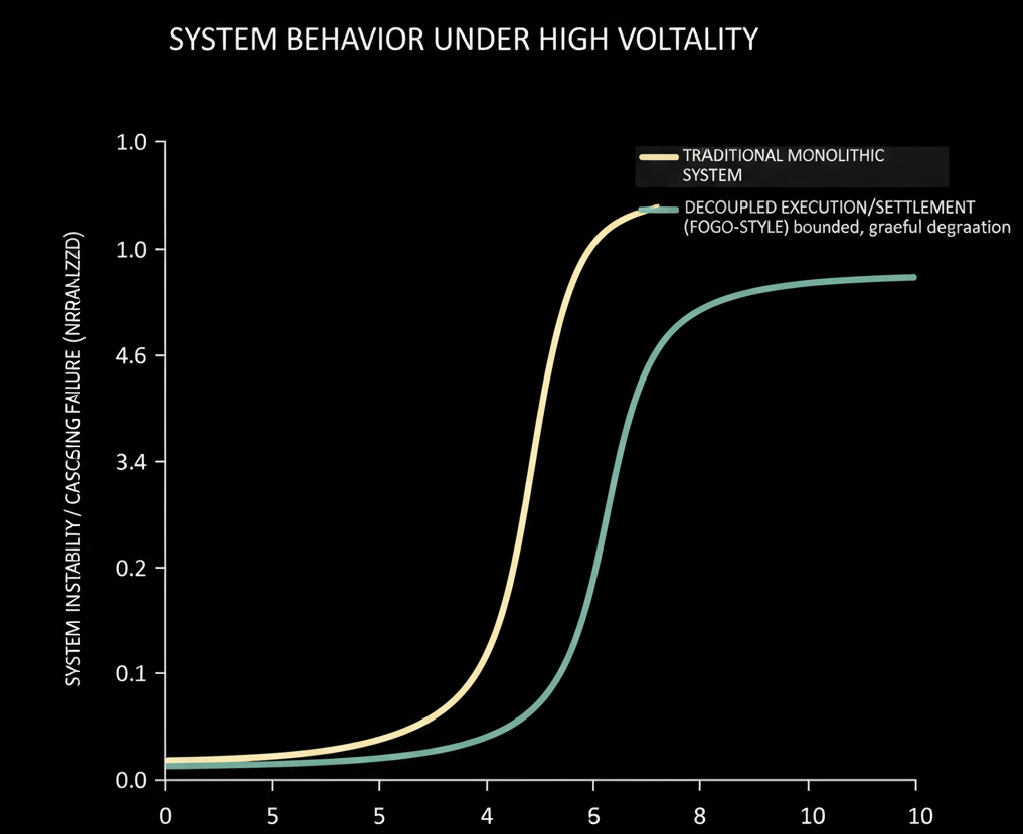
Right now,this approach matters more than ever.Perpetual futures outpace spot volumes, making markets hypersensitive to latency. There’s a wider industry move toward modular blockchains and specialized layers systems that break up core functions tend to handle scale better.Fogo’s model aims to keep the execution layer smooth even when volatility spikes,absorbing shocks instead of multiplying them.
For DeFi,deterministic execution means cleaner liquidations and less of that reflexive chaos.Stable execution lets bots,oracles,and leveraged traders operate with fewer surprises.That steadiness cuts down on hidden risks.For Web3 especially anything real time or tied to tokenized assets consistent performance isn’t just nice to have,it’s necessary for trust.
Of course,no system wipes out risk completely.Liquidity is still king without it, performance doesn’t matter.Syncing execution and settlement has to be exact or things break.Incentives need to attract long term liquidity,not just short bursts of speculative volume.And established exchanges aren’t going anywhere they’re still tough competitors.
The bigger picture?Infrastructure quality is quickly becoming the main battleground in crypto.Traders know their choice of venue is part of risk management.Builders need reliability for advanced products.Institutions want systems that stay solid under pressure.
The main point and it’s easy to forget is that edge in these markets isn’t just about calling the right trade.It’s about cutting out hidden friction.Platforms that smooth out latency, keep synchronization tight,and settle trades without hiccups save users from hidden costs and systemic stress.
If crypto’s going to become a serious financial backbone,it needs resilience,not just speed.The next wave of DeFi won’t be defined by who’s fastest,but by who can stay reliable and secure when it matters most.