When I first heard about Fogo, my immediate reaction was simple:
Another Solana-based Layer 1.
That wasn’t meant as criticism. It was just pattern recognition. We’ve seen execution models get reused before. We’ve seen ecosystems fork, expand, and experiment with variations of proven architectures.
But the crypto space doesn’t suffer from a lack of chains. It suffers from a lack of differentiation.
So the question isn’t whether Fogo uses Solana tech.
The question is whether that choice actually changes anything.
On the surface, building on the Solana Virtual Machine sounds like borrowing a fast engine. Parallel execution. High throughput potential. Low latency. Those are real strengths, and Solana proved that the architecture can scale under serious demand.
But copying an engine doesn’t automatically create a different vehicle.
What made me look closer at Fogo wasn’t that it uses the SVM. It was how it frames that decision.
Most chains that lean on existing technology emphasize compatibility. They try to reassure developers: you already know this tooling, you already understand this environment, migration will be easy.
Fogo feels less focused on familiarity and more focused on execution philosophy.
That’s a subtle distinction.
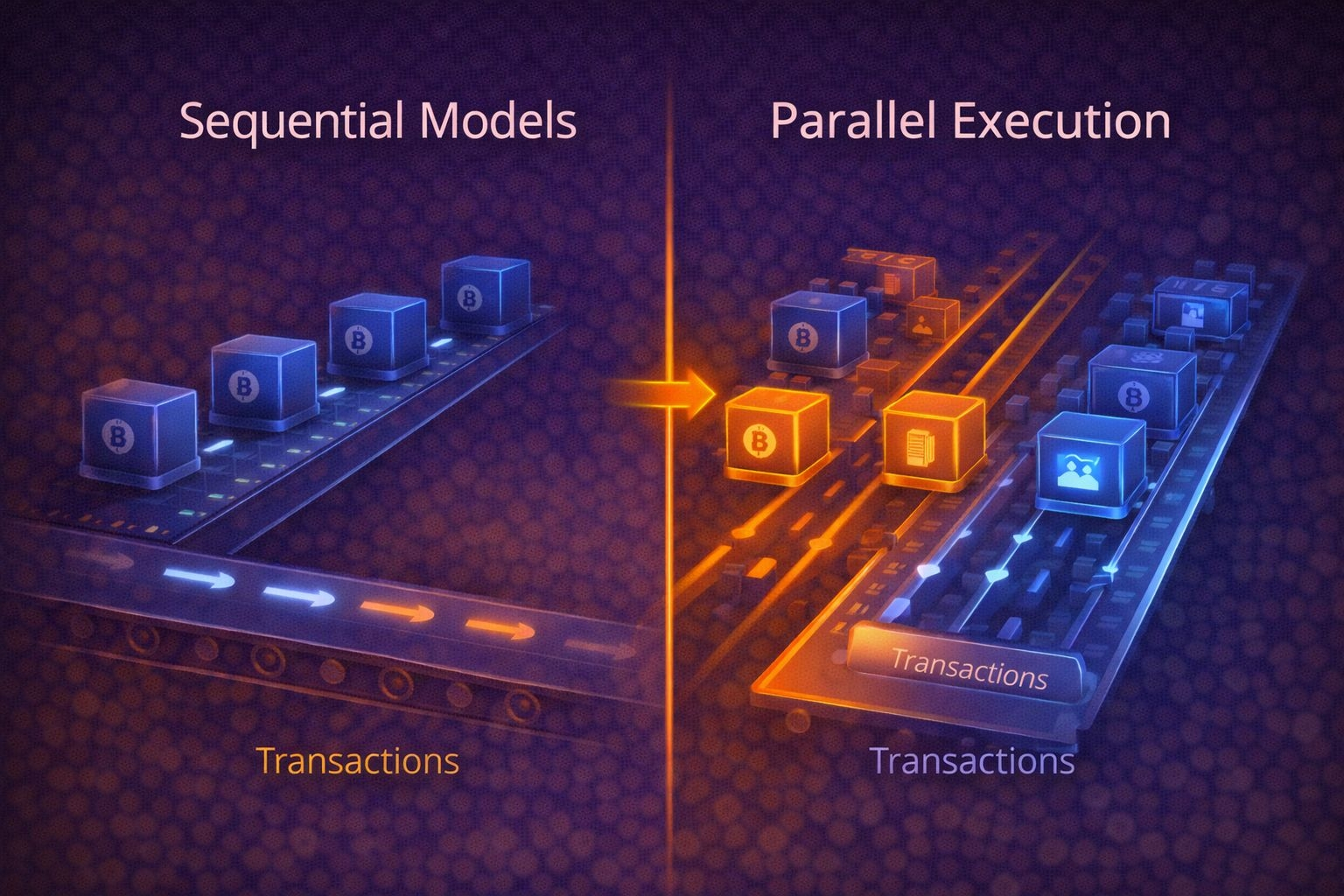
Parallel execution isn’t just about speed. It changes how applications are designed. When non-conflicting transactions can process simultaneously, you unlock patterns that sequential models struggle with especially in environments that depend on responsiveness.
Think about on-chain order books. Real-time financial infrastructure. High-frequency interactions. In those contexts, milliseconds matter. Not just for performance metrics, but for user confidence.
If latency fluctuates or transactions queue unpredictably, behavior changes. Liquidity shifts. Systems feel fragile.
So if Fogo is serious about being more than “another Solana-based L1,” it has to show that it’s building around that responsiveness intentionally not just inheriting it.
There’s also an operational layer to consider.
Solana’s journey demonstrated both the power and the pressure of high-performance design. When throughput scales, hardware expectations scale. Validator coordination becomes more demanding. Network stability becomes a constant balancing act.
Fogo has the advantage of building with hindsight.
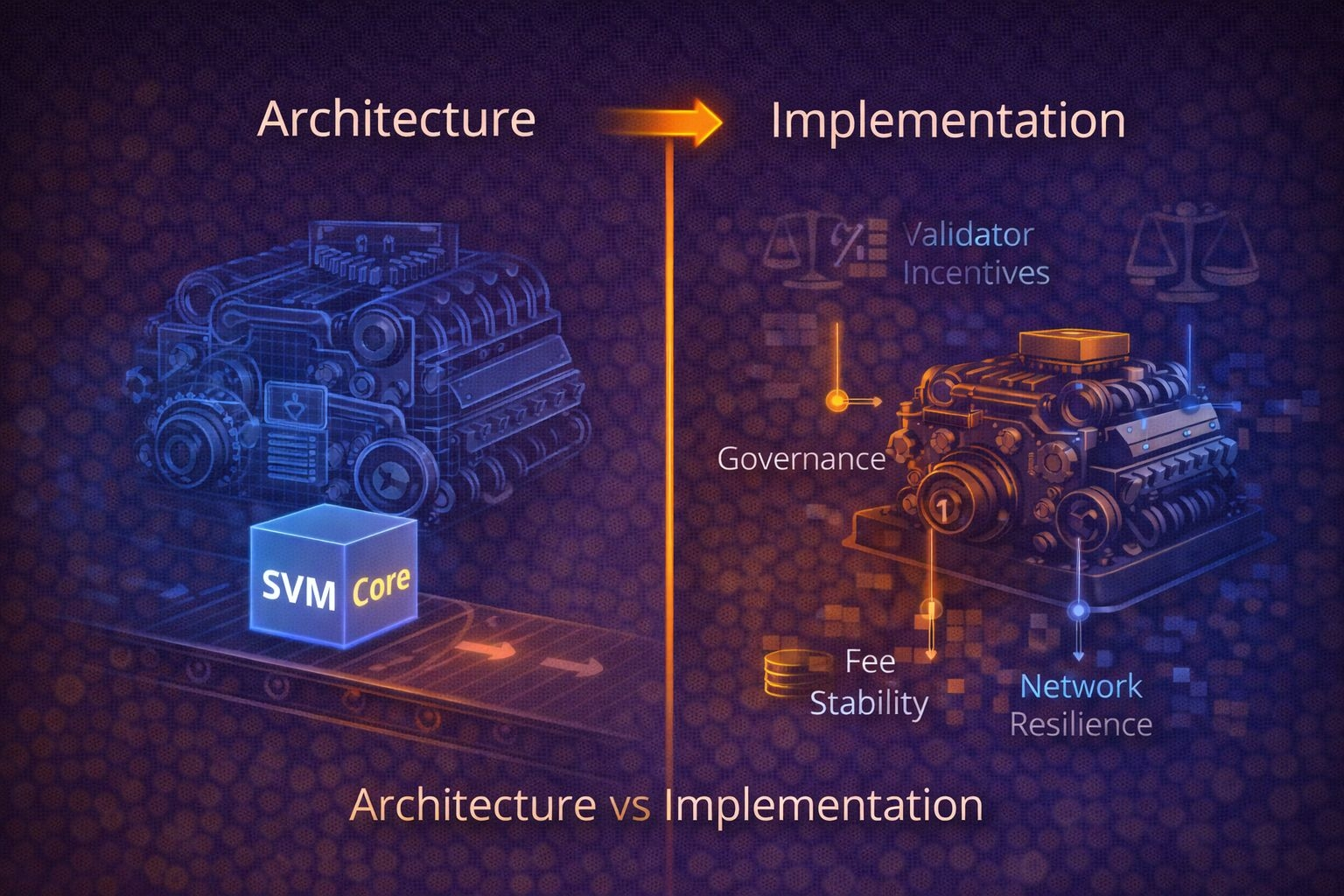
It doesn’t need to prove that the Solana Virtual Machine works. That debate already happened. Instead, it can focus on refining validator incentives, governance design, and performance consistency from the start.
That’s where it might become more than a derivative project.
Architecture is one piece. Implementation is another.
Another factor is ecosystem intent.
EVM-based chains often compete for breadth. They want as many developers as possible, as many applications as possible, as much composability as possible. That approach creates large ecosystems, but it also leads to repetition.
SVM-based environments attract a different builder profile teams that care about optimization, concurrency, and system-level efficiency. That can lead to a more performance-conscious ecosystem from day one.
If Fogo cultivates that culture deliberately, it won’t just be “Solana tech somewhere else.” It will be an environment optimized for builders who specifically want that execution model.
Of course, that’s not automatically an advantage.
It narrows the funnel. It demands stronger tooling and clearer documentation. It requires real-world proof that performance remains stable when demand rises.
And that’s the real test.
High-performance narratives look good during quiet periods. The true measure of differentiation is how a network behaves during volatility. When activity spikes. When markets move quickly. When applications are pushed to their limits.
If Fogo can demonstrate consistent latency, stable fee dynamics, and validator resilience under those conditions, then the “another Solana-based L1” label becomes incomplete.
Because at that point, it’s not about the origin of the technology. It’s about the quality of the environment built around it.
There’s also something worth acknowledging: architectural diversity matters.
Crypto doesn’t benefit from every chain following the same execution logic. Sequential models serve certain use cases well. Parallel models serve others. The more execution philosophies coexist, the more options developers have.
Fogo contributes to that diversity.
Whether it meaningfully advances it depends on discipline, not declarations.
Right now, I see Fogo as an intentional iteration, not a random expansion. It’s not trying to replace Solana. It’s not trying to compete on branding. It appears to be focusing on shaping a controlled, performance-oriented environment around an execution model that already proved viable.
That’s a different kind of ambition.
I’m not convinced yet that it will redefine high-performance Layer 1 design. That kind of credibility is earned over time, through stress tests and sustained usage.
But I don’t dismiss it as “just another Solana-based L1” anymore.
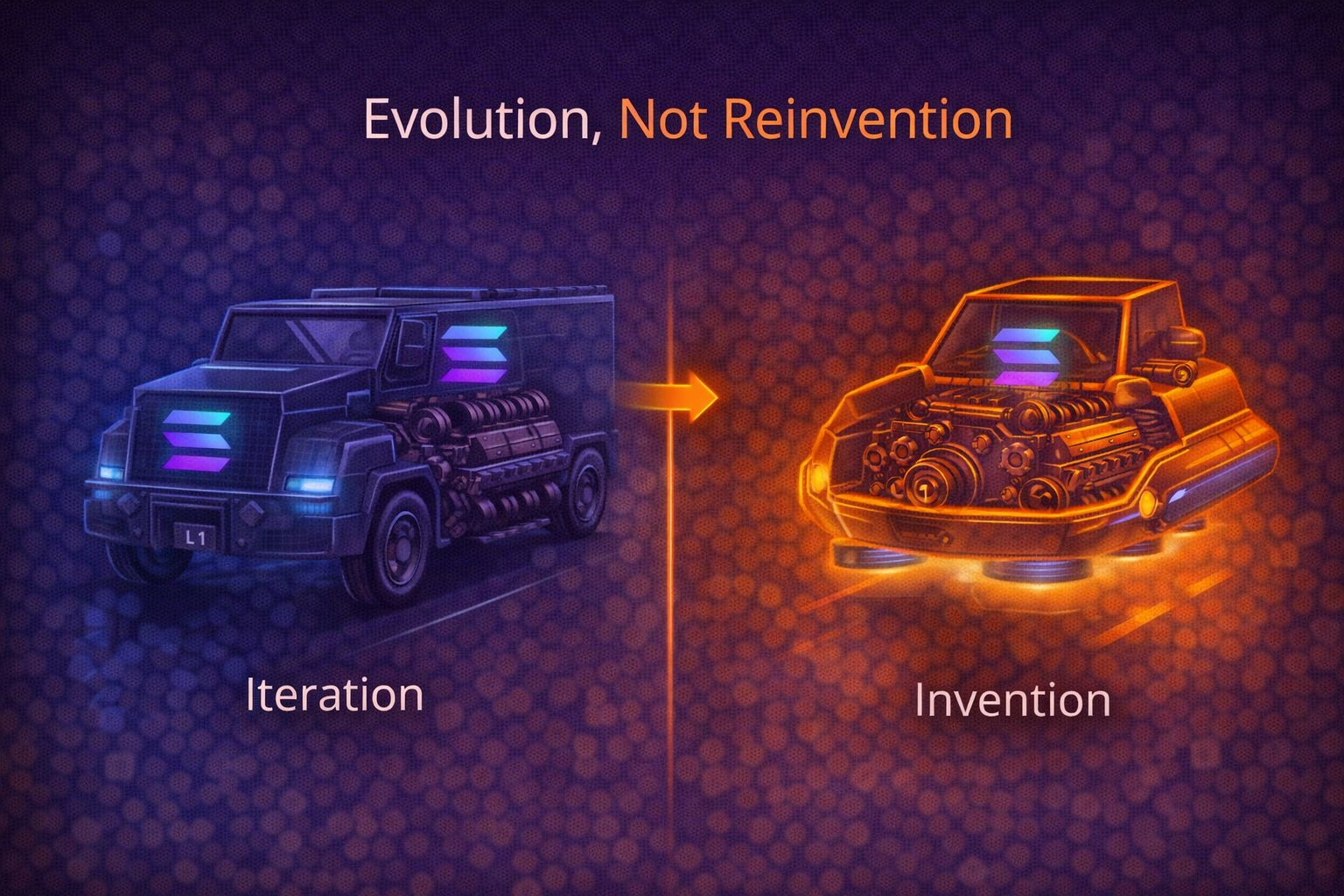
Because sometimes evolution isn’t about inventing a new engine.
It’s about building a better system around one that already works.