
Fogo is a high performance Layer 1 built on the Solana Virtual Machine and the easiest way to understand it is to start with how the system actually works beneath the surface. The network is designed to process many transactions at the same time rather than forcing them into a slow queue. Validators confirm activity quickly and blocks are produced at a steady pace so users feel immediate feedback when they interact with applications. Instead of waiting and wondering if a transaction will go through the system is structured to make everything feel responsive and predictable. That foundation matters because trust in infrastructure begins with consistency. When something works the same way every time people stop worrying and start using it naturally.
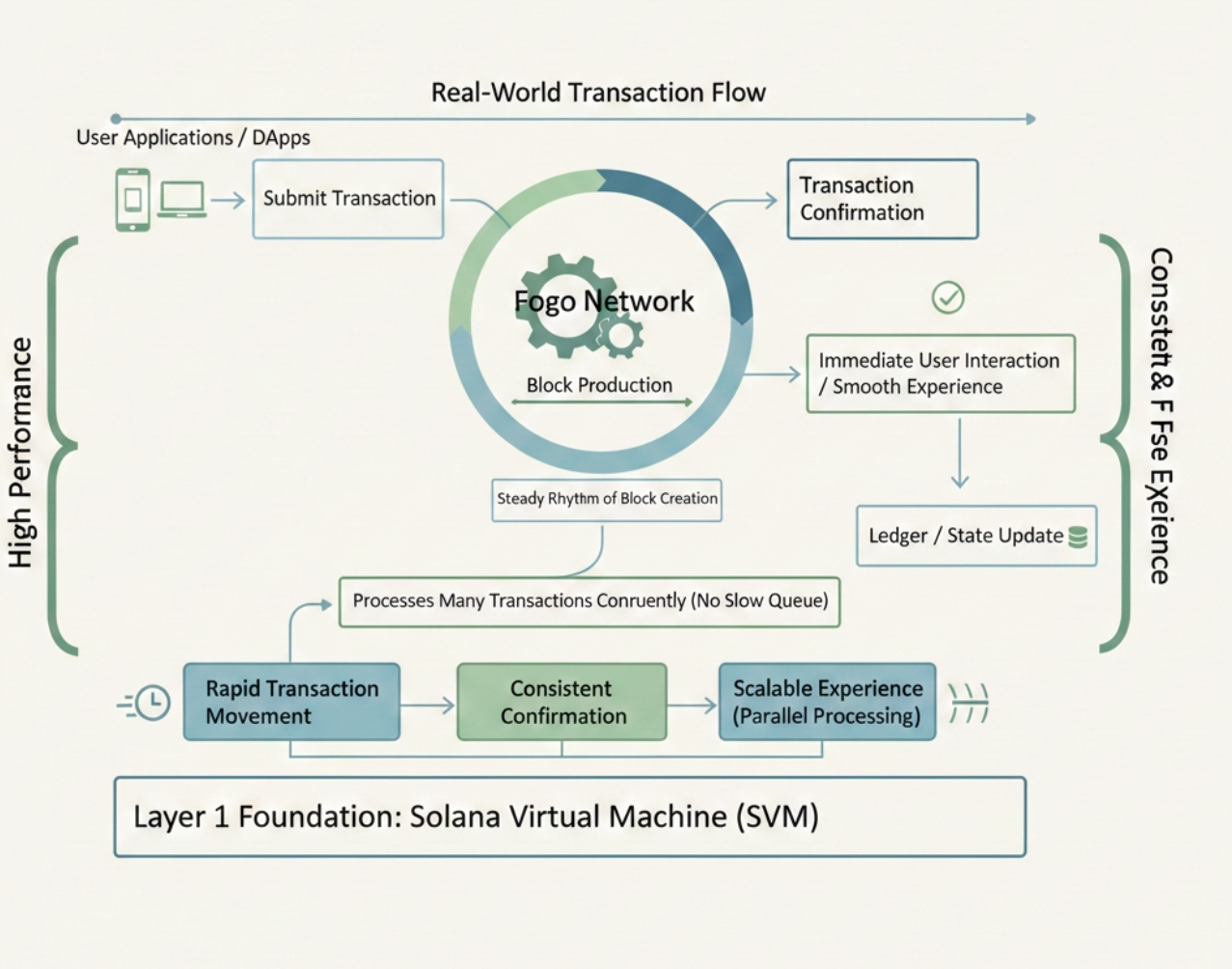
In the real world this kind of performance changes behavior. Traders want execution without delay. Developers want applications that do not freeze when activity spikes. Everyday users want to move value and interact with digital systems without feeling friction. Fogo is being shaped around those expectations. If it becomes reliable enough people will stop thinking about the technology and start focusing on what they can build or do with it. That shift from curiosity to habit is where real adoption begins. We are seeing more users expect blockchain systems to behave like the digital tools they already trust. They want speed clarity and stability and they want it consistently.
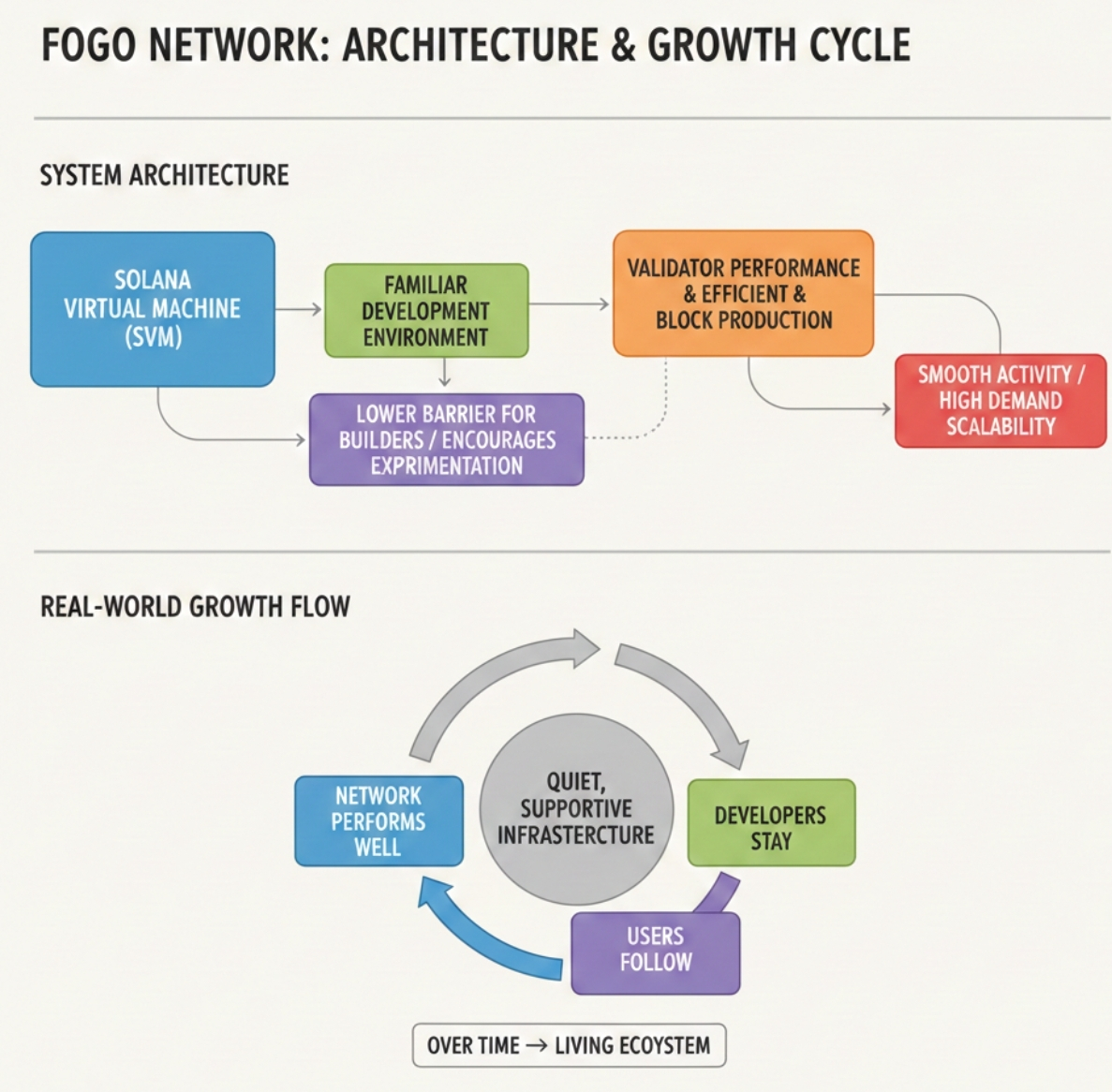
The architectural choices behind Fogo show a focus on practicality. By using the Solana Virtual Machine the network gives developers a familiar environment where they can deploy applications without starting from zero. This lowers the barrier for builders and encourages experimentation. At the same time the system emphasizes validator performance and efficient block production so activity can continue smoothly even when demand increases. It feels like a design built around the idea that infrastructure should support growth quietly rather than demand constant attention. If the network performs well developers stay. If developers stay users follow. Over time that cycle creates a living ecosystem.
At the center of the ecosystem sits the FOGO token which plays a role in keeping the network aligned and functioning. The token is used for transaction fees and network incentives and helps coordinate validators and participants who keep the system running. It also becomes a way for users and builders to share in the growth of the network as activity expands. If adoption increases and more applications run on the chain the importance of the token grows naturally because it supports the internal economy that powers everything behind the scenes. Rather than dominating the user experience the token acts like fuel for the engine. It helps maintain security reward participation and keep the system balanced as it evolves.
When thinking about progress for a project like this the most meaningful signals come from behavior rather than announcements. Are developers building consistently. Are users returning daily. Are transactions moving smoothly without interruption. These are the signs that show whether the system is doing its job. If performance remains stable during busy periods confidence builds slowly but steadily. Over time reliability turns into habit and habit turns into long term use. That is when infrastructure stops being experimental and starts becoming essential.
There are also risks that need to be understood early. High performance systems must prove they can remain stable when activity increases. If the network struggles under heavy load trust can fade quickly. There is also the ongoing balance between speed and decentralization. If the system leans too far in one direction it may face questions about resilience. Recognizing these challenges early allows the community to strengthen governance and expand participation over time. Every network grows through cycles of testing and improvement and the ability to adapt is what determines long term strength.
Looking ahead the future of Fogo does not feel fixed. It feels like something that will grow with its users. As more applications appear and more people interact with the network the ecosystem can evolve naturally. If it becomes reliable enough developers will continue building and if developers continue building users will have more reasons to stay. Over time the network can become a place where activity flows without friction and where speed feels normal rather than impressive.
If someone looks for exposure to the token connected with the ecosystem they may notice its presence on platforms such as Binance which provides visibility and liquidity. That visibility can bring attention quickly but long term value will come from consistent performance and real usage rather than short term excitement. The systems that endure are the ones that continue working regardless of market cycles.
When stepping back and looking at the entire story what stands out most is a sense of quiet determination. Fogo is trying to build infrastructure that feels fast stable and dependable. It is not trying to rely on noise or short bursts of attention. It is trying to create an environment where developers can build confidently and users can interact without hesitation. If that vision continues to develop the network may grow into something people trust without thinking too much about it. And when infrastructure reaches that point it becomes part of everyday digital life rather than something separate from it.
