
Vanar has always struck me as a project that prefers to stay out of the spotlight. When you look at VANAR Chain closely, the focus is not on flashy launches or dramatic claims. It is on the less visible layer of crypto: how people actually use it.
Most blockchain conversations revolve around speed, fees, and ecosystem growth. VANAR Chain seems more concerned with how normal users experience those features. If the wallet feels complicated, adoption slows. If onboarding requires technical knowledge, growth stalls. Infrastructure only works when people barely notice it.
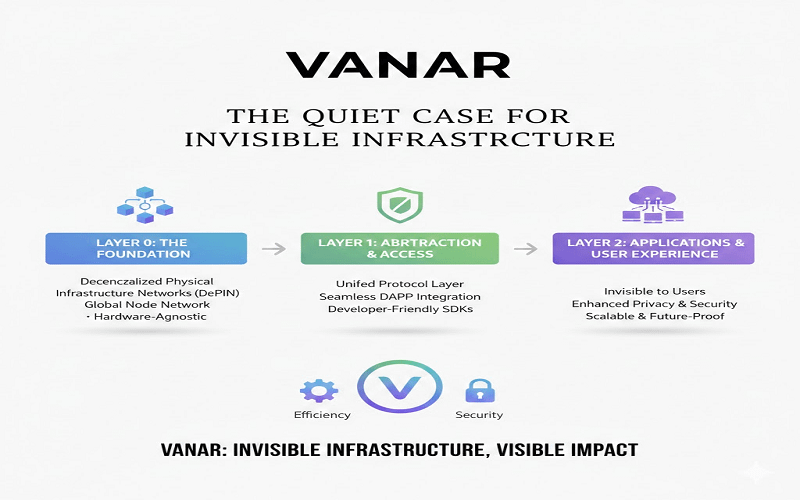
That is where $VANRY fits in. The token is part of the plumbing. It powers activity, supports transactions, and keeps the system functioning. It is not presented as a shortcut to gains. It operates more like a utility bill behind a service you use daily without thinking about it.
Projects like @Vanarchain r are attempting to simplify access to digital assets and on-chain interaction, especially for creators and developers who do not want to build their own backend from scratch. Tools such as the creator-focused platform at https://tinyurl.com/vanar-creatorpad reflect this practical direction. The emphasis is usability first, speculation second.
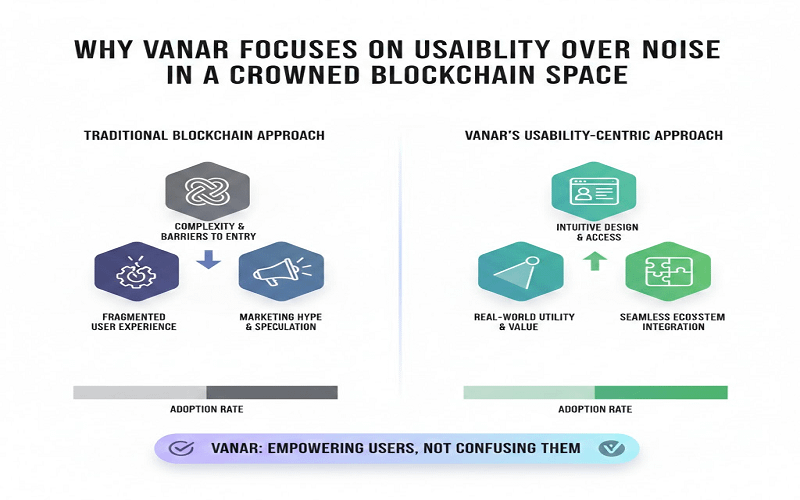
Of course, infrastructure projects face a slower path to recognition. They depend on steady developer adoption and consistent network reliability. If usage does not grow organically, the model struggles. And like any blockchain network, security and scalability must keep pace with demand.
Still, #Vanar and #vanar represent a quiet approach to building. Not loud, not dramatic. Just steady work beneath the surface, where most of the real value in crypto tends to live.
