Most blockchains boast capability. Plasma aims for something more functional: dependability—the kind that supports payments without users needing to think like traders.
This difference is important because stablecoins have become crypto's most widely used currency. People use stablecoins because they move value in familiar terms, not because they enjoy block explorers. Yet, the underlying systems often feel makeshift: a separate gas token is required, confirmations involve a waiting game, and "settlement" means actively overseeing it rather than simply trusting it.
Plasma's core idea is straightforward: treat stablecoins as the primary element, not an accessory on a general-purpose chain. This focus on the protocol level results in a stablecoin-first contract suite built to provide developers with better defaults—fee-free transfers, stablecoin-based gas, and other payment-focused features—without forcing every team to create their own unique infrastructure.
Plasma
Familiarity Where It Matters
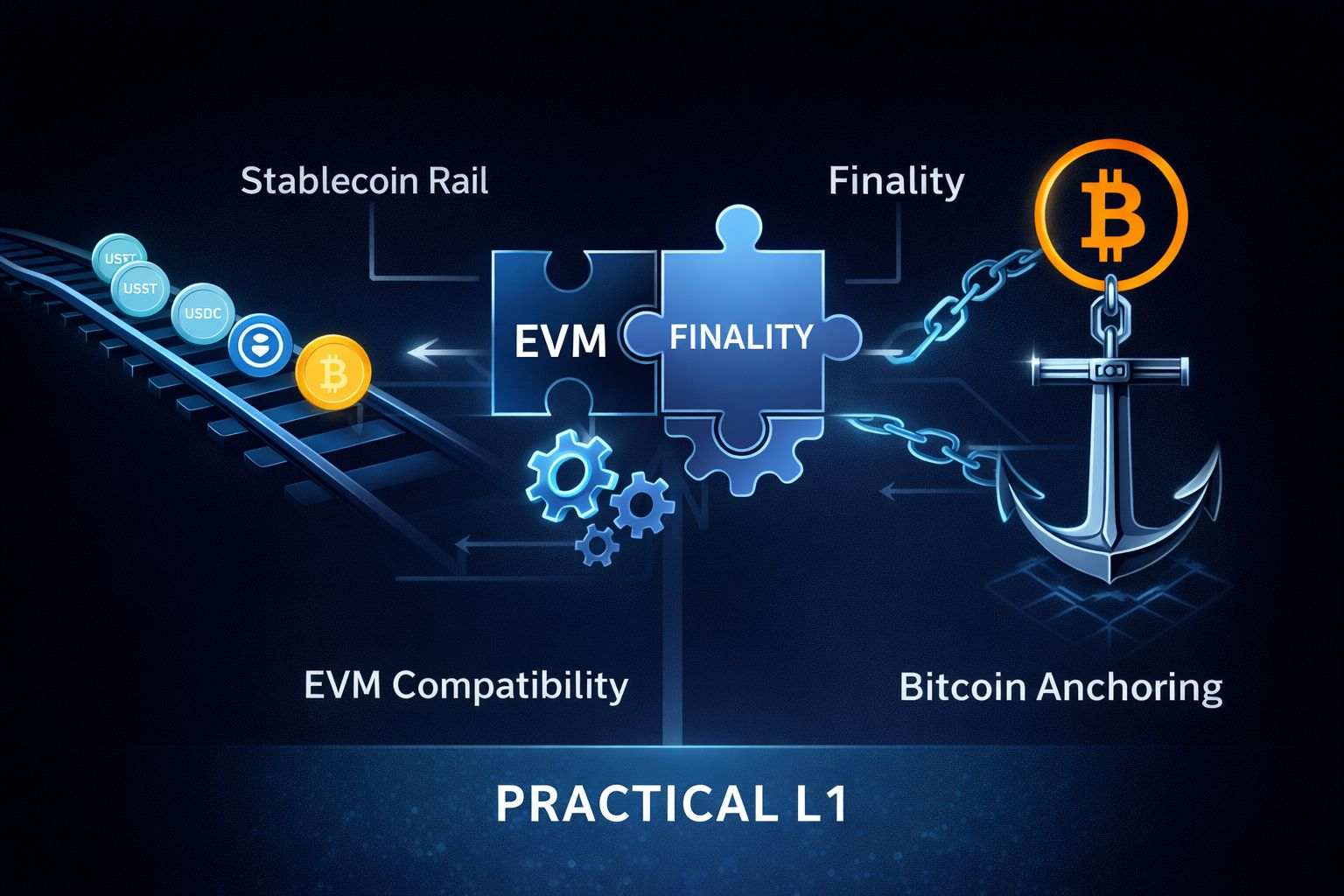
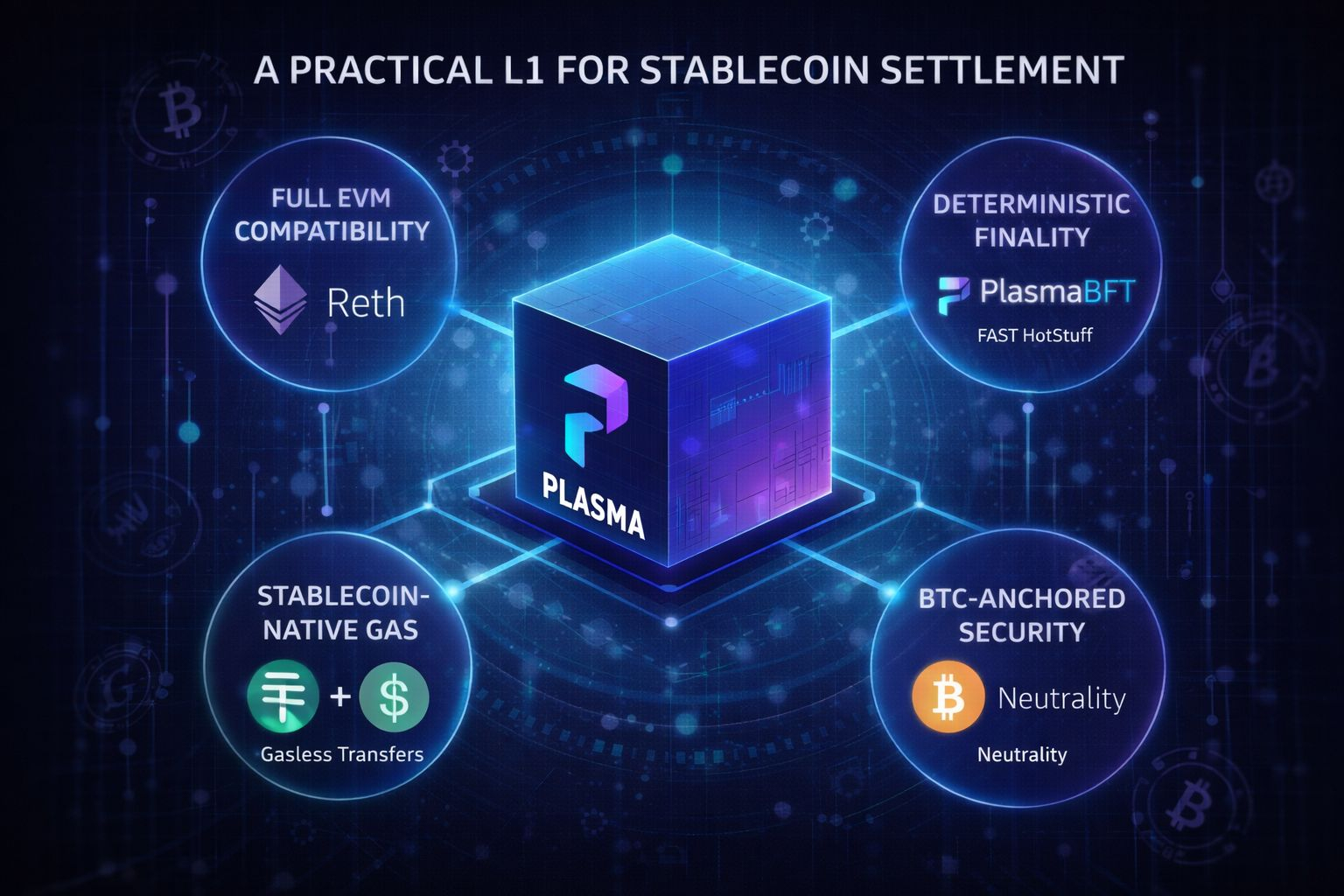
Practical infrastructure should minimize redundant work. Plasma's design is built for full EVM compatibility and uses a Reth-based execution client, keeping the development environment consistent with what Ethereum developers already use—their tools, methods, and expectations.
This is more about speed to market than an ideological stance: payment teams generally want fewer new concepts, not more.
Finality as a Feature, Not an Option
The claim of "stablecoin settlement" becomes significant when considering finality. Plasma's PlasmaBFT is a pipelined, Rust implementation of Fast HotStuff, designed to maintain BFT safety while speeding up the commit process and reducing latency.
While the technical details are complex, the goal is simple: shorten the time between something appearing confirmed and being irreversibly settled. In business, this gap leads to disputes, delays, and awkward checkout experiences.
Stablecoin-Native Gas: Eliminating the Hassle
One of Plasma's most practical decisions is treating gas fees as a primary user experience issue.
Plasma uses a protocol-operated EIP-4337 paymaster system that allows users to pay fees with approved ERC-20 tokens—often stablecoins—removing the need to acquire a separate token just to make a transaction.
Additionally, Plasma offers fee-free USD₮ transfers through a relayer API that exclusively supports direct USD₮ transfers, with measures in place to prevent misuse.
This is what "practical" means: fewer steps between a user and a dollar transfer.
Why Neutrality Influences the Design
As stablecoins grow, settlement becomes a question of resilience as much as performance. Plasma's system overview outlines a design that combines its EVM + PlasmaBFT core with a trust-minimized Bitcoin bridge. Discussions about the ecosystem often highlight Bitcoin anchoring as a way to ensure neutrality and resistance to censorship.
Whether you agree with the choices made, the reasoning is clear: payment systems should remain stable under pressure, not just in calm markets.
The Practical Test
A practical L1 for stablecoin settlement isn't about being exciting. It's about being predictable: developers can launch products without learning an entirely new system, users can pay without needing extra tokens, and businesses can consider "paid" as a final status—not an uncertain one.
Plasma's design—EVM consistency through Reth, payment-focused finality via PlasmaBFT, and stablecoin-centric features like paymasters and fee-free USD₮ transfers—appears to be an effort to make stablecoin settlement straightforward, dependable, and widely accessible.
This is not a step backward.
This is the objective.