
Let me say this the way I’d explain it to a smart friend who doesn’t have time for crypto drama.
That line—“wait for more confirmations”—isn’t just a technical habit. It’s a feeling. You press Send, you see “confirmed,” and yet you still hesitate. Not because you’re impatient… but because you’ve learned that in crypto, “confirmed” can sometimes mean “probably fine, but don’t relax yet.” That tiny doubt is where payments stop feeling like money and start feeling like a risk check.
That’s the exact gap Plasma is trying to close. Plasma
It’s a Layer-1 built around a simple idea: stablecoins are already being used like dollars, so the chain underneath them should behave like a serious settlement rail—not like an experiment you need to babysit.
One reason Plasma feels practical is that it doesn’t force builders into a new world. It keeps the EVM environment familiar and uses Reth, so developers can work with patterns and tools they already trust. Reth
That matters because the payments world doesn’t reward novelty—it rewards systems that quietly work every single day.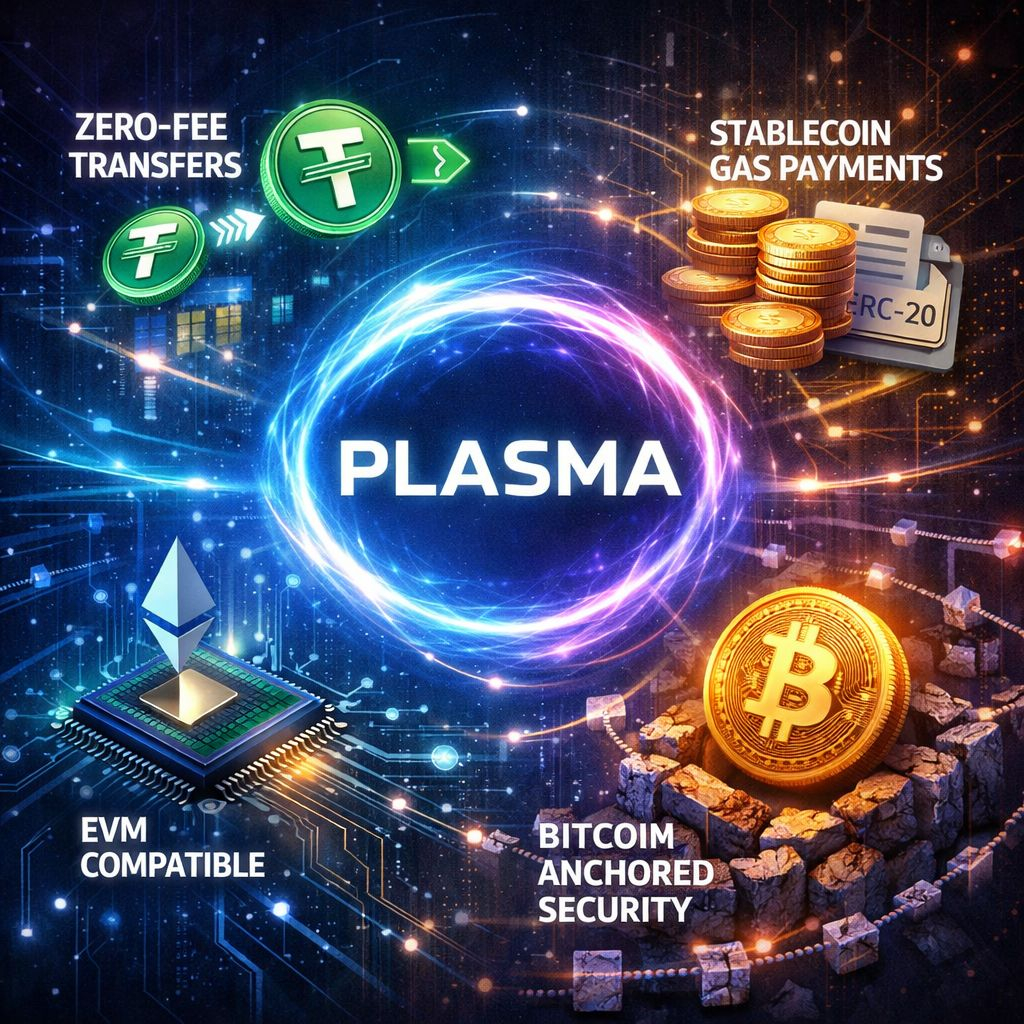
But the bigger point isn’t just familiarity. It’s certainty.
Plasma leans on PlasmaBFT and sub-second finality to push toward a “done means done” experience—especially for real-world payments where people don’t want to stand around wondering whether the transaction might get messy. PlasmaBFT
If you’re a merchant, you don’t want to do mental math at the checkout counter. You want the payment to feel like cash: once it’s paid, it’s paid.
Then there’s the part I think most people feel instantly: stablecoin payments shouldn’t require extra juggling. On many chains, you still need another token for gas, and that turns “send $10” into “wait, do I have the gas token too?” Plasma pushes stablecoin-native design—things like stablecoin-first gas and even gasless USDT transfers—so the act of sending stablecoins doesn’t come with a side quest.
And finally, Plasma talks about neutrality through Bitcoin anchoring, aiming to strengthen censorship resistance and trust in the settlement layer. Bitcoin
Because if stablecoins are going to be used at scale—by everyday people and serious institutions—the rail underneath them should hold up under pressure, not just during calm market days.
So when I say “the end of wait for more confirmations,” I’m really describing a future where you don’t hover over your screen after you send money. No second-guessing. No awkward pauses. No “let’s wait a bit more just in case.”
Just one clean feeling: done.