
$BTC has stabilized at the level of $70,000 after a period of increased volatility; however, pressure from sellers limits the potential for immediate growth. Large investors are actively increasing their positions, creating a foundation of support after the recent decline in quotes.
Data on exchange-traded funds and metrics within the network indicate the formation of a sideways trend with no clear signs of a sharp movement in the near future.
Maintaining pressure from sellers
One of the key risk indicators is the gap between the growth rates of market and realized capitalization. This indicator remains in the negative zone, which historically precedes increased pressure on prices. In such circumstances, assets are often redistributed at lower prices instead of showing growth amid new demand.
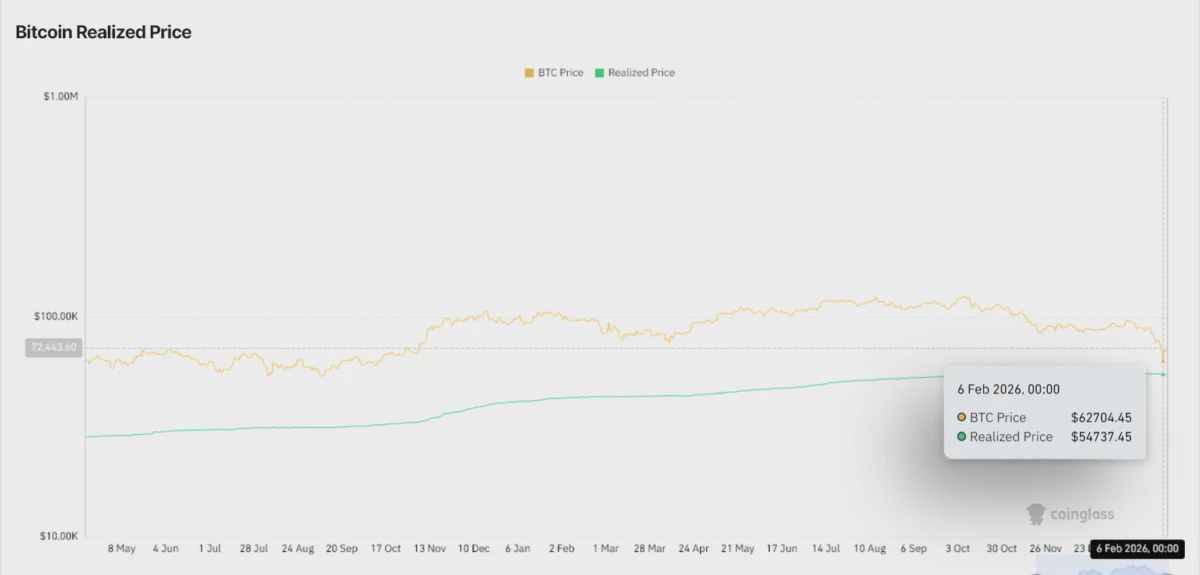
Historical analysis shows that deep and prolonged periods of stagnation occur only when prices fall below the level of realized value. In the current situation, Bitcoin maintains a neutral-positive position, remaining within an upward trend.
Stabilization of institutional demand
American spot Bitcoin ETFs recorded a significant outflow of capital during the market correction. However, the situation changed when the price stabilized in the range of $60,000–$65,000. During this period, funds began to show a confident inflow of investments again.
This similar reversal of capital flows indicates that the phase of forced liquidations and panic exits has ended. However, the current demand from institutional investors has not yet reached the levels necessary to initiate a strong upward impulse.
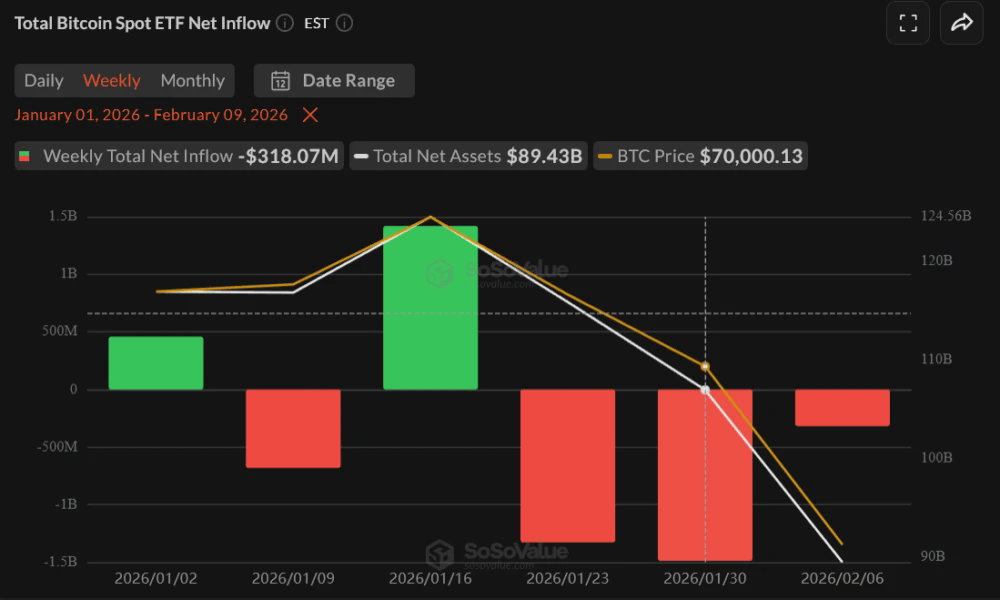
As a result of data analysis, one can conclude that there is an equilibrium between accumulation and distribution processes. Purchases by large players and the stabilization of the ETF sector curb the decline in the exchange rate. At the same time, stable supply limits the possibility of rapid growth. In the short term, the most likely scenario remains consolidation around the $70,000 mark.
