

Key Takeaways
Binance Co-CEO Richard Teng says clear regulation is essential for crypto innovation and institutional adoption
U.S. legislative progress is accelerating stablecoin issuance and corporate treasury adoption
Institutional investors added ~43,000 BTC in January, signaling continued “smart money” accumulation
Binance is expanding tokenized real-world assets through partnerships with traditional finance
Hong Kong has all prerequisites to become a global crypto hub, Teng says
Richard Teng: Clear Regulation Is the Foundation of Crypto Innovation
At the Consensus Hong Kong on February 12, Richard Teng, Co-CEO of Binance, shared his views on crypto regulation, institutional demand, and the company’s long-term strategy in an interview with CoinDesk.
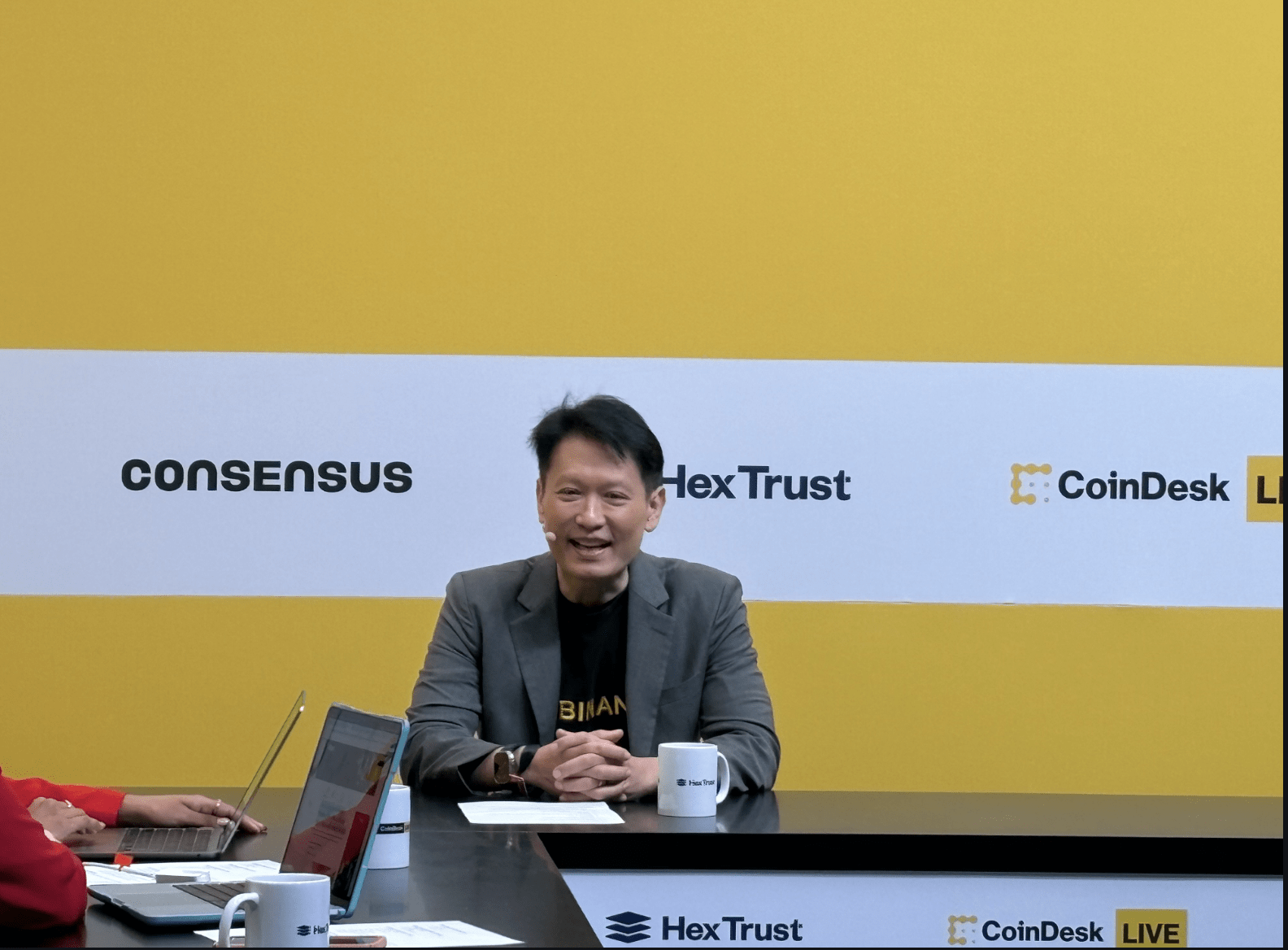
Teng said the crypto industry has spent years operating under regulatory uncertainty, weak oversight, and inconsistent enforcement. According to him, clear and transparent regulation is now a prerequisite for sustainable innovation.
He highlighted recent U.S. legislative developments, including the Genius Act, as a major confidence boost for the stablecoin sector. As a result, financial institutions and corporations are increasingly launching their own stablecoins or partnering with established issuers.
Corporate treasuries worldwide are also shifting away from traditional fiat rails toward stablecoins and crypto assets, driven by lower costs and faster cross-border settlement. Teng stressed that regulatory clarity enables developers, exchanges, and innovators to build with confidence.
Binance Expands Tokenization With Traditional Finance Partners
Teng revealed that Binance has recently deepened cooperation with Franklin Templeton, focusing on using tokenized money market funds as institutional collateral on the exchange.
This move aims to reduce trading costs and improve capital efficiency for institutional investors. Teng noted that the boundaries between Web2 finance and Web3 are rapidly disappearing.
He also pointed to Binance’s newly launched precious metals derivatives, which saw strong trading volume growth within a single month. The demand reflects growing interest in 24/7 global markets that allow institutions to manage risk continuously.
Binance plans to continue supporting asset tokenization efforts, bringing more real-world assets on-chain to enable global, always-on trading.
Institutional Bitcoin Demand Remains Strong Despite Volatility
According to Teng, Asia-Pacific and Latin America remain the fastest-growing regions for retail crypto users. However, retail participation has slowed amid market volatility.
Institutional investors, by contrast, continue to accumulate aggressively. Teng said institutions added approximately 43,000 BTC in January alone, underscoring sustained confidence in Bitcoin.
He expects retail investors to eventually return as new market narratives emerge and confidence improves.
Hong Kong Has All the Conditions to Become a Global Crypto Hub
Teng expressed strong confidence in Hong Kong’s ambitions to become a global crypto center.
He said he met with policymakers and regulators during the event and encouraged them to continue advancing clearer policies and stronger regulatory frameworks. As an established international financial center, Hong Kong already has the infrastructure, talent, and regulatory capacity needed to support large-scale crypto adoption.
Teng added that progress in any jurisdiction benefits the entire global crypto ecosystem.
Binance to Build Tailored Products for Different User Segments
Looking ahead, Teng said Binance’s goal of onboarding the next billion users remains a long-term mission.
To achieve this, the exchange will continue developing customized product offerings for different user groups, including VIP clients, institutional investors, and retail traders. User demand will remain the core principle guiding Binance’s product design and strategic expansion.
