
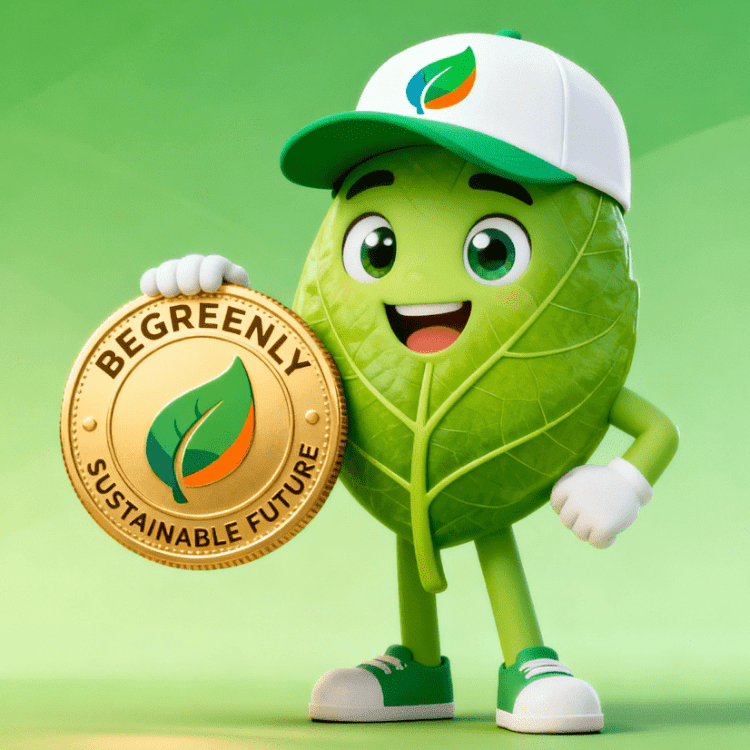
BeGreenly Coin Official
BeGreenly Coin – First Proof-of-Green Blockhain
Green innovations | Community first | Crypto with Conscience
Let’s build a sustainable chain
X: @begreenlyapp
Συχνός επενδυτής
8.1 χρόνια
173 Ακολούθηση
17.5K+ Ακόλουθοι
7.9K+ Μου αρέσει
596 Κοινοποιήσεις
Δημοσιεύσεις
Όλες
Παραθέσεις
Βίντεο
Ζωντανά
PINNED
🌱 BeGreenly Coin $BGREEN Successfully Migrated to BNB Chain!
We are excited to announce that BeGreenly Coin has officially migrated from Polygon to BNB Chain to bring faster transactions, lower fees, and better scalability for our community.
BNB Chain provides a stronger ecosystem and wider exposure, helping BeGreenly grow even faster while staying focused on sustainability and innovation.
✅ New Contract Address (BNB Chain):
0x791a856ccc3e2b8d990bd8cb30da823104accab8
Please update your wallets and bookmarks to avoid any confusion. The old Polygon contract is no longer the main token.
This migration is a major step forward in building a stronger, greener and smarter blockchain future with BeGreenly.
Thank you for your continuous support — big things are coming!
#BeGreenly #BNBChain #CryptoMigration #GreenBlockchain #BeGreenCoin #Web3Future
We are excited to announce that BeGreenly Coin has officially migrated from Polygon to BNB Chain to bring faster transactions, lower fees, and better scalability for our community.
BNB Chain provides a stronger ecosystem and wider exposure, helping BeGreenly grow even faster while staying focused on sustainability and innovation.
✅ New Contract Address (BNB Chain):
0x791a856ccc3e2b8d990bd8cb30da823104accab8
Please update your wallets and bookmarks to avoid any confusion. The old Polygon contract is no longer the main token.
This migration is a major step forward in building a stronger, greener and smarter blockchain future with BeGreenly.
Thank you for your continuous support — big things are coming!
#BeGreenly #BNBChain #CryptoMigration #GreenBlockchain #BeGreenCoin #Web3Future
PINNED
🎉 8 Years with Binance 🎉
Today marks 8 years of my journey with Binance.
It’s been more than just time — it’s been a journey of learning, growth, innovation, and trust.
Huge thanks to the Binance Team for building a platform that truly empowers its community, supports innovation, and keeps evolving with the crypto space.
Also grateful to all the friends, brothers, and community members who have been part of this journey — your support, discussions, and motivation mean a lot.
Still learning. Still building. Still moving forward. 🚀
#Binance #8YearsWithBinance #CryptoJourney #Grateful #BinanceCommunity
@CZ @Binance Labs @Yi He @Richard Teng @Daniel Zou (DZ) 🔶 @Binance Angels @ribka_bitcoiner
Today marks 8 years of my journey with Binance.
It’s been more than just time — it’s been a journey of learning, growth, innovation, and trust.
Huge thanks to the Binance Team for building a platform that truly empowers its community, supports innovation, and keeps evolving with the crypto space.
Also grateful to all the friends, brothers, and community members who have been part of this journey — your support, discussions, and motivation mean a lot.
Still learning. Still building. Still moving forward. 🚀
#Binance #8YearsWithBinance #CryptoJourney #Grateful #BinanceCommunity
@CZ @Binance Labs @Yi He @Richard Teng @Daniel Zou (DZ) 🔶 @Binance Angels @ribka_bitcoiner
Most discussions around FOGO completely miss the point. People reduce it to just another project connected to an existing ecosystem, while the real story is its architectural approach and long-term independence. I believe execution matters more than narratives, and if the team delivers what they are aiming for, FOGO could surprise many critics. Honestly, if I ever had to choose an SVM-based blockchain to work with, FOGO would be one of my first choices.
@Fogo Official #fogo $FOGO
@Fogo Official #fogo $FOGO
Clearing the Misconception: Is FOGO an L2 on Solana?
A Technical Analysis of FOGO's Architecture and Independence
Introduction
Yesterday, I published an article analyzing FOGO's technology and potential. Among the comments, one stood out and caught my attention:
"The best thing I've noticed that the FOGO is on Solana's shoulders."
This comment reflects a common misconception in the crypto space that needs clarification. While FOGO does interact with Solana, the relationship is fundamentally different from what many assume. This article aims to provide a technical analysis of FOGO's architecture and explain why viewing it as an L2 dependent on Solana is inaccurate.
Understanding L2 Solutions: What They Actually Are
Before we dive into FOGO's architecture, let's clarify what an L2 (Layer 2) solution actually means. A true L2 is fundamentally dependent on its parent chain for:
Security inheritance: The L2 derives its security directly from the L1. If the L1 goes down or gets compromised, the L2 cannot function independently.
Settlement finality: Transactions on an L2 ultimately settle on the L1. The L1 is the source of truth.
Data availability: Many L2s rely on the L1 to store critical data or proofs.
Examples include Arbitrum and Optimism on Ethereum, or Lightning Network on Bitcoin. These solutions cannot exist without their parent chains. This is not the case with FOGO.
FOGO's True Architecture: An Independent Layer 1
FOGO operates as an independent Layer 1 blockchain with its own consensus mechanism, validator network, and security model. Here's what makes it fundamentally different from an L2:
Independent Consensus: FOGO has its own network of validators running consensus independently. The network can continue operating regardless of Solana's status.
Own Security Model: Security is provided by FOGO's validator set and economic incentives, not borrowed from Solana.
Native Finality: Transactions achieve finality on FOGO itself. There's no dependency on Solana for transaction settlement or confirmation.
Sovereign State: FOGO maintains its own state and doesn't rely on Solana to validate or store its blockchain data.
If Solana were to experience downtime or any issues, FOGO would continue to operate normally. This is the key distinction that separates it from an L2 solution.
So What's the Connection with Solana?
The relationship between FOGO and Solana is better described as
interoperability and integration rather than dependency. Here's what this means in practice:
Bridge Connections: FOGO likely has bridge infrastructure to connect with Solana, allowing asset transfers between chains. This is similar to how Avalanche, Polygon, or Fantom connect with Ethereum—they're separate L1s with bridges, not L2s.
Ecosystem Integration: FOGO may leverage Solana's liquidity and user base through these connections, but this is a strategic choice, not a technical requirement.
Shared Tooling: Projects sometimes use similar development frameworks or tools (like Solana's tech stack), but this doesn't make one dependent on the other.
Think of it this way: When you use a bridge to move assets from Ethereum to Avalanche, does that make Avalanche an Ethereum L2? Absolutely not. The same logic applies to FOGO and Solana.
Why This Misconception Matters
Understanding the true nature of FOGO's architecture is crucial for several reasons:
Risk Assessment: If FOGO were truly an L2, its security and availability would be tied to Solana's. As an independent L1, it has its own risk profile.
Scalability Potential: Independent L1s have different scalability characteristics than L2s. FOGO can scale according to its own design choices without being constrained by Solana's architecture.
Long-term Viability: An L2's future is inherently tied to its parent chain. An independent L1 has more flexibility to evolve, pivot, or establish connections with multiple ecosystems.
Valuation and Positioning: The market values independent L1s differently than L2 solutions, as they represent different technological and economic propositions.
The Bigger Picture: Multi-Chain Future
The crypto industry is moving toward a multi-chain future where different L1s specialize in different use cases and connect through bridges and interoperability protocols. FOGO fits into this paradigm as:
A specialized L1 with its own value proposition and use cases
A blockchain that can connect with multiple ecosystems, not just Solana
A platform that maintains sovereignty while benefiting from ecosystem connections
This is fundamentally different from being "on Solana's shoulders." FOGO stands on its own foundation while choosing to build bridges to other ecosystems including Solana.
Conclusion
The comment that sparked this analysis represents a common but significant misunderstanding in the blockchain space. FOGO is not an L2 solution dependent on Solana. It is an independent Layer 1 blockchain with its own consensus, security, and operational infrastructure.
The relationship with Solana is one of connectivity and integration, similar to how many successful L1 blockchains connect with each other in today's multi-chain ecosystem. This distinction is crucial for anyone evaluating FOGO from a technical, security, or investment perspective.
FOGO doesn't stand on Solana's shoulders, it stands on its own ground, with the option to reach across and connect with Solana and other ecosystems when beneficial. That's the reality of modern blockchain architecture, and it's important we understand these distinctions clearly.
Disclaimer: This article is written for educational and analytical purposes. It represents a technical analysis and personal point of view, not financial or investment advice. Always conduct your own research before making any investment decisions.
@Fogo Official #fogo $FOGO
Introduction
Yesterday, I published an article analyzing FOGO's technology and potential. Among the comments, one stood out and caught my attention:
"The best thing I've noticed that the FOGO is on Solana's shoulders."
This comment reflects a common misconception in the crypto space that needs clarification. While FOGO does interact with Solana, the relationship is fundamentally different from what many assume. This article aims to provide a technical analysis of FOGO's architecture and explain why viewing it as an L2 dependent on Solana is inaccurate.
Understanding L2 Solutions: What They Actually Are
Before we dive into FOGO's architecture, let's clarify what an L2 (Layer 2) solution actually means. A true L2 is fundamentally dependent on its parent chain for:
Security inheritance: The L2 derives its security directly from the L1. If the L1 goes down or gets compromised, the L2 cannot function independently.
Settlement finality: Transactions on an L2 ultimately settle on the L1. The L1 is the source of truth.
Data availability: Many L2s rely on the L1 to store critical data or proofs.
Examples include Arbitrum and Optimism on Ethereum, or Lightning Network on Bitcoin. These solutions cannot exist without their parent chains. This is not the case with FOGO.
FOGO's True Architecture: An Independent Layer 1
FOGO operates as an independent Layer 1 blockchain with its own consensus mechanism, validator network, and security model. Here's what makes it fundamentally different from an L2:
Independent Consensus: FOGO has its own network of validators running consensus independently. The network can continue operating regardless of Solana's status.
Own Security Model: Security is provided by FOGO's validator set and economic incentives, not borrowed from Solana.
Native Finality: Transactions achieve finality on FOGO itself. There's no dependency on Solana for transaction settlement or confirmation.
Sovereign State: FOGO maintains its own state and doesn't rely on Solana to validate or store its blockchain data.
If Solana were to experience downtime or any issues, FOGO would continue to operate normally. This is the key distinction that separates it from an L2 solution.
So What's the Connection with Solana?
The relationship between FOGO and Solana is better described as
interoperability and integration rather than dependency. Here's what this means in practice:
Bridge Connections: FOGO likely has bridge infrastructure to connect with Solana, allowing asset transfers between chains. This is similar to how Avalanche, Polygon, or Fantom connect with Ethereum—they're separate L1s with bridges, not L2s.
Ecosystem Integration: FOGO may leverage Solana's liquidity and user base through these connections, but this is a strategic choice, not a technical requirement.
Shared Tooling: Projects sometimes use similar development frameworks or tools (like Solana's tech stack), but this doesn't make one dependent on the other.
Think of it this way: When you use a bridge to move assets from Ethereum to Avalanche, does that make Avalanche an Ethereum L2? Absolutely not. The same logic applies to FOGO and Solana.
Why This Misconception Matters
Understanding the true nature of FOGO's architecture is crucial for several reasons:
Risk Assessment: If FOGO were truly an L2, its security and availability would be tied to Solana's. As an independent L1, it has its own risk profile.
Scalability Potential: Independent L1s have different scalability characteristics than L2s. FOGO can scale according to its own design choices without being constrained by Solana's architecture.
Long-term Viability: An L2's future is inherently tied to its parent chain. An independent L1 has more flexibility to evolve, pivot, or establish connections with multiple ecosystems.
Valuation and Positioning: The market values independent L1s differently than L2 solutions, as they represent different technological and economic propositions.
The Bigger Picture: Multi-Chain Future
The crypto industry is moving toward a multi-chain future where different L1s specialize in different use cases and connect through bridges and interoperability protocols. FOGO fits into this paradigm as:
A specialized L1 with its own value proposition and use cases
A blockchain that can connect with multiple ecosystems, not just Solana
A platform that maintains sovereignty while benefiting from ecosystem connections
This is fundamentally different from being "on Solana's shoulders." FOGO stands on its own foundation while choosing to build bridges to other ecosystems including Solana.
Conclusion
The comment that sparked this analysis represents a common but significant misunderstanding in the blockchain space. FOGO is not an L2 solution dependent on Solana. It is an independent Layer 1 blockchain with its own consensus, security, and operational infrastructure.
The relationship with Solana is one of connectivity and integration, similar to how many successful L1 blockchains connect with each other in today's multi-chain ecosystem. This distinction is crucial for anyone evaluating FOGO from a technical, security, or investment perspective.
FOGO doesn't stand on Solana's shoulders, it stands on its own ground, with the option to reach across and connect with Solana and other ecosystems when beneficial. That's the reality of modern blockchain architecture, and it's important we understand these distinctions clearly.
Disclaimer: This article is written for educational and analytical purposes. It represents a technical analysis and personal point of view, not financial or investment advice. Always conduct your own research before making any investment decisions.
@Fogo Official #fogo $FOGO
I stopped trading on SVM chains for a while after failed transactions and network congestion ruined multiple entries. Timing didn’t matter when execution itself was uncertain. Recently tried FOGO’s SVM-supported infrastructure, and the difference was noticeable — smoother execution, predictable confirmations, and finally trading without guessing if a transaction would land or not. Sometimes innovation isn’t hype, it’s simply fixing real trader problems.
@Fogo Official #fogo $FOGO
@Fogo Official #fogo $FOGO
FOGO on Solana: Why I'm Finally Rotating Back (After Getting Burned)
I avoided $FOGO for weeks. Here's what changed my mind and what still keeps me up at night.
Look, I'll be straight with you. I'm not here to shill FOGO or any Solana memecoin. I'm rotating a portion of my portfolio into FOGO after sitting on the sidelines, and I want to document why, because this decision didn't come easy.
The Problem I Faced (And Why I Stayed Away)
Network congestion nearly destroyed my first FOGO trade.
Two weeks ago, I tried entering during a pump. Jupiter aggregator froze. My transaction sat pending for 4 minutes while price moved 18% against me. By the time it confirmed, I was already down. I rage-sold at a loss and swore off SVM-based memecoins entirely.
Sound familiar?
Solana's transaction prioritization during high-volume periods is still a nightmare. FOGO's volume spikes create the exact conditions where:
Priority fees become a guessing gameSlippage eats your entries aliveYou're trading blind for 30-90 seconds
This isn't FUD. It's infrastructure reality. And it's why I walked away initially.
What Changed: The Liquidity Thesis
Here's what brought me back after analyzing on-chain data for 72 hours straight:
FOGO's liquidity depth is absorbing volatility better than 90% of Solana memecoins.
$2.3M locked liquidity on Raydium (verified, not just claimed)48-hour average slippage for $10K buys: 1.2% (compare that to other SVM coins at 4-8%)Whale wallet distribution shows decreasing concentration over 14 days
Translation? The token is maturing past pure degen speculation. Large holders are taking profits without destroying the chart. That's rare. That's what got my attention.
My Position (And The Hedge)
I'm entering with 3% of my Solana allocation—not 30%. Here's the thesis:
Why I'm Buying:
Liquidity moat - If volume 5xs tomorrow, the pool can handle itCommunity shift - Telegram went from "wen moon" spam to actual builder discussionsTiming - Consolidation phase after initial hype = better entry than FOMO tops
Why I'm Still Skeptical:
It's still a memecoin - No utility promises will change thatSolana dependency - If SVM has another multi-hour outage, FOGO bleeds with everything elseFounder transparency - Anonymous teams can rug. Period. The liquidity lock reduces risk but doesn't eliminate it
The Criticism Nobody's Talking About
Let's address the elephant: FOGO's "FOMO" narrative is getting lazy.
Every Solana memecoin claims to be the "anti-FOMO" or "FOMO killer" or whatever. FOGO included. The reality? It trades exactly like every other speculative SVM token during Solana bull runs. The branding is clever marketing, not innovation.
I'm not buying the narrative. I'm buying the liquidity and holder behavior. Those are quantifiable. The story is just noise.
Transaction Strategy (How I'm Handling SVM Issues)
Since network congestion almost burned me before, here's my new approach:
Priority fees: Setting 0.001 SOL minimum (yes, expensive, but cheaper than failed transactions)Limit orders only: No more market buys during volume spikesEntry splitting: 3 separate buys over 48 hours to average slippageStop-loss: Hard 15% stop. If Solana clogs and I can't exit, I accept that risk at position size
The Honest Take
FOGO isn't going to 100x. If you're here for that, you're late and delusional.
But for a 2-4x swing trade during the next Solana memecoin rotation? The setup is there. Liquidity is there. Community hasn't completely degen'd out yet.
I'm in—cautiously, strategically, and with zero emotional attachment.
Am I wrong? Maybe. But I'd rather document the thesis now and learn from it later than ape in silently and pretend I called it.
Let's see if FOGO's liquidity thesis holds or if I'm about to learn another expensive lesson about SVM trading.
This is not financial advice. I'm just some analyst on the internet who got wrecked by Solana's mempool and is trying again. DYOR.
@Fogo Official #fogo $FOGO
Look, I'll be straight with you. I'm not here to shill FOGO or any Solana memecoin. I'm rotating a portion of my portfolio into FOGO after sitting on the sidelines, and I want to document why, because this decision didn't come easy.
The Problem I Faced (And Why I Stayed Away)
Network congestion nearly destroyed my first FOGO trade.
Two weeks ago, I tried entering during a pump. Jupiter aggregator froze. My transaction sat pending for 4 minutes while price moved 18% against me. By the time it confirmed, I was already down. I rage-sold at a loss and swore off SVM-based memecoins entirely.
Sound familiar?
Solana's transaction prioritization during high-volume periods is still a nightmare. FOGO's volume spikes create the exact conditions where:
Priority fees become a guessing gameSlippage eats your entries aliveYou're trading blind for 30-90 seconds
This isn't FUD. It's infrastructure reality. And it's why I walked away initially.
What Changed: The Liquidity Thesis
Here's what brought me back after analyzing on-chain data for 72 hours straight:
FOGO's liquidity depth is absorbing volatility better than 90% of Solana memecoins.
$2.3M locked liquidity on Raydium (verified, not just claimed)48-hour average slippage for $10K buys: 1.2% (compare that to other SVM coins at 4-8%)Whale wallet distribution shows decreasing concentration over 14 days
Translation? The token is maturing past pure degen speculation. Large holders are taking profits without destroying the chart. That's rare. That's what got my attention.
My Position (And The Hedge)
I'm entering with 3% of my Solana allocation—not 30%. Here's the thesis:
Why I'm Buying:
Liquidity moat - If volume 5xs tomorrow, the pool can handle itCommunity shift - Telegram went from "wen moon" spam to actual builder discussionsTiming - Consolidation phase after initial hype = better entry than FOMO tops
Why I'm Still Skeptical:
It's still a memecoin - No utility promises will change thatSolana dependency - If SVM has another multi-hour outage, FOGO bleeds with everything elseFounder transparency - Anonymous teams can rug. Period. The liquidity lock reduces risk but doesn't eliminate it
The Criticism Nobody's Talking About
Let's address the elephant: FOGO's "FOMO" narrative is getting lazy.
Every Solana memecoin claims to be the "anti-FOMO" or "FOMO killer" or whatever. FOGO included. The reality? It trades exactly like every other speculative SVM token during Solana bull runs. The branding is clever marketing, not innovation.
I'm not buying the narrative. I'm buying the liquidity and holder behavior. Those are quantifiable. The story is just noise.
Transaction Strategy (How I'm Handling SVM Issues)
Since network congestion almost burned me before, here's my new approach:
Priority fees: Setting 0.001 SOL minimum (yes, expensive, but cheaper than failed transactions)Limit orders only: No more market buys during volume spikesEntry splitting: 3 separate buys over 48 hours to average slippageStop-loss: Hard 15% stop. If Solana clogs and I can't exit, I accept that risk at position size
The Honest Take
FOGO isn't going to 100x. If you're here for that, you're late and delusional.
But for a 2-4x swing trade during the next Solana memecoin rotation? The setup is there. Liquidity is there. Community hasn't completely degen'd out yet.
I'm in—cautiously, strategically, and with zero emotional attachment.
Am I wrong? Maybe. But I'd rather document the thesis now and learn from it later than ape in silently and pretend I called it.
Let's see if FOGO's liquidity thesis holds or if I'm about to learn another expensive lesson about SVM trading.
This is not financial advice. I'm just some analyst on the internet who got wrecked by Solana's mempool and is trying again. DYOR.
@Fogo Official #fogo $FOGO

Binance Square Official
·
--
Grab a Share of 12,058,823 VANRY Token Voucher Rewards on CreatorPad!
We’ve launched a new CreatorPad campaign with @Vanar where you can post, follow and trade to unlock a share of 12,058,823 VANRY Token Voucher Rewards!
Activity Period: 2026-01-20 09:00 (UTC) to 2026-02-20 09:00 (UTC)
How to Participate:
During the Activity Period, click “Join now” on the activity page and complete the tasks in the table to be ranked on the leaderboard and qualify for rewards.
[2026-01-27 Update] We are updating the leaderboard points logic and the data currently displayed is as of 2026-01-25. All activity and points from 2026-01-26 is still fully recorded and will be reflected when updates resume on 2026-01-28 at 09:00 UTC in a T+2 rolling basis.
Here are some guides to help you get started in crafting your content:
1. AI-first vs AI-added infrastructure
What’s the current problem?
How are most chains approaching AI today?What breaks when AI is retrofitted onto legacy infrastructure?
What is an AI-first mindset?
What does it mean to design infrastructure for AI from day one?How does “native intelligence” differ from AI as a feature or add-on?
How does Vanar change this?
What makes Vanar AI-first rather than AI-added?How do live products and real usage support this positioning?Where does $VANRY fit into this design philosophy?
2. What “AI-ready” actually means
What’s the misconception?
Why are TPS and speed no longer the defining metrics?What assumptions about blockchain design are outdated for AI?
What do AI systems actually need?
Why are native memory, reasoning, automation, and settlement required?What happens when one of these is missing?
How does Vanar address AI readiness?
How is Vanar built around these requirements at the infrastructure level?Why does this make $VANRY exposure to AI readiness rather than speculation?
3. Cross-chain availability on Base unlocks scale
Why is single-chain AI infrastructure limiting?
Where do users, liquidity, and developers already exist?Why can’t AI-first systems remain isolated?
Why does cross-chain matter for AI?
How do AI agents operate across ecosystems?What does broader access unlock for adoption and usage?
What changes with Vanar on Base?
How does Base expand Vanar’s reach?How does this increase potential usage of $VANRY beyond one network?
4. Why new L1 launches will struggle in an AI era
What’s already solved in Web3?
Why isn’t base infrastructure the main problem anymore?What’s missing despite the number of existing chains?
What does AI-era differentiation look like?
Why do products matter more than new blockspace?What does “proof of AI readiness” look like?
How does Vanar demonstrate this today?
How does myNeutron prove native memory?How does Kayon prove on-chain reasoning and explainability?How does Flows prove safe, automated execution?
Where does $VANRY fit?
How does usage across these products flow back to the token?
5. Why payments complete AI-first infrastructure
What’s misunderstood about AI agents?
Why don’t AI agents use traditional wallet UX?What constraints do agents face in real-world environments?
Why are payments essential?
Why is settlement a core AI primitive, not an add-on?What role do compliance and global rails play?
How is Vanar positioned here?
How does Vanar treat payments as infrastructure, not a demo feature?How does $VANRY align with real economic activity?
6. Why $VANRY is positioned around readiness, not narratives
What’s the difference between narratives and readiness?
Why do narratives rotate quickly in crypto?What compounds over the long term?
Who is this infrastructure built for?
How do agents, enterprises, and real-world users differ from speculators?Why does this matter for value accrual?
Why does $VANRY have room to grow?
How does AI-native infrastructure create sustained demand?Why does readiness matter more than hype in an AI era?
Unlock Your VANRY Token Rewards Today!
Full T&Cs
Activity Period: 2026-01-20 09:00 (UTC) to 2026-02-20 09:00 (UTC)
How to Participate:
During the Activity Period, click “Join now” on the activity page and complete the tasks in the table to be ranked on the leaderboard and qualify for rewards.
[2026-01-27 Update] We are updating the leaderboard points logic and the data currently displayed is as of 2026-01-25. All activity and points from 2026-01-26 is still fully recorded and will be reflected when updates resume on 2026-01-28 at 09:00 UTC in a T+2 rolling basis.
Here are some guides to help you get started in crafting your content:
1. AI-first vs AI-added infrastructure
What’s the current problem?
How are most chains approaching AI today?What breaks when AI is retrofitted onto legacy infrastructure?
What is an AI-first mindset?
What does it mean to design infrastructure for AI from day one?How does “native intelligence” differ from AI as a feature or add-on?
How does Vanar change this?
What makes Vanar AI-first rather than AI-added?How do live products and real usage support this positioning?Where does $VANRY fit into this design philosophy?
2. What “AI-ready” actually means
What’s the misconception?
Why are TPS and speed no longer the defining metrics?What assumptions about blockchain design are outdated for AI?
What do AI systems actually need?
Why are native memory, reasoning, automation, and settlement required?What happens when one of these is missing?
How does Vanar address AI readiness?
How is Vanar built around these requirements at the infrastructure level?Why does this make $VANRY exposure to AI readiness rather than speculation?
3. Cross-chain availability on Base unlocks scale
Why is single-chain AI infrastructure limiting?
Where do users, liquidity, and developers already exist?Why can’t AI-first systems remain isolated?
Why does cross-chain matter for AI?
How do AI agents operate across ecosystems?What does broader access unlock for adoption and usage?
What changes with Vanar on Base?
How does Base expand Vanar’s reach?How does this increase potential usage of $VANRY beyond one network?
4. Why new L1 launches will struggle in an AI era
What’s already solved in Web3?
Why isn’t base infrastructure the main problem anymore?What’s missing despite the number of existing chains?
What does AI-era differentiation look like?
Why do products matter more than new blockspace?What does “proof of AI readiness” look like?
How does Vanar demonstrate this today?
How does myNeutron prove native memory?How does Kayon prove on-chain reasoning and explainability?How does Flows prove safe, automated execution?
Where does $VANRY fit?
How does usage across these products flow back to the token?
5. Why payments complete AI-first infrastructure
What’s misunderstood about AI agents?
Why don’t AI agents use traditional wallet UX?What constraints do agents face in real-world environments?
Why are payments essential?
Why is settlement a core AI primitive, not an add-on?What role do compliance and global rails play?
How is Vanar positioned here?
How does Vanar treat payments as infrastructure, not a demo feature?How does $VANRY align with real economic activity?
6. Why $VANRY is positioned around readiness, not narratives
What’s the difference between narratives and readiness?
Why do narratives rotate quickly in crypto?What compounds over the long term?
Who is this infrastructure built for?
How do agents, enterprises, and real-world users differ from speculators?Why does this matter for value accrual?
Why does $VANRY have room to grow?
How does AI-native infrastructure create sustained demand?Why does readiness matter more than hype in an AI era?
Unlock Your VANRY Token Rewards Today!
Full T&Cs
USD1: A Stablecoin or Another Trump Political Trap in Disguise?
The cryptocurrency market has learned one lesson the hard way: whenever a stablecoin promises safety without explaining how that safety is enforced, disaster is usually just a matter of time. From UST to USDN, history is filled with projects that looked solid—until the moment they collapsed.
Today, a new name is gaining attention: USD1. Backed by strong branding and political association, USD1 is being marketed as a stable digital dollar. But behind the headlines and hype, serious questions remain unanswered. The most important one being: is USD1 truly stable, or is it another high-risk experiment dressed as certainty?
What Makes a Stablecoin Actually Stable?
At its core, a stablecoin has only one real responsibility: redemption.
Not marketing. Not narratives. Not influence.
A stablecoin remains pegged to one dollar because there exists a mechanism allowing holders—or more importantly, large arbitrage players—to exchange the token for real value. This redemption process creates arbitrage opportunities that automatically correct price deviations.
USDT and USDC have survived multiple market crashes precisely because institutional players can redeem large amounts directly with the issuer. Retail users may never touch redemption, but they benefit from the arbitrage pressure it creates.
Without redemption, a stablecoin does not have a peg—it has a belief.
The Missing Piece in USD1: Clear Redemption
This is where USD1 begins to look structurally fragile.
As of now, USD1 does not publicly present a clear, transparent, and enforceable redemption framework. There is no detailed information explaining who can redeem, under what conditions, at what scale, and within what timeframe. In financial systems, such ambiguity is not a minor oversight—it is a major red flag.
When markets are calm, this lack of clarity may go unnoticed. But in moments of stress, when confidence disappears and exits are tested, redemption is the only thing that matters. If redemption cannot be executed efficiently, the peg becomes theoretical.
WLFI and the Shadow Support Question
Another layer of concern emerges when examining the relationship between USD1 and WLFI. Market behavior suggests that WLFI’s price movements often appear to support confidence around USD1, raising uncomfortable parallels with past failures.
This structure resembles the infamous UST–LUNA relationship, where one asset existed largely to reinforce belief in another. As long as confidence held, the system appeared stable. Once confidence cracked, both assets collapsed simultaneously.
When the stability of one token depends—directly or indirectly—on the market value of another, the system becomes circular. Circular confidence is not stability; it is delayed risk.
Trump Branding: Confidence Booster or Strategic Distraction?
There is no denying the psychological impact of political branding. Associating USD1 with Trump-related narratives attracts attention, loyalty, and retail trust. However, markets are indifferent to politics when pressure rises.
Political influence cannot create liquidity.
It cannot guarantee redemptions.
It cannot stop a bank-run dynamic.
When panic begins, traders do not ask who endorsed the token. They ask one question only: Can I get out at par?
If the answer is unclear, the market answers brutally.
The Dangerous Illusion of a “Soft Peg”
Supporters of USD1 often suggest that it does not need strict redemption, arguing instead for a “soft peg.” This argument has been made before—almost word for word—by projects that no longer exist.
A peg is not a spectrum.
It either holds, or it breaks.
Anything in between relies on trust rather than mechanism. In crypto, trust without enforceable guarantees is the weakest possible foundation.
Is USD1 a Scam?
Labeling something a scam implies proven malicious intent, and that threshold has not been met. However, dismissing the risks surrounding USD1 would be equally irresponsible.
Based on available information, USD1 appears to be a high-risk, low-transparency stablecoin experiment whose stability depends heavily on confidence rather than clearly defined financial mechanics. History has shown that such designs do not fail slowly—they fail suddenly.
Final Thoughts: Stability Is Tested in Crisis, Not Comfort
Stablecoins do not collapse on good days.
They collapse when everyone wants out at the same time.
That moment exposes whether a project is backed by real exits or by belief alone. Without a transparent and credible redemption framework, USD1’s peg remains a promise—not a guarantee.
Trump’s name may attract liquidity.
It will not protect a broken peg
Final Takeaway
A stablecoin without clear redemption is not stable.
It is a confidence trap that only reveals itself when it is already too late.
#JPMorganSaysBTCOverGold #USD1 #ScamAwareness #scam #USD1Scam
Today, a new name is gaining attention: USD1. Backed by strong branding and political association, USD1 is being marketed as a stable digital dollar. But behind the headlines and hype, serious questions remain unanswered. The most important one being: is USD1 truly stable, or is it another high-risk experiment dressed as certainty?
What Makes a Stablecoin Actually Stable?
At its core, a stablecoin has only one real responsibility: redemption.
Not marketing. Not narratives. Not influence.
A stablecoin remains pegged to one dollar because there exists a mechanism allowing holders—or more importantly, large arbitrage players—to exchange the token for real value. This redemption process creates arbitrage opportunities that automatically correct price deviations.
USDT and USDC have survived multiple market crashes precisely because institutional players can redeem large amounts directly with the issuer. Retail users may never touch redemption, but they benefit from the arbitrage pressure it creates.
Without redemption, a stablecoin does not have a peg—it has a belief.
The Missing Piece in USD1: Clear Redemption
This is where USD1 begins to look structurally fragile.
As of now, USD1 does not publicly present a clear, transparent, and enforceable redemption framework. There is no detailed information explaining who can redeem, under what conditions, at what scale, and within what timeframe. In financial systems, such ambiguity is not a minor oversight—it is a major red flag.
When markets are calm, this lack of clarity may go unnoticed. But in moments of stress, when confidence disappears and exits are tested, redemption is the only thing that matters. If redemption cannot be executed efficiently, the peg becomes theoretical.
WLFI and the Shadow Support Question
Another layer of concern emerges when examining the relationship between USD1 and WLFI. Market behavior suggests that WLFI’s price movements often appear to support confidence around USD1, raising uncomfortable parallels with past failures.
This structure resembles the infamous UST–LUNA relationship, where one asset existed largely to reinforce belief in another. As long as confidence held, the system appeared stable. Once confidence cracked, both assets collapsed simultaneously.
When the stability of one token depends—directly or indirectly—on the market value of another, the system becomes circular. Circular confidence is not stability; it is delayed risk.
Trump Branding: Confidence Booster or Strategic Distraction?
There is no denying the psychological impact of political branding. Associating USD1 with Trump-related narratives attracts attention, loyalty, and retail trust. However, markets are indifferent to politics when pressure rises.
Political influence cannot create liquidity.
It cannot guarantee redemptions.
It cannot stop a bank-run dynamic.
When panic begins, traders do not ask who endorsed the token. They ask one question only: Can I get out at par?
If the answer is unclear, the market answers brutally.
The Dangerous Illusion of a “Soft Peg”
Supporters of USD1 often suggest that it does not need strict redemption, arguing instead for a “soft peg.” This argument has been made before—almost word for word—by projects that no longer exist.
A peg is not a spectrum.
It either holds, or it breaks.
Anything in between relies on trust rather than mechanism. In crypto, trust without enforceable guarantees is the weakest possible foundation.
Is USD1 a Scam?
Labeling something a scam implies proven malicious intent, and that threshold has not been met. However, dismissing the risks surrounding USD1 would be equally irresponsible.
Based on available information, USD1 appears to be a high-risk, low-transparency stablecoin experiment whose stability depends heavily on confidence rather than clearly defined financial mechanics. History has shown that such designs do not fail slowly—they fail suddenly.
Final Thoughts: Stability Is Tested in Crisis, Not Comfort
Stablecoins do not collapse on good days.
They collapse when everyone wants out at the same time.
That moment exposes whether a project is backed by real exits or by belief alone. Without a transparent and credible redemption framework, USD1’s peg remains a promise—not a guarantee.
Trump’s name may attract liquidity.
It will not protect a broken peg
Final Takeaway
A stablecoin without clear redemption is not stable.
It is a confidence trap that only reveals itself when it is already too late.
#JPMorganSaysBTCOverGold #USD1 #ScamAwareness #scam #USD1Scam
Good morning BeGreenly family
Market may look weak
But strong projects do not fear red candles
Fasten your seatbelts
BeGreenly is ready for the next move
Trade smart
Stay calm
Stay green
#BeGreenly #TradeBeGreenly #ADPDataDisappoints $BGREEN
Market may look weak
But strong projects do not fear red candles
Fasten your seatbelts
BeGreenly is ready for the next move
Trade smart
Stay calm
Stay green
#BeGreenly #TradeBeGreenly #ADPDataDisappoints $BGREEN
Join Everyone ..... Get a Chance to win 1000 $BGREEN Today ....
[Αναπαραγωγή] 🎙️ Welcome everyone !!
02 ώ. 06 μ. 14 δ. · 4.3k ακροάσεις
Join for Rewards and Giveaways
[Αναπαραγωγή] 🎙️ Trade Smarter, Not Harder ..Crypto Help Live..!!
02 ώ. 37 μ. 45 δ. · 3.6k ακροάσεις
🎙️ Join Everyone ..... Let's Enjoy Market dump .....

Τέλος
02 ώ. 17 μ. 37 δ.
1.8k
8
🎙️ Let's Save the Planet, Buy BeGreenly ....
Τέλος
05 ώ. 25 μ. 30 δ.
2.5k
7
Everyone Should Buy BeGreenly Coin $BGREEN ..... Help us to keep our Planet Clean and Green .....
If you're tired of losing on other coins… you need a dose of Vitamin BeGreenly Coin ..😁😁😍
@BeGreenly Coin Official
{web3_wallet_create}(560x791a856ccc3e2b8d990bd8cb30da823104accab8)
@BeGreenly Coin Official
{web3_wallet_create}(560x791a856ccc3e2b8d990bd8cb30da823104accab8)
Join Everyone Em Here ......
[Αναπαραγωγή] 🎙️ Weekend Crypto Emergency .. Join Our Live Now !!
02 ώ. 54 μ. 38 δ. · 3.7k ακροάσεις
🎙️ Stop Donating Money to Crypto .. Learn Live !!
Τέλος
02 ώ. 29 μ. 25 δ.
3.7k
22
Why Trading on Meme Coins is Haram in Islam Even on Spot Trading
Introduction
In recent years, cryptocurrency has become extremely popular, especially meme coins like Dogecoin, Shiba Inu, Pepe, and many others. These coins are often promoted through hype, social media trends, and influencers rather than real utility or economic value.
Many Muslim traders believe that spot trading of meme coins is halal because it does not involve leverage or interest. However, when analyzed under Islamic finance principles, meme coin trading even on spot markets falls into several prohibited categories such as gharar (excessive uncertainty), maysir (gambling), deception, and lack of intrinsic value. Every time some one profit in Meme Coin is actually some one is loosing money.
This article explains in detail why meme coin trading is considered haram in Islam, even when done on spot trading platforms.
What Are Meme Coins?
Meme coins are cryptocurrencies created mainly for fun, hype, or internet culture rather than solving real financial or technological problems.
Common characteristics include:
No real-world use caseNo strong development roadmapPrice driven by hype and speculationExtreme volatilityOften controlled by a few wallets (whales)
Examples include Dogecoin, Shiba Inu, Floki, Pepe, and many similar tokens launched daily.
Their value does not come from productivity, assets, or services but from speculation alone.
Islamic Principles of Halal Trade
Islam allows trade but with strict ethical conditions. Some core principles are:
1. Asset must have real value and benefit
The Prophet Muhammad (peace be upon him) forbade trade in items that have no real utility or lawful benefit.
2. No excessive uncertainty (Gharar)
Transactions involving unclear outcomes or unpredictable results are prohibited.
3. No gambling (Maysir)
Earning wealth purely through chance, speculation, or betting is haram.
4. No deception or market manipulation
Artificial hype, pump and dump schemes, and misleading promotion are forbidden.
Why Meme Coin Trading Falls Under Haram Categories
1. Meme Coins Have No Intrinsic Value
Most meme coins exist only because of jokes, trends, or hype.
They do not:
Provide services or utilitiesSolve economic problems
Their price is created artificially through speculation.
Islam requires trade to be based on real economic activity and benefit, not imaginary value.
2. Meme Coin Trading Is Pure Speculation (Maysir)
People buy meme coins hoping:
Someone else will buy at a higher priceA viral tweet will pump the priceHype will increase demandYou make profit while other trader looses moneyYour Profit is Someone's else loss
This is similar to gambling:
Win if hype growsLose if hype dies
There is no analysis of real productivity or income.
Allah clearly forbids gambling in the Quran:
"Intoxicants and gambling are abominations of Satan’s handiwork."
Quran 5:90
Meme coin trading functions exactly like a betting game on hype.
3. Extreme Gharar (Uncertainty)
Meme coins can drop:
50 percent in minutes90 percent in daysGo to zero suddenly
There is:
No predictable valueNo financial backingNo long-term stability
Islam forbids transactions based on excessive uncertainty because it leads to injustice and loss.
4. Market Manipulation Is Common
Most meme coins are controlled by early holders or insiders.
Common practices include:
Pump and dump schemesFake marketingInfluencer paid promotionsArtificial volume
Islam strictly forbids deception and manipulation in trade.
The Prophet (peace be upon him) said:
"Whoever deceives is not one of us."
Sahih Muslim
5. Wealth Transfer Without Productivity
In meme coin trading:
One trader gains moneyAnother trader loses money
No product is createdNo service is deliveredNo economic value is added
This is zero-sum speculation, which Islam discourages. Every time you trade and gain profit is actually someone's loss.
Halal wealth should come from productive and beneficial activities.
Why Spot Trading Does Not Make It Halal
Many argue:
"I am not using futures or leverage, only spot trading."
However, even spot trading becomes haram if the asset itself is haram to trade.
For example:
Gambling chips bought with cash and use to trade are still haram.Alcohol bought in cash is still haram either drink it Trade it.
Similarly, trading a speculative and harmful asset remains haram regardless of trading method.
The issue is not leverage only.
The issue is:
SpeculationGhararMaysirDeception
All present in meme coins.
Views of Islamic Scholars on Speculative Assets
Many contemporary scholars state:
Assets with no intrinsic value used only for speculation fall under maysir and gharar.
Institutions like:
Islamic Fiqh Academy
AAOIFI (Accounting and Auditing Organization for Islamic Financial Institutions)
Have warned against high-risk speculative instruments that resemble gambling behavior.
Halal Alternatives in Crypto (If Done Properly)
Some blockchain projects focus on:
Real utilityPaymentsSmart contractsInfrastructureTokenized assets
If structured properly, transparent, and non-speculative, some scholars allow certain crypto assets.
However meme coins almost never meet halal criteria.
Conclusion
Trading meme coins is haram in Islam even on spot markets because:
They have no real intrinsic valueThey rely on hype and speculationThey resemble gambling (maysir)They contain excessive uncertainty (gharar)They are heavily manipulated
Islam promotes ethical wealth building through productive trade, not hype-based betting.
For Muslims seeking halal income, avoiding meme coin trading is the safest and most correct path according to Islamic principles.
References
Quran 5:90 on gambling prohibitionSahih Muslim Hadith on deception in tradeAAOIFI Shariah Standards on speculative transactionsIslamic Fiqh Academy rulings on excessive ghararMufti Taqi Usmani writings on modern financial speculationInvestopedia explanation of speculative trading behaviorJournal of Islamic Finance studies on uncertainty in modern markets
In recent years, cryptocurrency has become extremely popular, especially meme coins like Dogecoin, Shiba Inu, Pepe, and many others. These coins are often promoted through hype, social media trends, and influencers rather than real utility or economic value.
Many Muslim traders believe that spot trading of meme coins is halal because it does not involve leverage or interest. However, when analyzed under Islamic finance principles, meme coin trading even on spot markets falls into several prohibited categories such as gharar (excessive uncertainty), maysir (gambling), deception, and lack of intrinsic value. Every time some one profit in Meme Coin is actually some one is loosing money.
This article explains in detail why meme coin trading is considered haram in Islam, even when done on spot trading platforms.
What Are Meme Coins?
Meme coins are cryptocurrencies created mainly for fun, hype, or internet culture rather than solving real financial or technological problems.
Common characteristics include:
No real-world use caseNo strong development roadmapPrice driven by hype and speculationExtreme volatilityOften controlled by a few wallets (whales)
Examples include Dogecoin, Shiba Inu, Floki, Pepe, and many similar tokens launched daily.
Their value does not come from productivity, assets, or services but from speculation alone.
Islamic Principles of Halal Trade
Islam allows trade but with strict ethical conditions. Some core principles are:
1. Asset must have real value and benefit
The Prophet Muhammad (peace be upon him) forbade trade in items that have no real utility or lawful benefit.
2. No excessive uncertainty (Gharar)
Transactions involving unclear outcomes or unpredictable results are prohibited.
3. No gambling (Maysir)
Earning wealth purely through chance, speculation, or betting is haram.
4. No deception or market manipulation
Artificial hype, pump and dump schemes, and misleading promotion are forbidden.
Why Meme Coin Trading Falls Under Haram Categories
1. Meme Coins Have No Intrinsic Value
Most meme coins exist only because of jokes, trends, or hype.
They do not:
Provide services or utilitiesSolve economic problems
Their price is created artificially through speculation.
Islam requires trade to be based on real economic activity and benefit, not imaginary value.
2. Meme Coin Trading Is Pure Speculation (Maysir)
People buy meme coins hoping:
Someone else will buy at a higher priceA viral tweet will pump the priceHype will increase demandYou make profit while other trader looses moneyYour Profit is Someone's else loss
This is similar to gambling:
Win if hype growsLose if hype dies
There is no analysis of real productivity or income.
Allah clearly forbids gambling in the Quran:
"Intoxicants and gambling are abominations of Satan’s handiwork."
Quran 5:90
Meme coin trading functions exactly like a betting game on hype.
3. Extreme Gharar (Uncertainty)
Meme coins can drop:
50 percent in minutes90 percent in daysGo to zero suddenly
There is:
No predictable valueNo financial backingNo long-term stability
Islam forbids transactions based on excessive uncertainty because it leads to injustice and loss.
4. Market Manipulation Is Common
Most meme coins are controlled by early holders or insiders.
Common practices include:
Pump and dump schemesFake marketingInfluencer paid promotionsArtificial volume
Islam strictly forbids deception and manipulation in trade.
The Prophet (peace be upon him) said:
"Whoever deceives is not one of us."
Sahih Muslim
5. Wealth Transfer Without Productivity
In meme coin trading:
One trader gains moneyAnother trader loses money
No product is createdNo service is deliveredNo economic value is added
This is zero-sum speculation, which Islam discourages. Every time you trade and gain profit is actually someone's loss.
Halal wealth should come from productive and beneficial activities.
Why Spot Trading Does Not Make It Halal
Many argue:
"I am not using futures or leverage, only spot trading."
However, even spot trading becomes haram if the asset itself is haram to trade.
For example:
Gambling chips bought with cash and use to trade are still haram.Alcohol bought in cash is still haram either drink it Trade it.
Similarly, trading a speculative and harmful asset remains haram regardless of trading method.
The issue is not leverage only.
The issue is:
SpeculationGhararMaysirDeception
All present in meme coins.
Views of Islamic Scholars on Speculative Assets
Many contemporary scholars state:
Assets with no intrinsic value used only for speculation fall under maysir and gharar.
Institutions like:
Islamic Fiqh Academy
AAOIFI (Accounting and Auditing Organization for Islamic Financial Institutions)
Have warned against high-risk speculative instruments that resemble gambling behavior.
Halal Alternatives in Crypto (If Done Properly)
Some blockchain projects focus on:
Real utilityPaymentsSmart contractsInfrastructureTokenized assets
If structured properly, transparent, and non-speculative, some scholars allow certain crypto assets.
However meme coins almost never meet halal criteria.
Conclusion
Trading meme coins is haram in Islam even on spot markets because:
They have no real intrinsic valueThey rely on hype and speculationThey resemble gambling (maysir)They contain excessive uncertainty (gharar)They are heavily manipulated
Islam promotes ethical wealth building through productive trade, not hype-based betting.
For Muslims seeking halal income, avoiding meme coin trading is the safest and most correct path according to Islamic principles.
References
Quran 5:90 on gambling prohibitionSahih Muslim Hadith on deception in tradeAAOIFI Shariah Standards on speculative transactionsIslamic Fiqh Academy rulings on excessive ghararMufti Taqi Usmani writings on modern financial speculationInvestopedia explanation of speculative trading behaviorJournal of Islamic Finance studies on uncertainty in modern markets
🎙️ Everyone join the party ‼️🙏‼️
Τέλος
03 ώ. 23 μ. 40 δ.
7.5k
1
Συνδεθείτε για να εξερευνήσετε περισσότερα περιεχόμενα