

The era of Big Techs as defensive assets and "infinite cash registers" is showing that it is coming to an end, giving way to a cycle of massive indebtedness and aggressive AI Capex. This movement forces the market to reevaluate the valuation of giants like Alphabet, which are now seeking century-long debt to sustain their competitiveness. Bitcoin, captured by this macro dynamic, mirrors this transition: shifting from a decorrelated asset to becoming the thermometer of institutional risk appetite. Where we once saw solidity, today we see a technological "arms race" that pressures margins and tests the resilience of balance sheets.
RELEVANT NUMBERS
◾US$ 646 billion → Projected AI investment for 2026 (Meta, Microsoft, Amazon, Google).
◾100 years → Term of Alphabet's debt in pounds; signals risk and suspicion of a bubble in the sector.
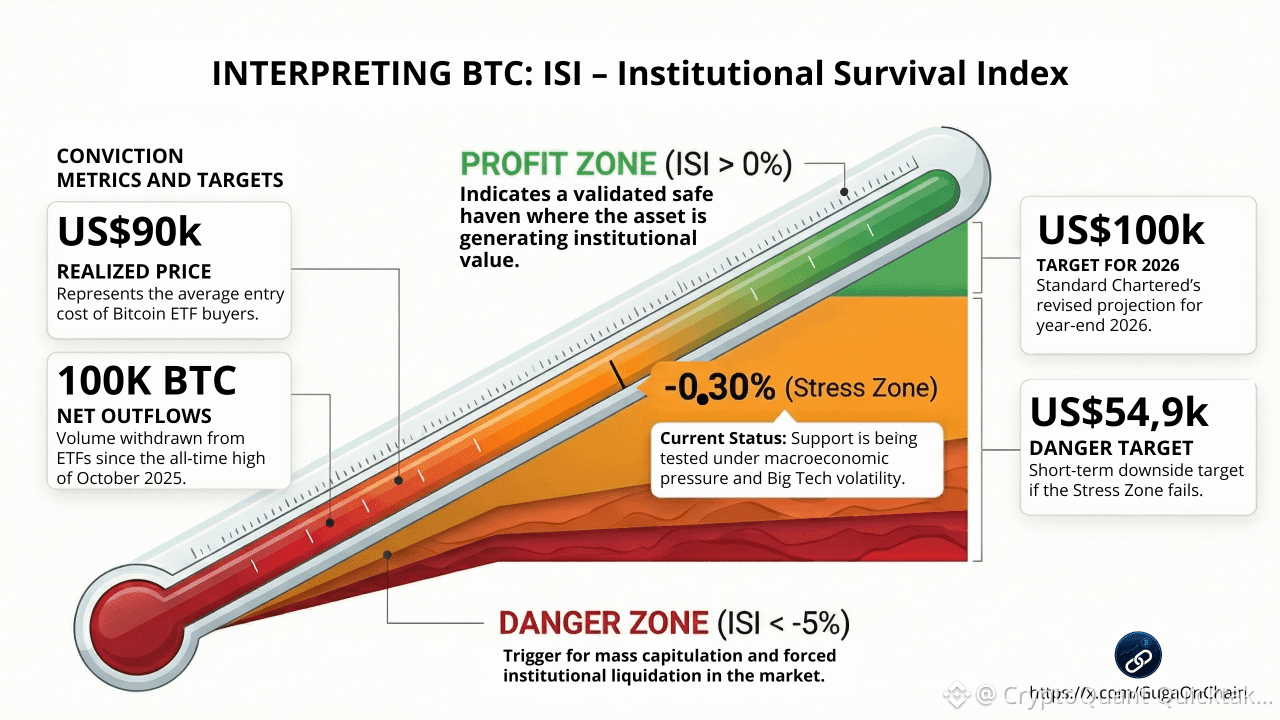
◾US$ 90,000 → Average entry price (Realized Price) for ETF buyers.
◾US$ 54,954 → "Danger" target for BTC in the short term.
◾US$ 100,000 → Revised targets by Standard Chartered for the end of 2026.
◾100,000 BTC → Net ETF outflow since the October 2025 peak.
INTERPRETING BTC: ISI – Institutional Survival Index
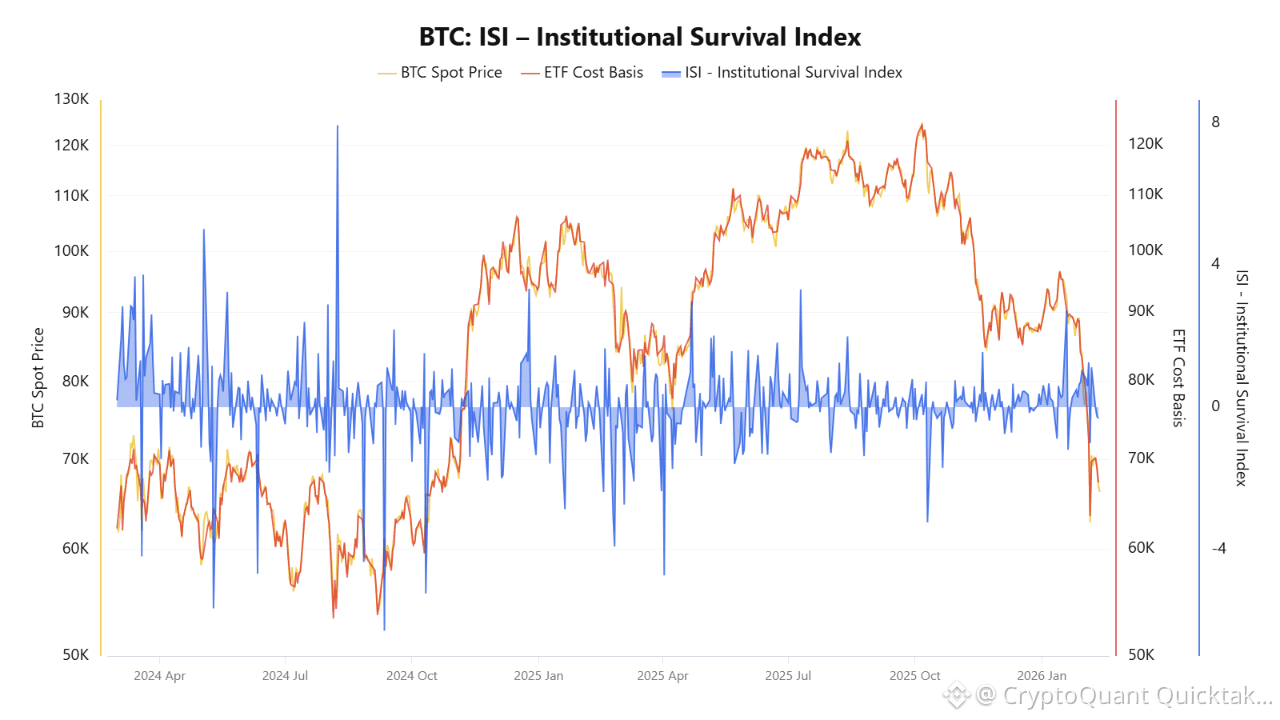
The ISI at -0.30% indicates that BTC via ETFs is operating at Critical Support. Interpret it in three zones:
◾ISI > 0% → Profit Zone. Safe Haven validated and generating value.
◾ISI 0% to -5% → Stress Zone. Support under test due to macro and Big Tech risk.
◾ISI < -5% → Danger Zone. Capitulation and forced institutional liquidation.
CONCLUSION
The Institutional Survival Index (ISI) monitors this pain threshold. If the ETF margin remains negative, the Danger Zone will be inevitable. We are living in a regime where Bitcoin seeks a new floor before the recovery promised for 2026 and, from what we see, driven by signals from the technology sector.
Technical Note → The ISI confronts the spot price (real-time) with the institutional cost (Delay T+2, due to the settlement and reporting time of the ETFs).
Written by GugaOnChain
