Crypto markets can move fast and sometimes painfully. When big positions get liquidated, it’s easy to panic, but there’s a method behind the madness. Understanding why forced liquidations happen helps you see what’s really going on beneath the price charts.
Why Liquidations Happen?
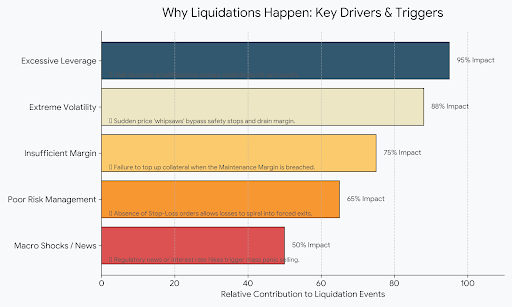
Liquidations usually happen when too many traders use high leverage. Imagine lots of people all betting big and sitting near the same price levels. When the market dips, a few forced sells can trigger a domino effect. Thin liquidity makes it worse, and automated trading systems can accelerate the slide. Big exchanges like Binance, Bybit, OKX, and Deribit execute these liquidations automatically once maintenance margins are hit adding extra selling pressure in the process.
Lessons from History?

The recent 24-hour liquidations were big, but not extreme. Back in May 2021, over $8 billion got liquidated in one day. November 2022 saw around $3 billion after FTX fell. Today’s liquidations are mostly long positions roughly 4:1 versus shorts suggesting we’re just seeing a correction in an overall bullish market, not a full-blown crash.
Market Impact and What Traders Learn?

Liquidations shake things up but also clean the system. They reduce leverage, normalize funding rates, and often create clearer support levels. After a liquidation event, markets tend to be oversold for a day or two, volatility stays high, and prices settle more rationally. Traders learn fast: size your positions carefully, diversify, and keep an eye on leverage. The recent 7–12% pullback with spiking volumes and oversold RSI shows it was more of a healthy shakeout than a reversal.
Final thoughts
Forced liquidations can feel scary, but they’re part of how crypto markets function. With better exchange risk systems, isolated margin accounts, and insurance funds, the risk of total market chaos is smaller than in the past. Knowing how these events work gives traders an edge and some peace of mind when volatility hits.