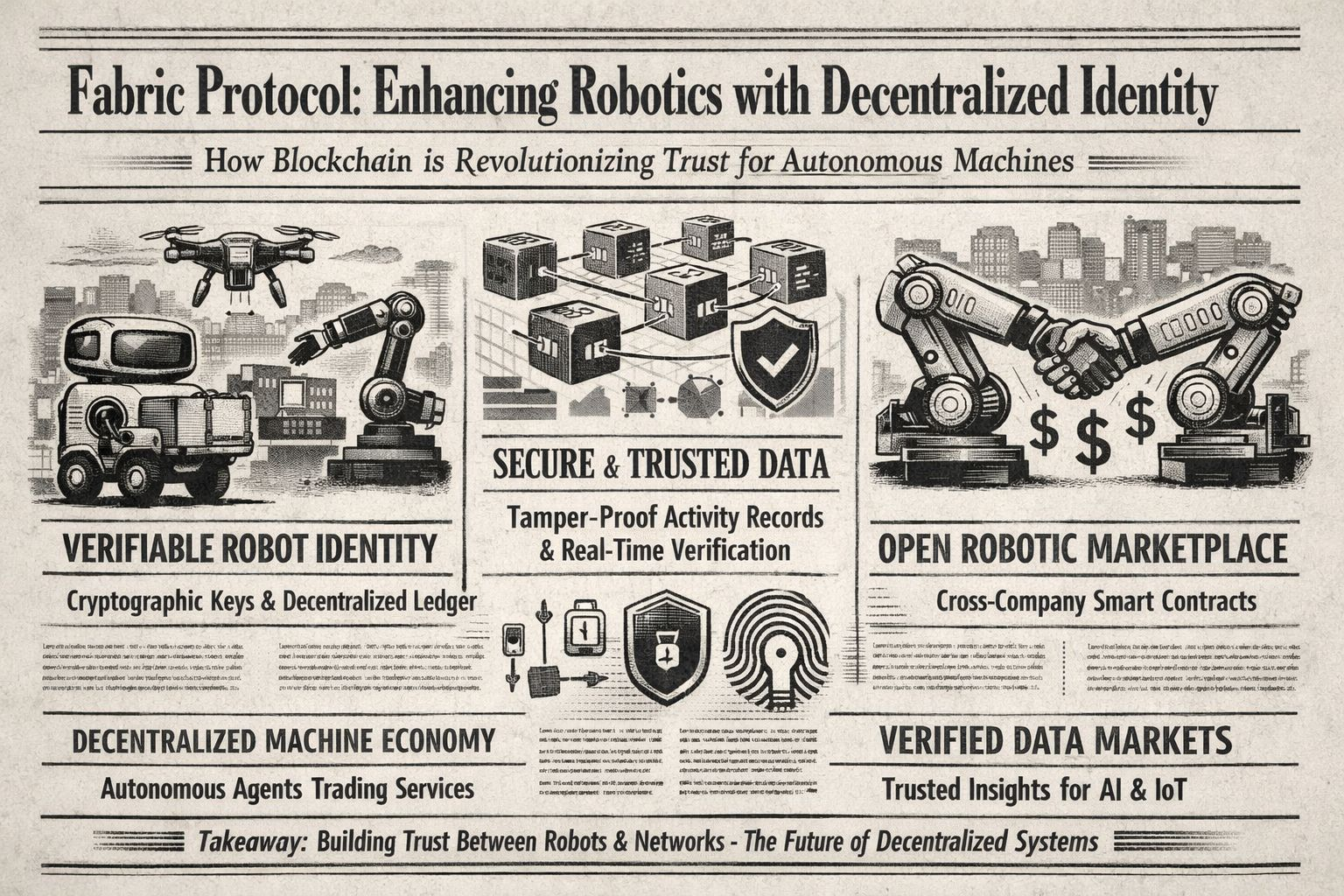
Robotics is hitting a strange wall.On the hardware side,it's all progress cheaper sensors,stronger processors,smarter machine learning models.Robots can do a lot more physically,but their actual working environments haven’t caught up.It’s not about what robots can accomplish it comes down to coordination and trust.They do their tasks,yet other machines,companies,or networks lack an honest way to confirm those actions.
This gap in verification keeps robotics locked inside closed systems.Warehouses,factories, logistics they all depend on central databases controlled by a single group.Once you involve multiple organizations with the same robotic infrastructure,trust starts to break down.Take delivery robots:if one says it finished a job,who believes the data?Or an autonomous drone gathering map data how does anyone know the results are real,not tweaked?
Fabric Protocol tackles this head on.It introduces decentralized identity and verifiable activity records for robots.These machines move beyond being anonymous gadgets in isolated networks.Now,each robot gets a cryptographic identity that signs and tracks its own actions.With this,robots build trust right into their logs a layer everyone can share and verify.
Technically,it borrows a lot from blockchain. Think about wallets and addresses people sign transactions with private keys.Robots can do the same:signing proof for finished tasks,sensor results,or service interactions. All these signed events go onto a distributed ledger,making them tamper resistant and easy to audit by anyone in the network.
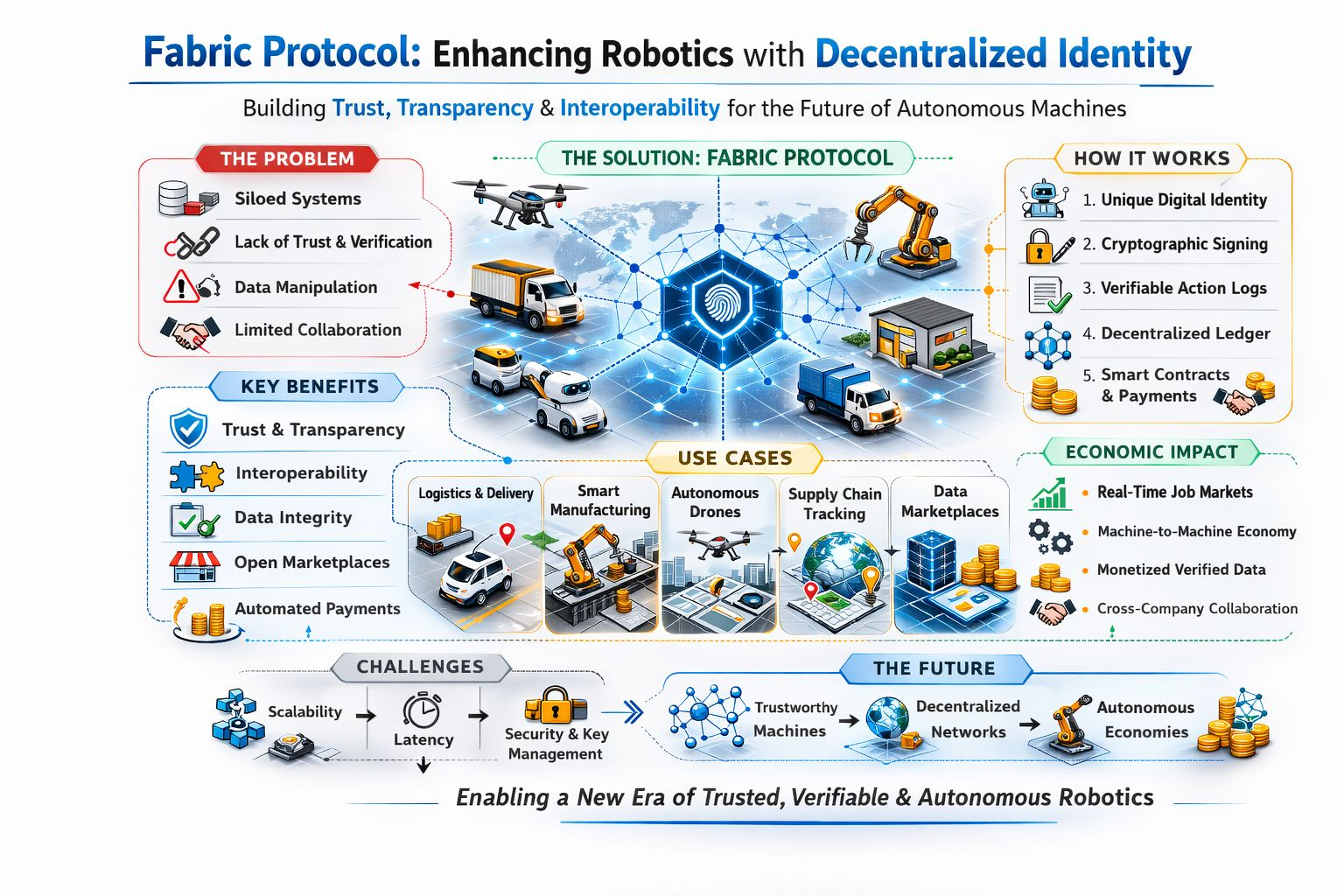
That changes things economically.Right now, robotics markets are scattered because equipment and data can’t easily move from one provider to another.With verifiable identities,robots could join open marketplaces where they get jobs in real time.Picture a delivery robot from one fleet finishing a task for a totally different company all automatically posted and settled with smart contracts.
It also flips the script on data quality.Robots pump out loads of information navigation, environmental,all kinds.When that data comes verified right at the source,it opens up new data marketplaces.Verified machine data could become priceless,especially for AI systems that crave trustworthy,real world inputs.
Still,none of this is simple.Blockchain based verification brings its own headaches latency, extra complexity,stuff that doesn’t fit every robotic system.High frequency operations can’t wait for slow consensus.That means protocols like Fabric have to carefully split real time decision making from after the fact verification.
Security doesn’t take a back seat either. Compromise a robot’s cryptographic identity, and you can fake jobs or rewrite histories. Keeping key management tight and adding hardware level security are essential if machine identities are going to mean anything.
Even with these hurdles,the big picture matches where crypto is heading.The industry now wants decentralized infrastructure well outside finance compute networks,data layers,AI coordination. Robotics fits right in.Machines are physical agents,and they can create verifiable economic activity,not just digital currencies.
If decentralized identity becomes normal for machines,robotics can break out of isolation. We start getting networks of autonomous agents that interoperate,not just better oversight.Eventually,we could see machine to machine economies devices proving their work,trading services,jumping into decentralized markets.
Takeaway
Fabric Protocol marks a shift in how crypto thinks about real world systems.We’re moving beyond just digital assets.The next big blockchain experiments might revolve around proving physical actions.For investors and builders,the lesson is to judge projects on whether they solve real coordination problems not just token hype.Protocols that build trustworthy links between machines, data,and incentives could shape the future of decentralized systems. @Fabric Foundation $ROBO #ROBO