
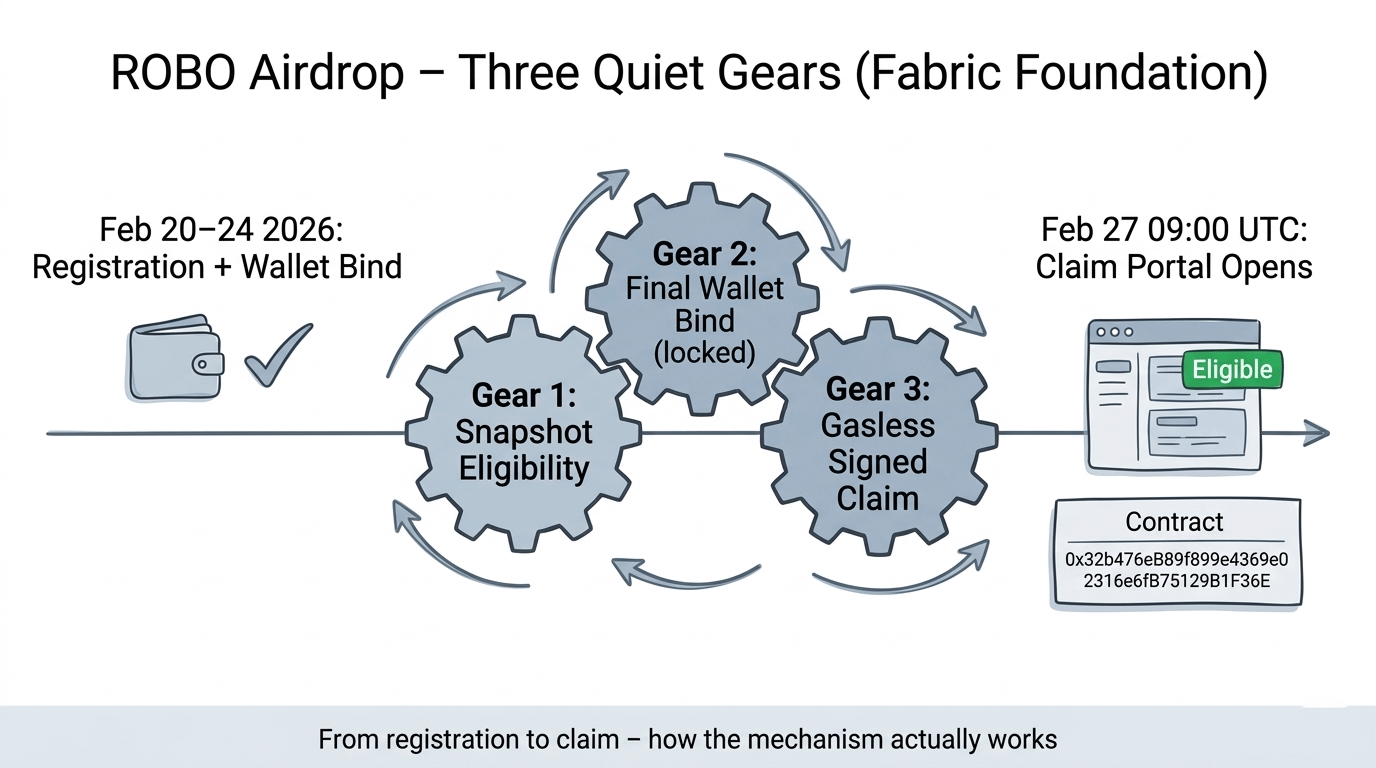
I closed a small position around midnight, poured the usual black coffee, and opened the Fabric Foundation ROBO airdrop claim portal just to double-check. The dashboard refreshed at exactly 09:00 UTC on February 27, 2026 — no fanfare, just a quiet green “eligible” tag next to my bound wallet. That single moment still sits with me because everything before it (the February 20 registration scramble, the wallet-binding deadline at 03:00 UTC on the 24th) suddenly felt real once the on-chain path lit up.
the moment the dashboard refreshed
You connect an EVM wallet, sign one gasless message, and the ROBO tokens start moving from the distributor address tied to the contract at 0x32b476eB89f899e4369e02316e6fB75129B1F36E (view it on Etherscan if you want the raw proof). No crowded gas war, no surprise fees — just a clean transfer that hits your balance within minutes. I watched my own allocation land while the market was still sleeping; the quiet efficiency is what separates this Fabric Foundation ROBO airdrop from the usual chaos. It reminded me of the first time I claimed an early liquidity incentive on Base — same calm, same feeling that the mechanism actually works instead of just promising to.
The three quiet gears I keep turning over in my head are simple: first the snapshot eligibility that locked in February activity, second the final wallet bind that can’t be changed, and third the signed claim that triggers the actual on-chain movement. Miss any gear and the whole flywheel stalls. That’s why I spent the registration window checking every linked address twice — one missed social verification and you’re watching from the sidelines while others claim.
honestly the part that still bugs me
A couple of friends who qualified through partner ecosystems (Kaito, Surf AI) saw their allocations appear instantly; mine took the full cycle. Nothing broken, just the natural queue behavior you notice once you live on-chain every day. It made me pause. The Fabric Foundation ROBO airdrop updates promised broad access from registration to claim portal opening, yet the early flow clearly favored the tighter ecosystem circles. Not unfair, exactly — just a reminder that on-chain design always rewards the first movers who were already plugged in.
Two market examples hit me while staring at the explorer last week. When Binance listed ROBO on March 4 the volume spiked hard, pulling in new wallets that never touched the original eligibility portal; meanwhile a similar robotics-adjacent project on another chain saw its claim window close with half the tokens still unclaimed because the gas fees scared casual users away. Fabric’s gasless sign trick dodged that trap completely. Still, I caught myself wondering if the same clusters of late registrants will ever catch the same wave the early wallets did.
3:42 AM and this finally clicked
Lying there with the screen glow on my ceiling, I realized the real play isn’t the token amount in my wallet — it’s the silent infrastructure being built for machines that will one day hold their own addresses and earn their own ROBO for verified work. The airdrop is just the first on-ramp. We’re handing out the keys before the robots even need them. That thought kept me up longer than the coffee should have allowed.
The next few months will show whether these early distributions actually seed the kind of decentralized robot economy the whitepaper sketches, or whether they just become another traded asset on the usual exchanges. I’m watching the on-chain activity more than the price chart these days.
If you went through the same registration-to-claim journey, drop your honest take below — did the flow feel as smooth on your end, or did one of those quiet gears catch you too?
@Fabric Foundation #ROBO $ROBO