
information online. Whether signing up for a service, verifying age, or applying for financial products, users often have to upload documents that reveal far more information than necessary.
Zero-knowledge systems offer a better alternative. Instead of sharing full identity documents, users can prove specific facts about themselves without exposing additional data. For example, someone could prove that they are over eighteen years old without revealing their exact birth date, name, or identification number.
This approach allows individuals to maintain control over their personal information. Instead of handing over sensitive data to companies and websites, users provide only the proof needed to confirm a requirement. This reduces the risk of data leaks, identity theft, and misuse of personal information.
The concept of data ownership is becoming increasingly important in the modern digital world. Large technology platforms often collect huge amounts of user data and store it in centralized databases. Once the data is collected, users have very little control over how it is used or shared.
Zero-knowledge technology helps change this dynamic by allowing people to interact with digital systems while keeping their information private. Instead of revealing the data itself, users provide proofs that confirm the validity of certain statements. In this way, trust is created without exposing sensitive details.
The technology is also being explored in many other industries. In healthcare, hospitals could verify that a patient qualifies for treatment without sharing the patient’s full medical history. In supply chains, companies could prove that products meet certain standards without revealing confidential business information. Even voting systems could use zero-knowledge proofs to confirm that votes are legitimate while keeping voter identities anonymous.
Of course, the technology is still evolving. The mathematics behind zero-knowledge proofs is extremely complex, and generating these proofs can require significant computing power. Developers and researchers around the world are working on improving the efficiency of these systems so that they can be used more easily in real-world applications.
Several advanced forms of zero-knowledge proof systems already exist, such as zk-SNARKs and zk-STARKs. These systems allow complex computations to be verified quickly while keeping the underlying data private. Over time, improvements in these technologies are making them faster and more accessible for developers building decentralized applications.
As blockchain technology continues to evolve, many experts believe zero-knowledge proofs will become one of its most important foundations. They solve a key problem that early blockchains struggled with: how to maintain transparency and trust while protecting privacy.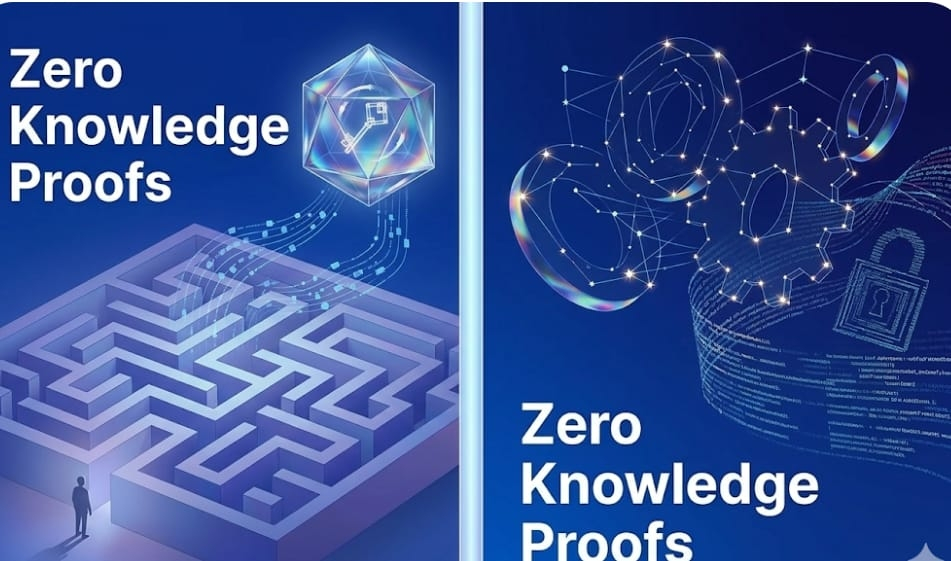
In many ways, zero-knowledge blockchains represent a new stage in the development of the internet. Early digital systems required people to reveal information in order to build trust. Today, technology is moving toward a model where trust can exist without unnecessary disclosure.
Instead of sharing sensitive information, people can rely on mathematical proofs that confirm the truth while keeping the data hidden. This simple idea has the potential to reshape how digital systems work.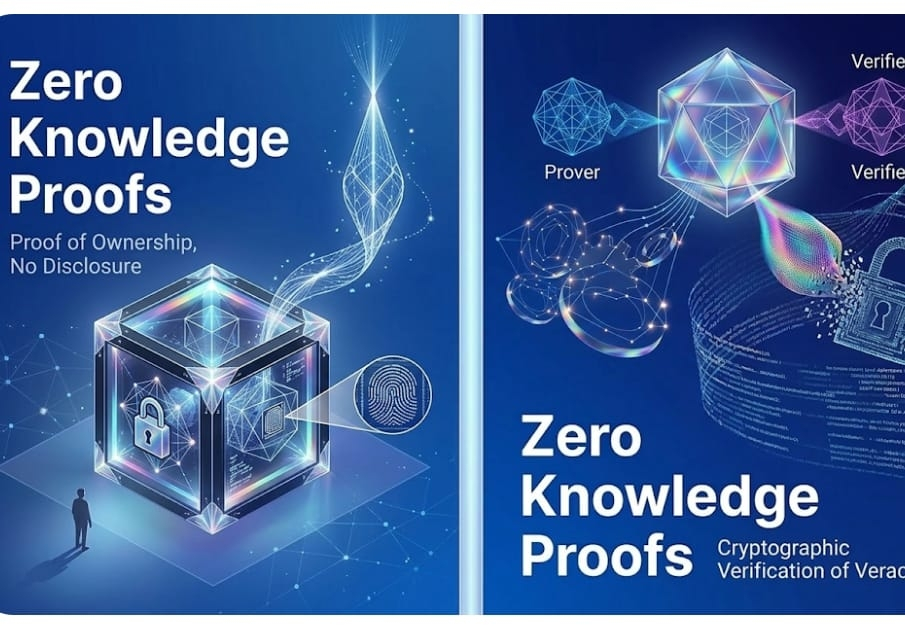
As concerns about privacy, security, and data ownership continue to grow, technologies like zero-knowledge proofs are becoming more important than ever. They offer a future where people can interact online, make transactions, and verify information without giving up control of their personal data.
In that sense, zero-knowledge blockchai n technology is not just about improving privacy. It represents a broader shift toward a more secure, user-controlled digital world where verification and confidentiality can finally exist together.@Mira - Trust Layer of AI #night $NIGHT
