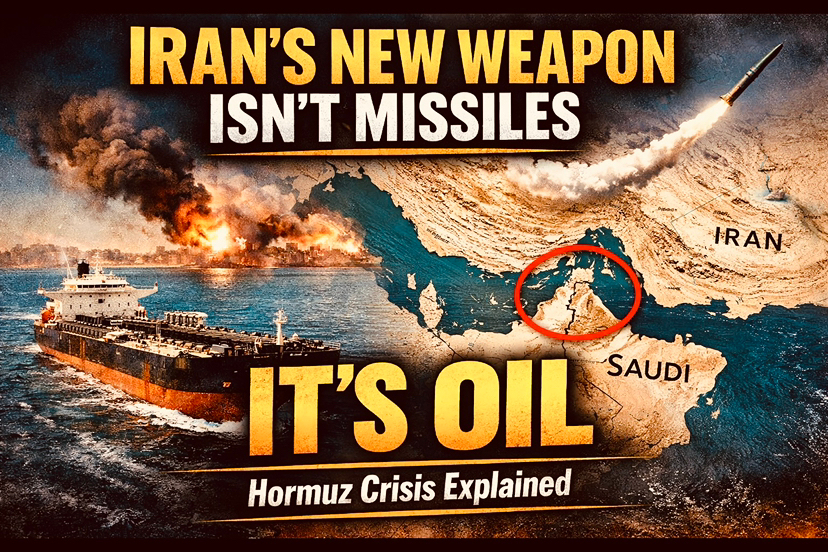
Everyone is watching the missiles between Iran and Israel, but the real story might be happening somewhere else — the Strait of Hormuz.
While airstrikes and drone attacks dominate headlines, Iran has quietly opened another front: global energy.
After joint Israeli-U.S. strikes on Iranian targets in late February, the conflict escalated rapidly across the region. The operation targeted military and leadership sites in Tehran and triggered massive retaliation from Iran.
Iran responded with waves of ballistic missiles and drones targeting Israel and U.S.-linked assets across the Middle East, calling it one of the “heaviest operations” since the war began.
But the real pressure point isn’t the battlefield.
It’s oil.
The Strait of Hormuz — the narrow waterway where nearly 20% of the world’s oil supply passes — has become a strategic weapon in this conflict. Shipping traffic dropped dramatically as attacks and threats forced tankers to stay away.
Oil prices quickly surged above $100 per barrel, sending shockwaves through global markets and raising fears of a new energy crisis.
At the same time, missile exchanges between Iran and Israel continue, with civilian areas hit and casualties rising on both sides as the war enters its second week.
This is why analysts say the war is entering a new phase.
Instead of only fighting Israel directly, Iran may be trying to increase the economic cost of the war for the entire world.
If Hormuz closes completely, the consequences could include:
🌿Global oil shortages
Massive fuel price spikes
Supply chain disruptions
A potential worldwide economic shock
In other words, this conflict might not stay a regional war.
It could become a global economic battlefield.
And that may be exactly the strategy.