

Kyle Samani’s post-exit criticism of crypto appears hypocritical given his past success and influence in the industry.
Conflicting signals around Hyperliquid and Multicoin suggest his departure may involve internal tensions rather than pure disillusionment.
Despite his exit, major investors remain confident that crypto is entering a new “builder-driven” phase of long-term growth.
An in-depth analysis of Kyle Samani’s controversial exit from crypto, his criticism of the industry, internal speculation, and why leading investors still believe in crypto’s long-term future.
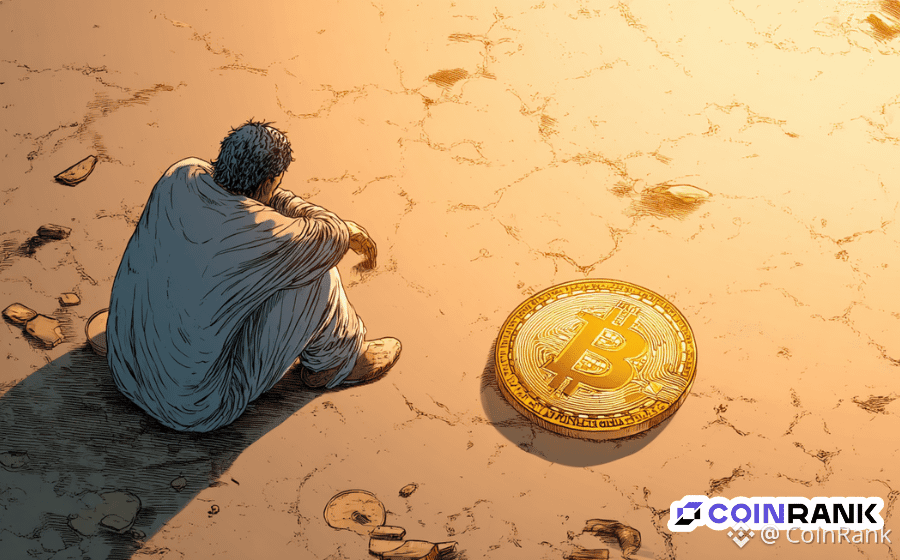
“BURNING THE BRIDGE” IS SIMPLY DISGUSTING
Objectively speaking, Kyle Samani has made meaningful positive contributions to the crypto industry over the years. Whether through substantial financial support for early-stage projects (regardless of his motives, the impact was real), or through shaping narratives and promoting ideological frameworks, he directly or indirectly influenced the direction of the industry’s development.
From a results-oriented perspective, Kyle Samani has also achieved outcomes in crypto that most people could never imagine. On this point alone, it is entirely reasonable for Hasseb Qureshi to call him “one of the best investors in the industry,” or for Mable to describe him as a “top-tier player.”
Precisely because of this, the “ugly side” he has repeatedly displayed in the days following his exit from crypto feels even more repulsive.
On the very day he announced his departure, Kyle Samani replied to Taran, founder of Stix, saying:
✏️ “Crypto is nowhere near as interesting as many people (including myself) once thought. I used to believe in the Web3 vision and in dApps, but I don’t anymore. Blockchains are essentially asset ledgers. They will reshape finance, but that’s about it. They won’t have much broader impact.”
He deleted the post almost immediately after publishing it.
Fine—this was likely his genuine view, one he had never publicly expressed before. But the fact that he deleted it at least suggests he understood that “burning the bridge” was not exactly graceful.
Unfortunately, he did not stop there.
On February 8, Kyle Samani once again attacked the industry that had helped build his success:
✏️ “Hyperliquid reflects almost everything that’s wrong with crypto. Its founders fled their home country to build it, openly facilitate crime and terrorism, run a closed-source system, and still require permission.”
While bluntness has always been one of his controversial traits, this time his remarks were illogical and clearly inconsistent with the facts. They were difficult to defend. Coming from someone who now positions himself as an outsider, the comments felt even more jarring.
In the past, even his most extreme statements could usually find support within certain communities—for example, his alignment with Solana or his long-standing criticism of Ethereum. This time, however, he spoke from outside the industry, rejecting crypto as a whole.
The backlash was inevitable. Kyle Samani successfully provoked widespread outrage.
When people who have lost money in crypto complain about the industry, it is understandable. Everyone needs an emotional outlet. But Kyle Samani is someone who made enormous wealth in crypto and achieved significant social mobility through it. For him to turn around and attack the industry immediately after announcing his exit inevitably feels hypocritical and distasteful.
To put it bluntly, this is a classic case of “biting the hand that fed you.”
He wants to walk away with the wealth and status the industry gave him, while rushing to cut ties and denounce it at the same time. There is no such thing as getting the best of both worlds so easily.
A STRANGE SENSE OF INCONSISTENCY: IS THERE MORE BEHIND HIS EXIT?
Another deeply puzzling aspect of Kyle Samani’s departure is his choice of target. This time, he singled out Hyperliquid for criticism—yet on the other hand, Multicoin Capital has been steadily increasing its exposure to Hyperliquid.
Crypto Banter founder Ran Neuner also pointed out that in a recent weekend post by Multicoin’s other co-founder, Tushar Jain, outlining the firm’s five-year investment roadmap, Hyperliquid was prominently featured as a core project under the third major theme, “Financial Globalization.” Meanwhile, DePIN—an area Kyle Samani had long been extremely bullish on—was not mentioned at all.
Based on this, Ran Neuner proposed a hypothesis: that Kyle Samani may not have left voluntarily, but was instead forced out due to internal conflicts with Tushar Jain. Under the constraints of a non-compete agreement, he may then have had no choice but to exit the crypto industry entirely.
Although this theory lacks any concrete evidence, it does seem to better explain the inconsistencies mentioned above, as well as Kyle Samani’s sudden shift in attitude.
🔍Which is more believable?
That a top-tier mind who spent years deeply engaged in crypto suddenly woke up one day and realized the entire industry was hollow and meaningless?
Or that Kyle Samani, driven by resentment and unable to continue profiting from the industry, chose to turn against it?
Whether out of faith in the industry’s future, or out of residual respect for Kyle Samani’s past achievements, emotionally I am more inclined toward the second explanation.
As for the truth, it may only be revealed someday in the future—probably at a time when no one cares about this story anymore.
DOES CRYPTO STILL HAVE A FUTURE?
Over the past few years, we have seen a steady flow of talent migrating from crypto to AI. But when a symbolic figure like Kyle Samani chooses to leave the space entirely, it inevitably delivers a heavy blow to confidence across the industry.
So, does crypto really have no future?
This is clearly not a question that can be answered by any single individual’s opinion. After Kyle Samani’s departure, several influential leaders of comparable stature have articulated—through their own reasoning—why they remain optimistic about the industry’s long-term prospects.
Tushar Jain has maintained his conviction. The eight major investment themes recently released by Multicoin Capital remain firmly centered on the crypto ecosystem.
Haseeb Qureshi, meanwhile, views Kyle Samani’s exit as a genuine sign of the industry’s maturation. In his view, pioneers and long-term settlers are rarely the same group—this is simply human nature. As he put it:
✏️ “I’m still very bullish on crypto. I know it sounds strange to say this in a volatile market, because people have little patience for dreams that may take ten years to realize. The era of dreamers is ending, and the era of builders is beginning. That is neither inherently good nor bad.”
From another perspective, a16z Crypto partner and Web3 pioneer Chris Dixon rejected Kyle Samani’s view that crypto can only reshape finance by drawing an analogy to the early internet:
✏️ “Infrastructure and distribution networks usually emerge before new application categories. The internet didn’t start with social media, streaming, or online communities. It started with packet switching, TCP/IP, and basic connectivity. Only after hundreds of millions of people got online did entirely new cultural and economic categories emerge. Crypto is likely similar. A reasonable hypothesis is that we first need to onboard hundreds of millions of users through payments, stablecoins, savings, and DeFi before we see meaningful adoption in media, gaming, AI, or other more distant domains.”
Ultimately, the future is shaped by people.
As long as enough individuals continue to share this belief, the narrative flame of crypto can still be reignited.
▶ Read the original article
ꚰ CoinRank x Bitget – Sign up & Trade!
Looking for the latest scoop and cool insights from CoinRank? Hit up our Twitter and stay in the loop with all our fresh stories!
〈Is Kyle Samani’s Exit From the Crypto Scene Hiding a Deeper Story?〉這篇文章最早發佈於《CoinRank》。


