
What @MidnightNetwork seems to understand is that privacy does not have to mean disappearing behind a high wall. I think that is where a lot of older projects lost the room; they pushed so hard toward total concealment that the whole thing started to feel detached from how people, companies, and actual systems work. Most users are not asking to vanish. They just do not want to expose ten layers of personal or financial detail to prove one small thing. That is the part I keep coming back to. Midnight is not really asking whether data can be hidden—plenty of projects have tried that angle. It is asking whether truth can be verified without dragging all the underlying information into public view. That is a better question, and a much harder one too.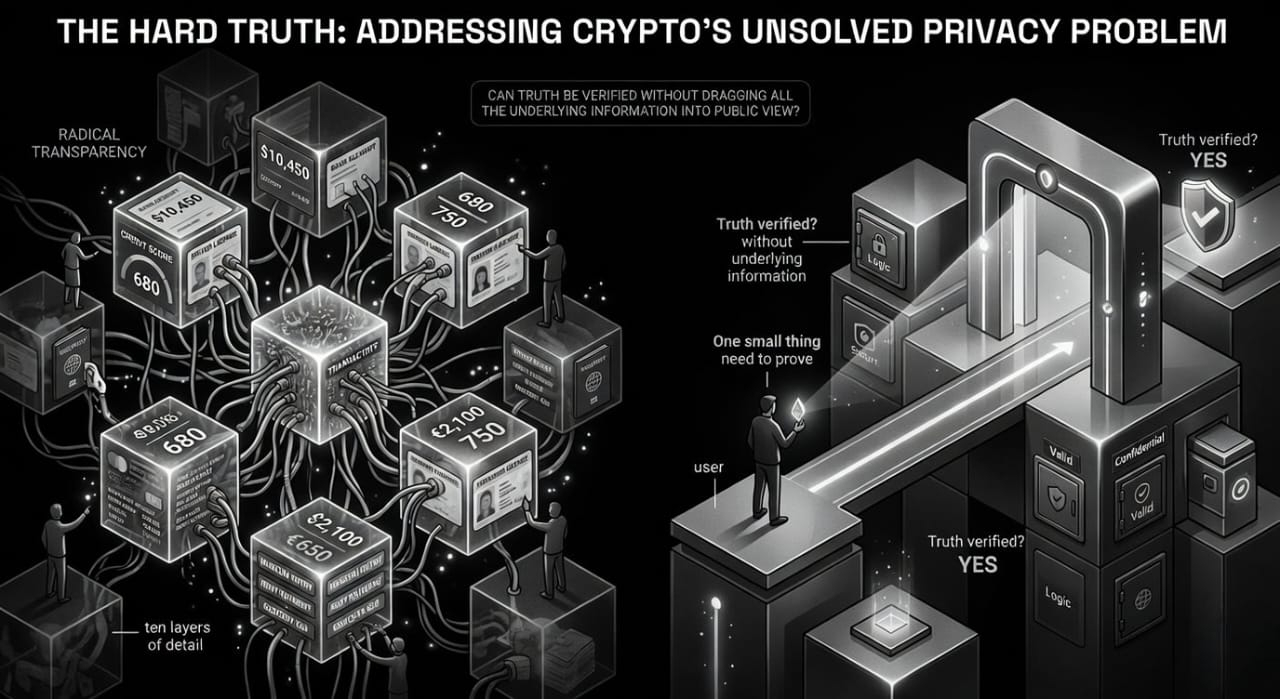
Honestly, harder is good because easy narratives are usually worthless in this market. I do not find the project interesting because it wraps itself in the usual privacy language; I find it interesting because it is trying to deal with a real structural flaw in blockchain design. Public verification became a kind of dogma in crypto, where people treated total transparency like it was automatically virtuous, even when it was obviously clumsy, invasive, and in many cases unusable. Midnight seems to be pushing back on that without falling into the old trap of making secrecy the entire identity. That matters more than people think. A person should be able to prove they qualify for something without dumping their life onto a ledger, and a business should be able to execute logic without exposing internal details to whoever feels like looking. A network should be able to confirm something is valid without turning every interaction into a public archive. None of that feels extreme to me—it feels overdue.
But here’s the thing: I’ve seen plenty of projects identify a real problem and still go nowhere. That part alone means very little. Crypto is littered with smart ideas that could not survive contact with actual users, builders, or market pressure. Midnight does not get a pass just because the core thesis is better than average. I’m still looking for the moment this actually breaks through the whitepaper layer and becomes something people need rather than something they admire from a distance. That is the real test—not whether the idea sounds clean, but whether this kind of controlled disclosure can become practical enough that builders stop treating it like a niche feature and start treating it like basic infrastructure.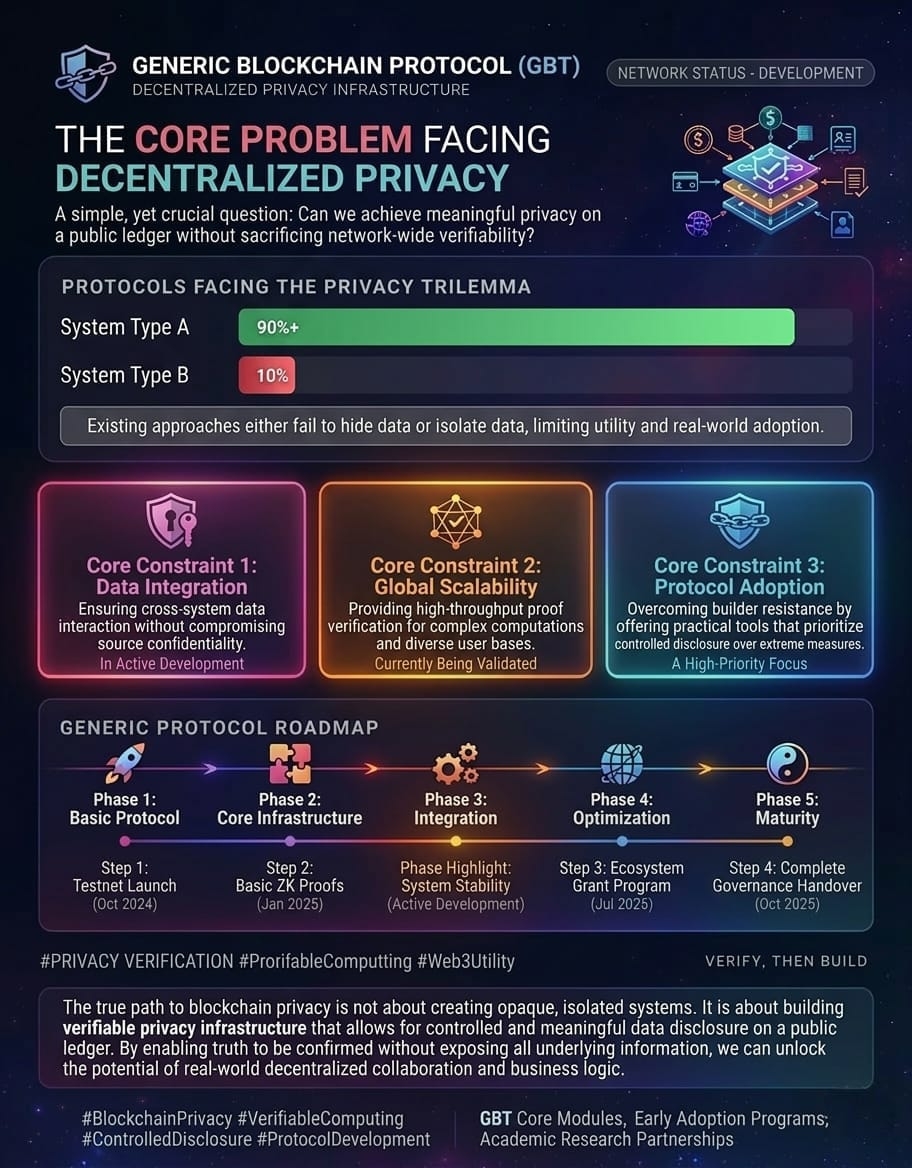
The timing is certainly better now than it would have been a few years ago. Back then, the market had enough momentum to ignore obvious design flaws, but now the exhaustion is visible. People have seen what constant exposure leads to: surveillance, data leakage, and systems that feel hostile to those using them. The old romance with radical transparency has worn down, and that gives Midnight a narrow but real opening. It stands out because it sounds like it is trying to solve a problem the industry kept postponing. Most projects chase attention first and purpose later, but Midnight feels built in the opposite direction—the purpose lands before the pitch does. Still, I do not trust early clarity anymore. I’ve seen clean narratives rot on contact with incentives, so I keep asking: does this become useful in a way that survives the market’s bad habits, or does it get absorbed into the cycle of noise? Midnight is interesting because it isn't trying to make blockchain louder; it is trying to make it less careless. That is a real difference, and maybe even an important one.
#MidnightNetwork #NIGHT #Privacy #BinanceCreator $NIGHT
