
#ROBO #Fabric #AI #Robotics #Web3 #FabricProtocol 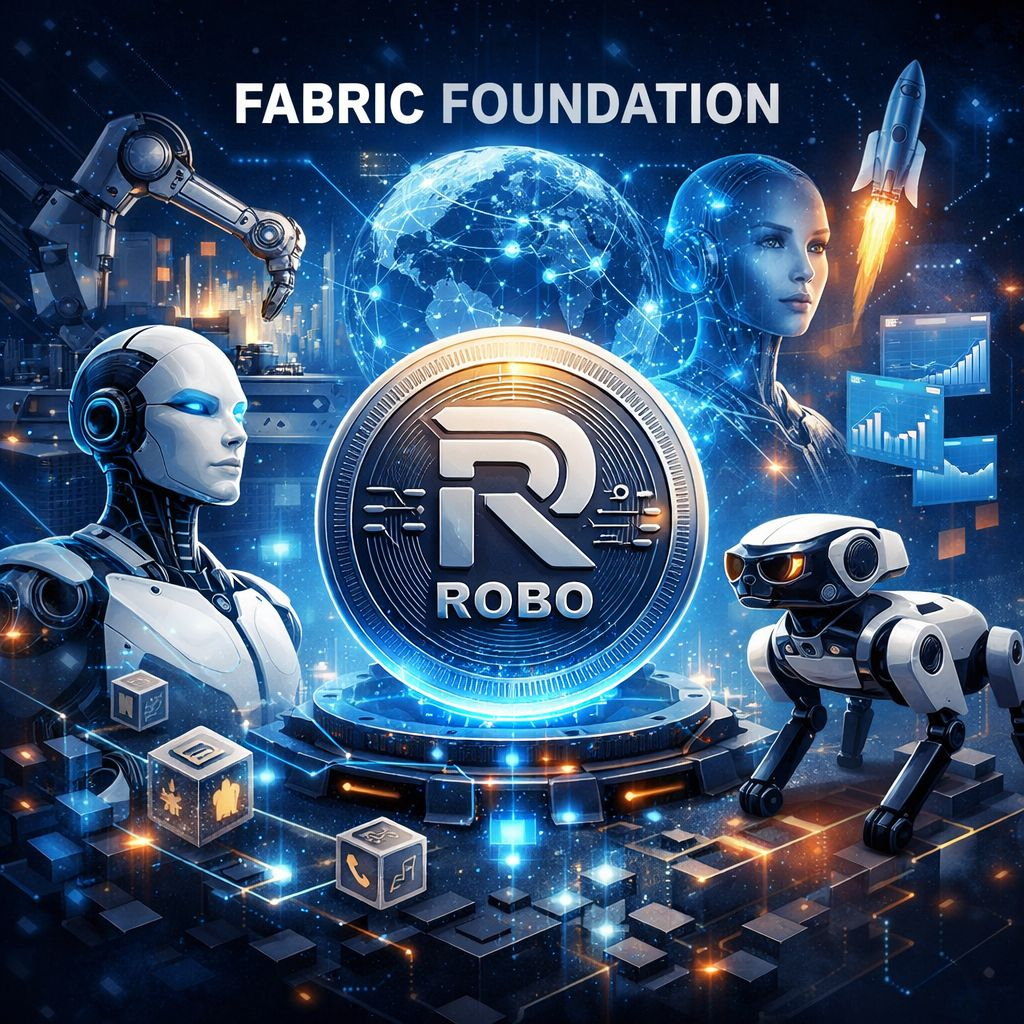 The intersection of artificial intelligence and blockchain is quickly becoming one of the most exciting narratives in the crypto industry. One project that is beginning to attract attention in this space is Fabric Foundation, a platform aiming to build infrastructure for what it calls the “robot economy.” At the center of this ecosystem is the native token ROBO, designed to power transactions, incentives, and coordination between autonomous AI agents and robotic systems.
Fabric Foundation’s vision is based on a simple but powerful idea: in the future, AI agents and robots may not only perform tasks but also participate in economic activity. To enable this, the project focuses on creating a decentralized framework where machines and AI systems can interact, exchange data, and execute transactions securely on blockchain networks. In this ecosystem, ROBO acts as the utility token that supports payments, governance participation, and network incentives.
Recently, the project has gained traction through community campaigns and growing interest around AI-focused crypto initiatives. The broader market trend toward AI-powered technologies has also played a role in increasing awareness around Fabric Foundation. As more developers and users explore AI-driven decentralized systems, projects working at this intersection could see increasing attention from both investors and builders.
From a market perspective, early-stage ecosystem tokens like ROBO often depend heavily on adoption, partnerships, and continued development of the underlying technology. If Fabric Foundation successfully expands its ecosystem and integrates real-world AI or robotic applications, the demand for its token could naturally increase as network usage grows. This type of utility-driven demand has historically been one of the main catalysts behind long-term value growth in blockchain projects.
While the project is still developing and the long-term outcome will depend on execution, the concept behind Fabric Foundation reflects a larger trend shaping the future of Web3: the convergence of blockchain, automation, and artificial intelligence. If that vision continues to gain momentum, ROBO could become an interesting token to watch as the idea of a decentralized “robot economy” gradually moves from theory to reality.
