
I came across Fabric Protocol recently, and it made me pause for a bit. After spending years around crypto, you develop a habit of looking past the surface of new announcements. Some projects immediately feel like short-term narratives, while others make you stop and think about where the industry might actually be heading. Fabric gave me that second feeling.
What first caught my attention wasn’t the usual things people focus on, like the token or early hype. It was the idea behind the project. The protocol is trying to build an open network where robots, machines, and autonomous systems can interact with each other using blockchain infrastructure. Instead of everything being controlled by centralized platforms, the system aims to coordinate data, computation, and activity through a public ledger.
That idea isn’t completely new. I’ve seen similar conversations in crypto before, especially during the early days of the Internet of Things narrative. Back then people talked about devices paying each other for services like bandwidth, electricity, or data. It sounded interesting, but the technology wasn’t really ready yet. Now the conversation is starting to come back again, but this time it’s mixed with robotics and AI, which makes it feel slightly more realistic.
From what I understand, Fabric Protocol is designed to act as a coordination layer for machines and agents. Robots connected to the network could theoretically complete tasks, record their actions, and verify the work through a shared system. The blockchain element helps provide transparency and trust so that different participants can rely on the same record of events.
What stood out to me is the focus on verifiable computing and machine identity. If robots are going to do real work in the physical world, there needs to be a reliable way to prove that the work actually happened. Without that, it becomes difficult to coordinate tasks or distribute payments in an automated environment. Fabric seems to address that by creating a system where machine activity can be logged and verified on-chain.

The idea of machines having digital identities is interesting. Each robot or autonomous system could have a trackable history of tasks, performance, and interactions. That kind of transparency might sound simple, but it becomes important when automation moves beyond software and starts affecting real-world processes.
The protocol is supported by an organization called the Fabric Foundation, which focuses on governance and long-term development of the ecosystem. That structure feels familiar because many crypto projects eventually create a foundation to guide research, development, and community coordination. It usually helps keep the long-term vision separate from the short-term market noise.
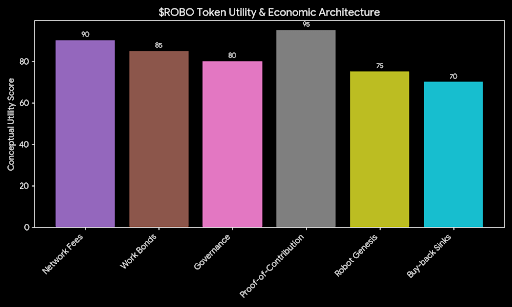
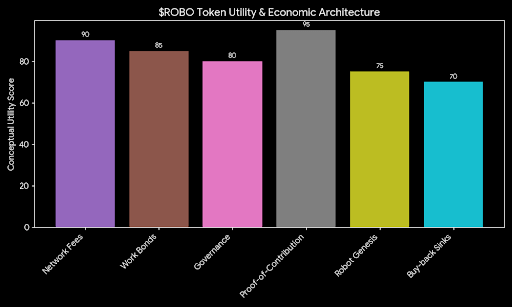
Like most blockchain networks, Fabric also introduces its own token called ROBO. The token is meant to be used for payments, staking, governance decisions, and rewards within the ecosystem. If robots or agents perform tasks through the network, the token would act as the settlement layer that distributes value between participants.
This part of the design is something we’ve seen many times before. Tokens often serve as both an incentive mechanism and a coordination tool. Sometimes they work extremely well when real activity supports them. Other times the token becomes the main focus while the underlying technology struggles to find actual usage.
That’s why whenever I see a new infrastructure project, my mind immediately shifts toward adoption. In crypto, ideas are everywhere, but functioning ecosystems are much harder to build. Liquidity, developers, and real users all need to show up at the same time for a network to gain momentum.

In the case of Fabric, adoption might be even more challenging because robotics operates very differently from typical crypto applications. Most blockchain projects exist entirely in the digital world, where software can be deployed quickly and updated frequently. Robotics is slower by nature. Hardware development, testing, and real-world deployment take time, sometimes years.
Because of that, projects that combine blockchain with physical machines usually move at a much slower pace than the rest of the crypto industry. While markets expect quick results, robotics ecosystems tend to grow gradually.
Still, the broader direction does make sense when you think about how technology is evolving. AI systems are already becoming more capable of performing tasks independently. Automation is expanding across industries, from logistics to manufacturing. As machines become more autonomous, the question of how they interact economically becomes more relevant.
If robots or intelligent systems eventually perform services, negotiate tasks, or exchange resources, they will likely need some form of infrastructure to manage those interactions. Fabric seems to be trying to build that layer before the demand fully arrives.
Whether that timing works out is another question.
Crypto has a habit of exploring future ideas long before they become practical. Sometimes those experiments turn into important infrastructure later on. Other times they fade away because the ecosystem wasn’t ready yet.
That’s why I try not to form strong opinions too early. The concept behind Fabric is definitely interesting, but the real test will come once the early curiosity fades. The important signals will be things like developer activity, real integrations, and whether actual machines start connecting to the network.
For now, it feels like one of those projects that’s worth quietly watching rather than reacting to immediately. The idea touches on a future where machines, software, and humans might collaborate in more open systems. But turning that vision into something that works at scale is a long process.
So at this point, I’m mostly just observing. Waiting to see if developers start experimenting with the protocol, if the ecosystem grows naturally, and if real activity eventually begins to flow through the network. Like many things in crypto, time will probably reveal whether it becomes meaningful infrastructure or simply another interesting idea that appeared a bit too early.