One afternoon I scanned a QR code, unlocked a public bicycle, and rode around the lake for an hour. No ownership. No maintenance. No storage. Just the value of using it when I needed it.
That feeling stuck with me. Access without burden.
Fabric Foundation is building that same logic into the robot economy, except with a twist that changes everything.
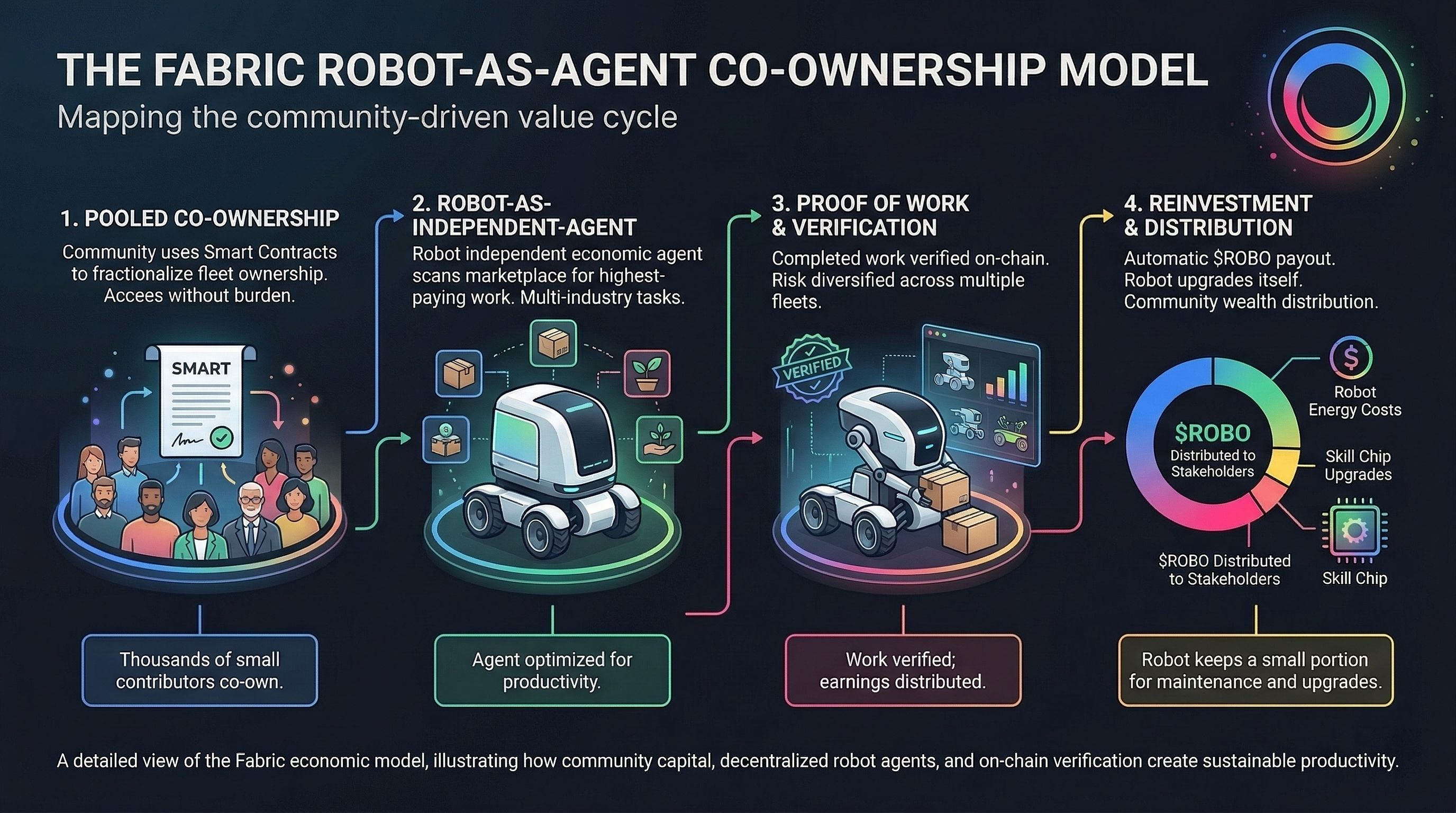
Under their model, you don't need $50,000 to own a delivery robot. A thousand people can pool capital through a smart contract and co-own a fleet. Each contributor holds fractional ownership, represented on-chain through Decentralized Identity.
The robot then operates as an independent economic agent. It scans the Fabric network for the highest-paying tasks, moves to where demand is strongest, completes work verified through Proof of Robotic Work, and the smart contract automatically distributes $ROBO back to every stakeholder proportionally. No middleman. No delays. No landlord taking the margin.
The robot keeps a small portion to cover energy costs and upgrade its own Skill Chips. Then goes back to work.
Here's the risk management insight most people miss. If you own one robot and it breaks, your income drops to zero. If you own one percent of a thousand robots operating across different cities and industries, one breakdown is barely noise.
You stopped owning a machine. You started owning productivity.
In the old economy, corporations owned the machines and hired humans to run them. Fabric inverts that completely. A small village could collectively invest in an agricultural robot fleet, send them out to work surrounding farms, and share the returns.
Machinery as a tool for distributing wealth. Not concentrating it.
@Fabric Foundation #ROBO $ROBO