
I do not trust systems I cannot verify.
Most people investing in robotics and AI right now are trusting systems they cannot verify. That is the gap that @Fabric Foundation is building a solution for.
Here is the problem nobody is talking about loudly enough. When a robot operates in a hospital corridor, delivers a package to your door, or manages inventory in a warehouse — who is that robot? Not what model it is. Not what company manufactured it. Who is it, cryptographically, verifiably, and permanently? Right now the answer is: whatever the vendor tells you. That is not identity. That is a label.
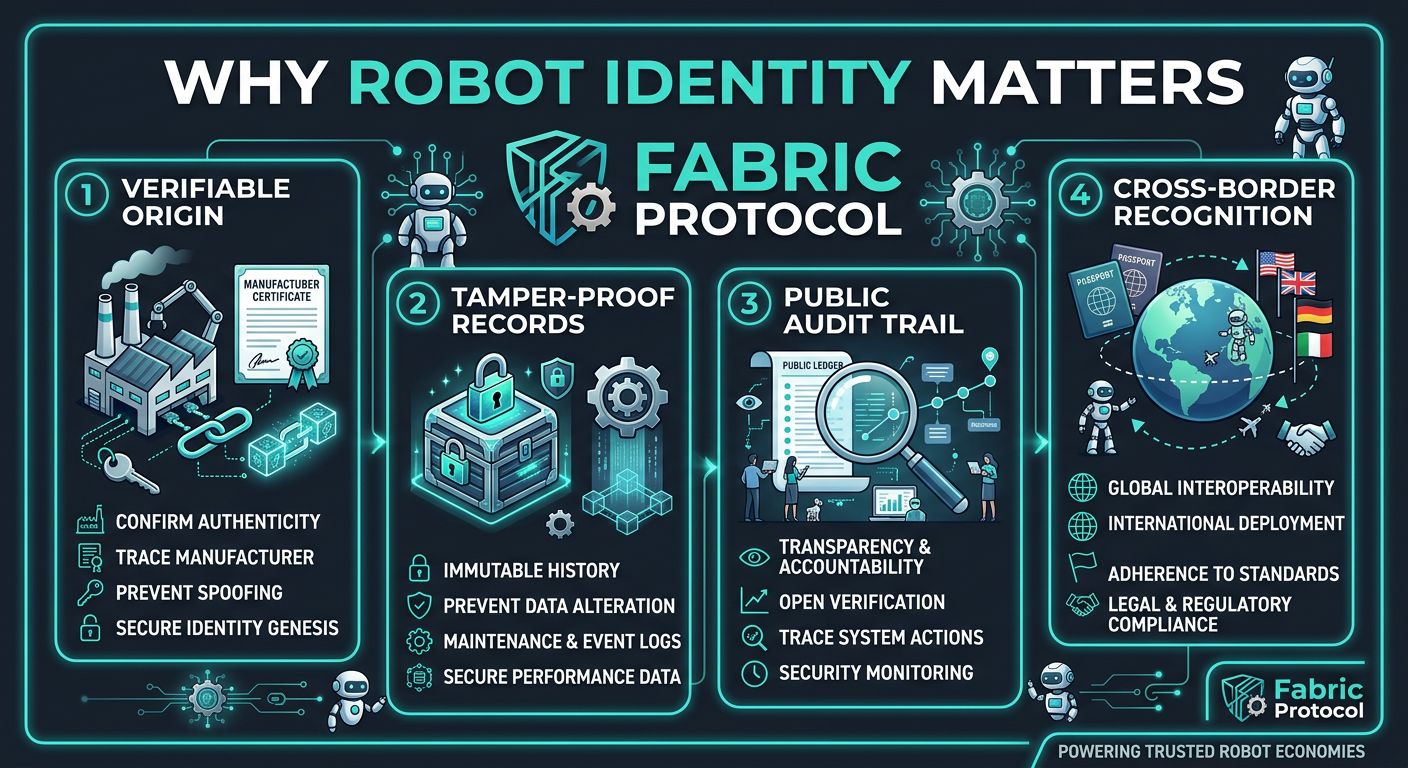
The difference matters enormously. A label can be changed. A label can be spoofed. A label exists inside a database that one company controls and one company can edit. True machine identity is immutable. It lives on a ledger that no single actor can quietly rewrite overnight. This is one of the foundational problems that @Fabric Foundation is solving through its Fabric Protocol infrastructure. Every machine that enters the Fabric ecosystem receives a cryptographic identity. Registered on-chain. Verifiable by anyone with legitimate authority to check. Not stored in a proprietary server somewhere that regulators cannot access. This is not a feature. This is a philosophical commitment to accountability.
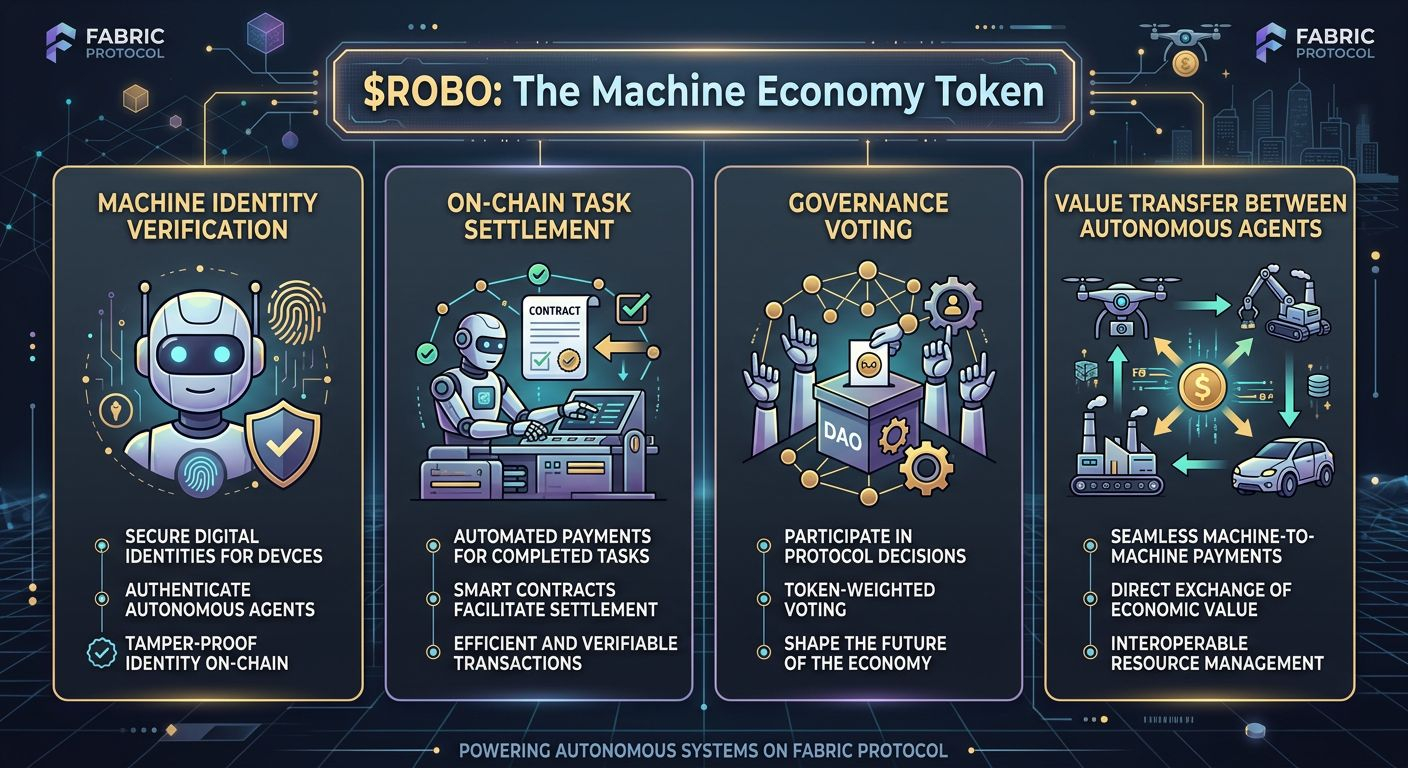
The $ROBO token is what makes this system economically sustainable. When a machine registers its identity, that action is settled through ROBO. When a machine completes a task and that task needs to be recorded on the public ledger, $ROBO facilitates the transaction. When governance decisions need to be made about which machines meet compliance standards, $ROBO holders vote. This is not tokenomics invented to justify a token price. This is a token that exists because the system genuinely requires a coordination layer between machines, humans, and institutions.
Why does robot identity matter more right now than it did two years ago? Because autonomous systems are graduating. They are leaving the controlled environments they were trained in. Warehouses, test tracks, research labs. They are entering hospitals. Schools. Public roads. Critical infrastructure. The moment a machine operates in a space where its failure has consequences for real people, the question of accountability becomes urgent. Regulators are starting to ask it. Insurance underwriters are starting to demand answers to it. Enterprise procurement teams are making it a condition of contracts. And the honest answer from most robotics companies today is: we will get back to you on that. @Fabric Foundation is the only project that is building the infrastructure to actually answer that question at scale.
Accountability infrastructure is not glamorous. It does not trend the way a new AI model announcement does. But it is the thing that separates robotics deployments that regulators approve from the ones they shut down. It is the thing that separates platforms that enterprises trust with mission-critical operations from the ones they pilot and abandon. @Fabric Foundation is building the trust layer that the entire autonomous systems industry will eventually need whether they know it yet or not. ROBO is the economic engine of that trust layer.
The projects that solve real coordination problems between humans and machines at scale are the ones that matter a decade from now. Not the ones with the best marketing in a bull market. The ones with the best infrastructure when it actually counts. That is @Fabric Foundation . That is ROBO. That is worth paying attention to.