
In a market crowded with new blockchains promising speed and scalability infrastructure choices matter more than slogans. For Fogo, building on the Solana Virtual Machine (SVM) is not a cosmetic decision it is the core of its strategic positioning. The SVM foundation shapes how Fogo executes transactions handles congestion attracts developers and ultimately competes in a performance driven crypto landscape.
The SVM was originally engineered within the ecosystem developed by Solana Labs and deployed on Solana. Its defining innovation is parallel execution. Other traditional blockchains process the transactions sequentially the SVM allows transactions that access different accounts to execute simultaneously. This dramatically increases efficiency while maintaining determinism.
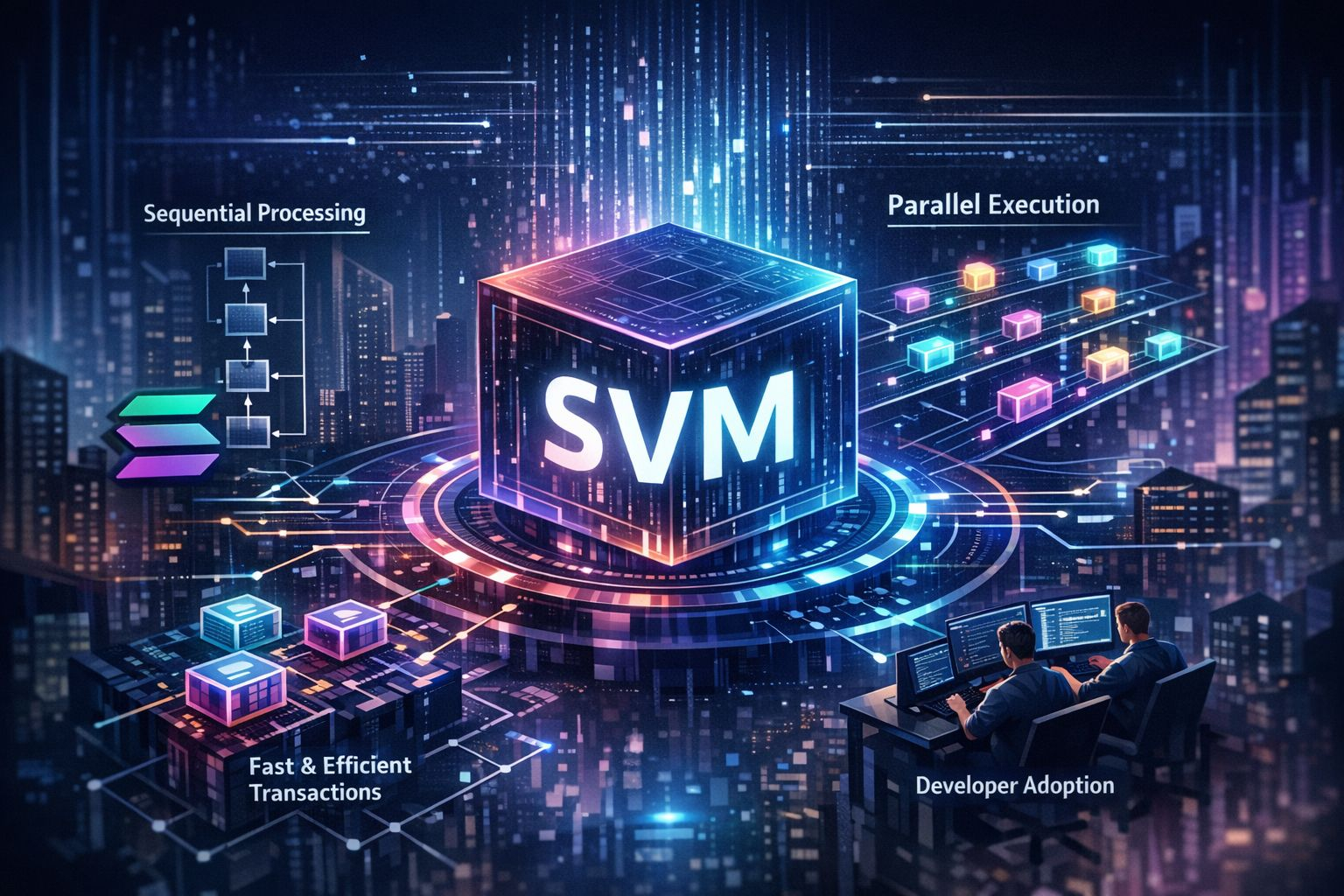
For Fogo this matters because its identity leans heavily toward trading optimization. On-chain trading is latency sensitive. Execution speed, confirmation consistency, and predictable ordering are not abstract technical metrics they directly impact slippage, arbitrage efficiency and market maker profitability. By adopting the SVM, Fogo inherits an execution model already optimized for high throughput environments.
But the advantage is not just speed.
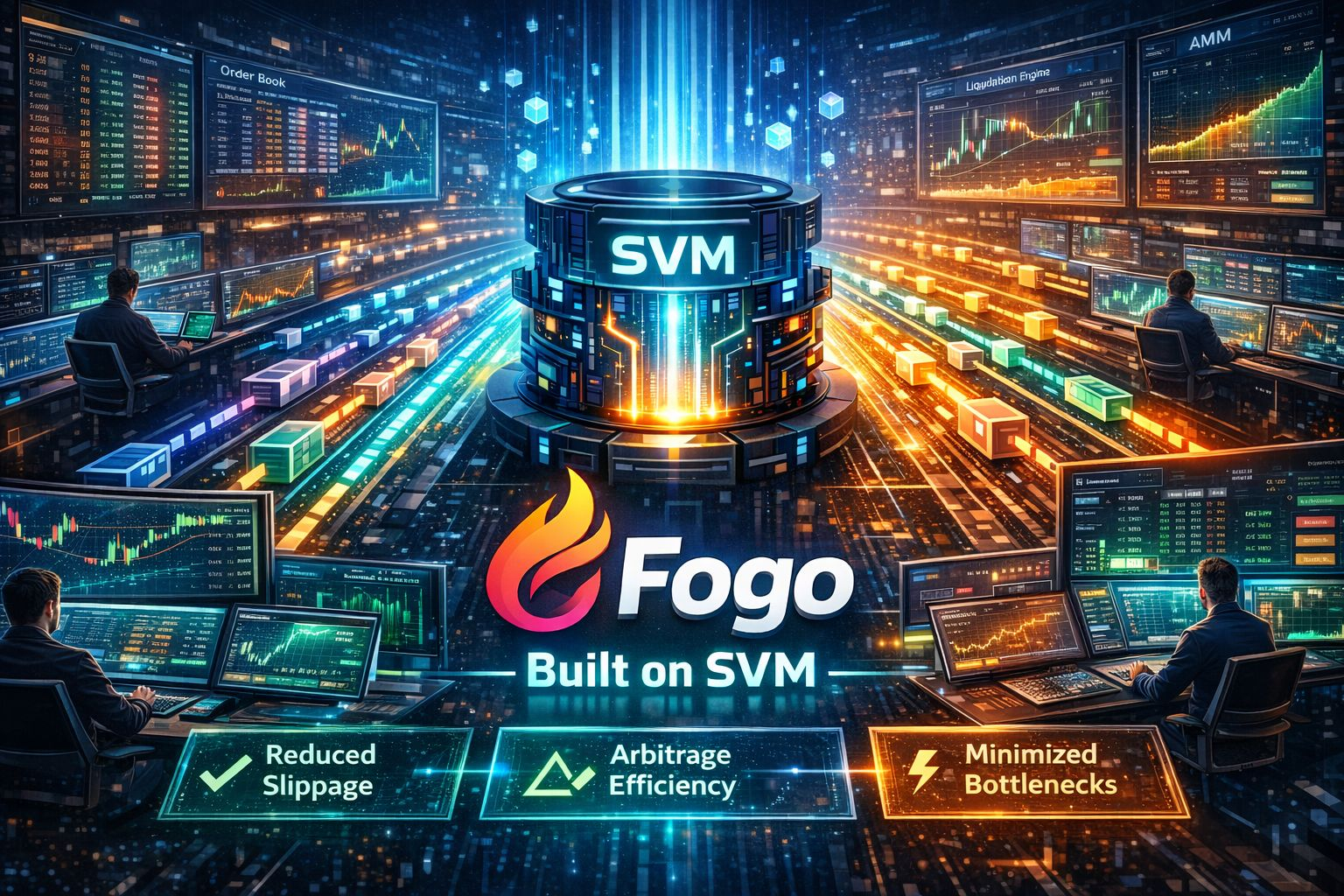
The SVM requires transactions to declare which accounts they will read & write. This structured approach enables the runtime to avoid unnecessary conflicts. In a trading heavy environment where order books, AMMs & liquidation engines operate simultaneously minimizing execution clashes becomes critical. The SVM’s architecture reduces bottlenecks under pressure, helping Fogo maintain performance during volatile periods.
Here is one more reason the SVM foundation matters is ecosystem familiarity. Developers who have built within the Solana ecosystem already understand the programming model, tooling and performance considerations. This lowers the barrier to entry. Fogo does not need to educate the market on a new virtual machine or invent an entirely new developer stack. Instead it can focus on refining infrastructure and incentives.
Strategically this allows Fogo to compete on precision rather than novelty.
The SVM is also hardware aware. It was designed to leverage multi core processors and high performance validator setups. While this raises decentralization debates it aligns with Fogo’s implied thesis: if the goal is institutional grade trading infrastructure, performance cannot be an afterthought. Markets require reliability under stress. Hardware aligned execution supports that ambition.
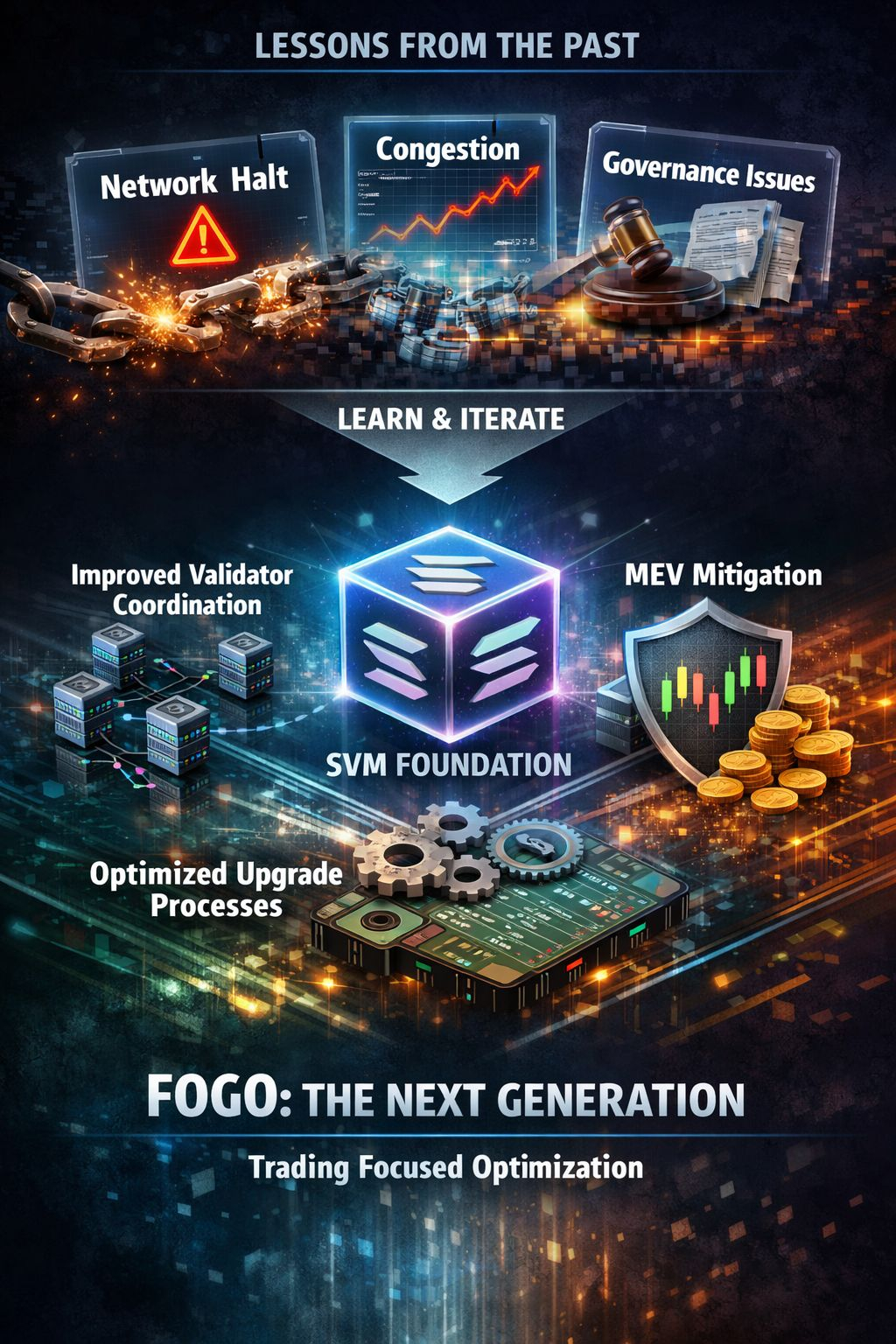
Perhaps most importantly building on the SVM allows Fogo to learn from first-generation challenges. Solana experienced network halts, congestion spikes, and governance scrutiny during periods of explosive growth. Fogo can observe these trade offs and attempt to refine validator coordination, upgrade processes, and MEV mitigation from the outset.
In this sense, the SVM foundation is not just about copying a successful model. It is about iterating on a proven execution engine while tightening focus around trading specific optimization.
Ultimately the SVM gives Fogo a credible technical base. Without a strong execution layer promises of fairness, low latency, and market precision would lack substance. With it, Fogo begins with infrastructure capable of supporting high frequency on-chain activity.
Whether it succeeds will depend on liquidity, governance, and adoption. But the SVM foundation ensures that Fogo is not starting from theory it is starting from performance architecture already tested in live markets.
And in a maturing crypto environment, that foundation matters.
