
There’s something striking about this move — and that’s why it matters.
Bitdeer didn’t trim its holdings. It eliminated them completely.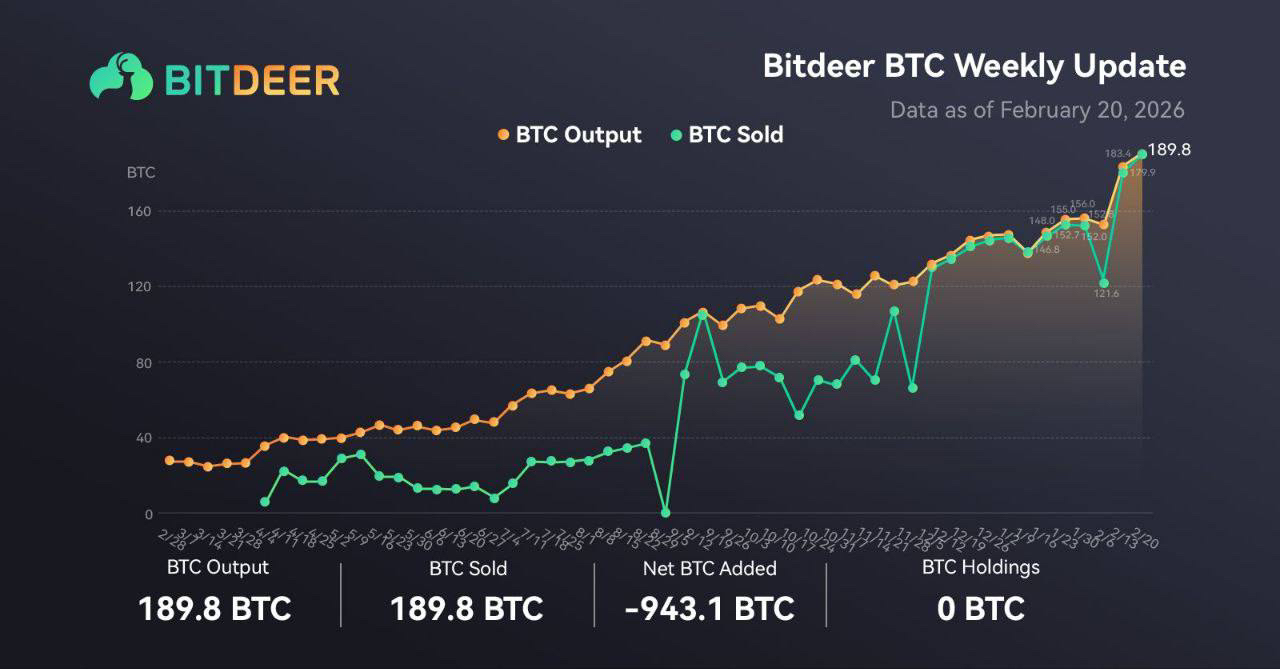
The Moment That Stood Out
When news broke that Bitdeer had reduced its Bitcoin balance to zero, the reaction wasn’t panic — it was curiosity. Mining companies regularly sell portions of their holdings to cover operational costs like electricity. But they almost always retain a reserve — a treasury position reflecting long-term conviction.
Bitdeer chose a different path.
The company confirmed it now holds zero $BTC , having sold all newly mined coins along with roughly 943 BTC from its reserves.
A Gradual Exit, Not a Sudden One
This wasn’t an overnight decision.
Its Bitcoin holdings steadily declined from about 2,000 BTC in December 2025 to nothing by February 2026. Production continued — but inventory was reduced week after week until the balance sheet was empty.
That looks less like a short-term trade and more like a strategic shift in outlook.
The Reality of Modern Mining
Mining is no longer the “free Bitcoin” narrative many still imagine.
Rising difficulty, shrinking margins, and increased operational costs have tightened profitability. Hashprice has struggled to keep pace with expenses, forcing operators to rethink sustainability.
In fact, Bitdeer reportedly sold more Bitcoin than it mined during certain periods — suggesting a defensive or restructuring strategy rather than routine treasury management.
Bearish Signal — or Strategic Pivot?
While some interpret miner selling as inherently bearish, this may be something else entirely.
Bitdeer is reportedly raising $300 million and redirecting capital toward:
AI infrastructure
Data center expansion
Mining hardware development
This doesn’t look like an exit from the industry. It looks like a repositioning within it.
Instead of holding Bitcoin as a treasury asset, Bitdeer appears to be focusing on building the infrastructure that generates revenue regardless of BTC price direction.
Two Types of Miners Emerging
The industry increasingly reflects two philosophies:
Long-term holders who treat BTC as digital gold.
Operational miners who treat BTC strictly as inventory.
Bitdeer has clearly aligned with the second camp.
Meanwhile, companies like Marathon Digital Holdings continue holding significant reserves — highlighting a clear strategic divide within the same sector.
What It Could Mean
This isn’t necessarily a panic signal — but it is a notable shift.
When a major miner with significant hashrate chooses to hold zero Bitcoin, it raises important questions:
Is this insight-driven positioning?
Or simply adaptation to tougher market conditions?
Possibly both.
The easy mining era is over. Today’s environment is capital-heavy, margin-sensitive, and highly competitive. Survival increasingly depends on adaptability.
Final Reflection
Miners are often described as the backbone of Bitcoin.
But even a backbone must flex under pressure.
Bitdeer didn’t collapse — it adjusted.
Whether that adjustment proves visionary or desperate remains to be seen. 👀
#BTC #BTCMiningDifficultyIncrease #BTC100kNext? #WhenWillBTCRebound
