

It started normaly — no dramatic warning, no countdown. Then suddenly, the IoTeX cross-chain bridge was bleeding funds.
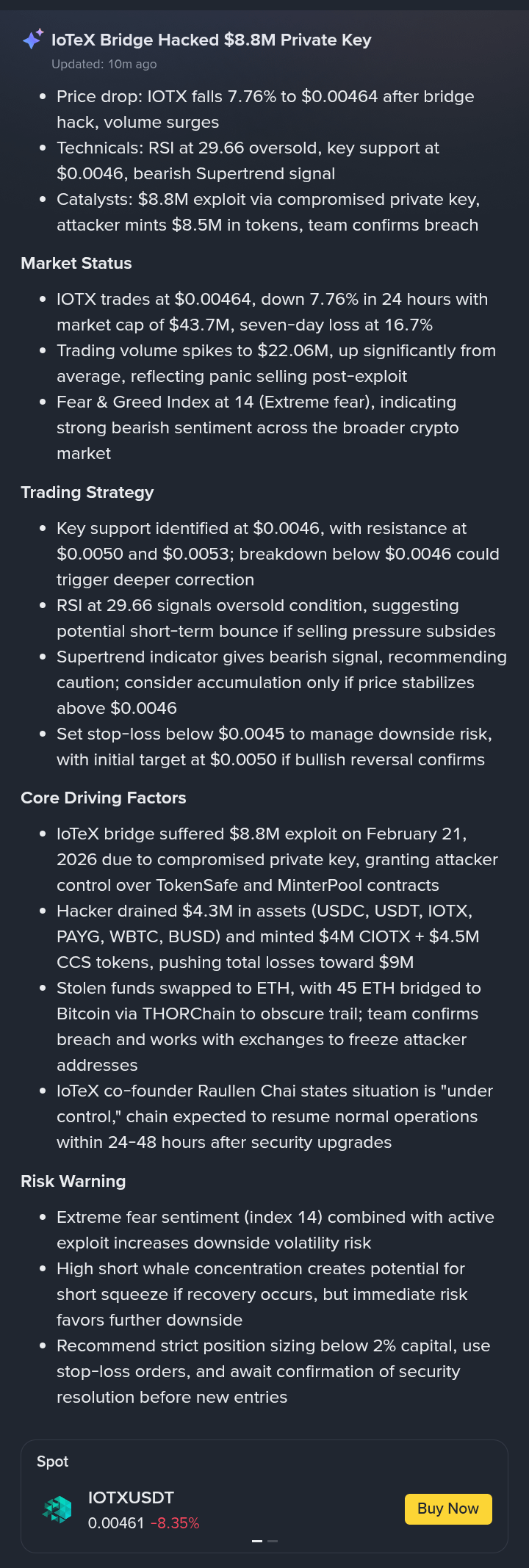
On February 21, the bridge connected to IoTeX was exploited after an attacker compromised a private key with administrative control. Not a complex smart contract bug. Not some zero-day exploit. Just one critical key falling into the wrong hands.
And that was enough.

💰 What Was Taken
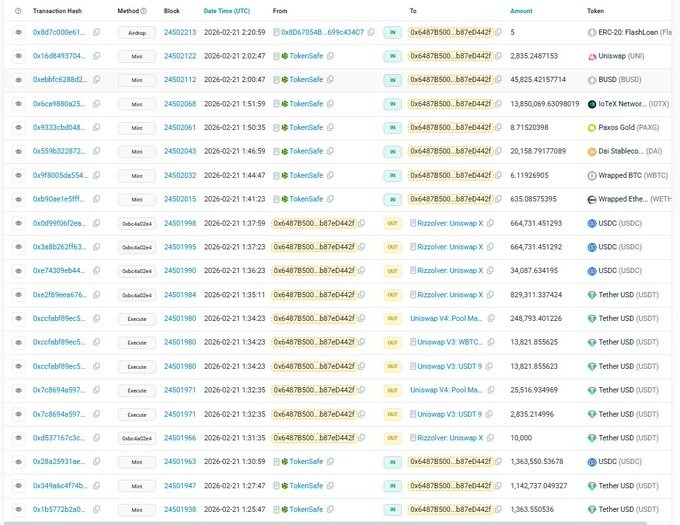
With admin access, the attacker drained multiple assets from the bridge — including stablecoins and wrapped tokens — with early estimates ranging from $2 million to nearly $9 million depending on calculations and minted assets.
Reports show the attacker didn’t just withdraw existing funds. They allegedly minted additional tokens using compromised contracts, amplifying the damage.
🔄 The Getaway
After draining the bridge, the hacker swapped funds into ETH and then moved them through THORChain, routing value toward Bitcoin addresses.
That move matters. Cross-chain swaps make tracking and freezing funds significantly harder. It’s a classic crypto escape route — fast, fragmented, and difficult to reverse.
📉 Market Reaction
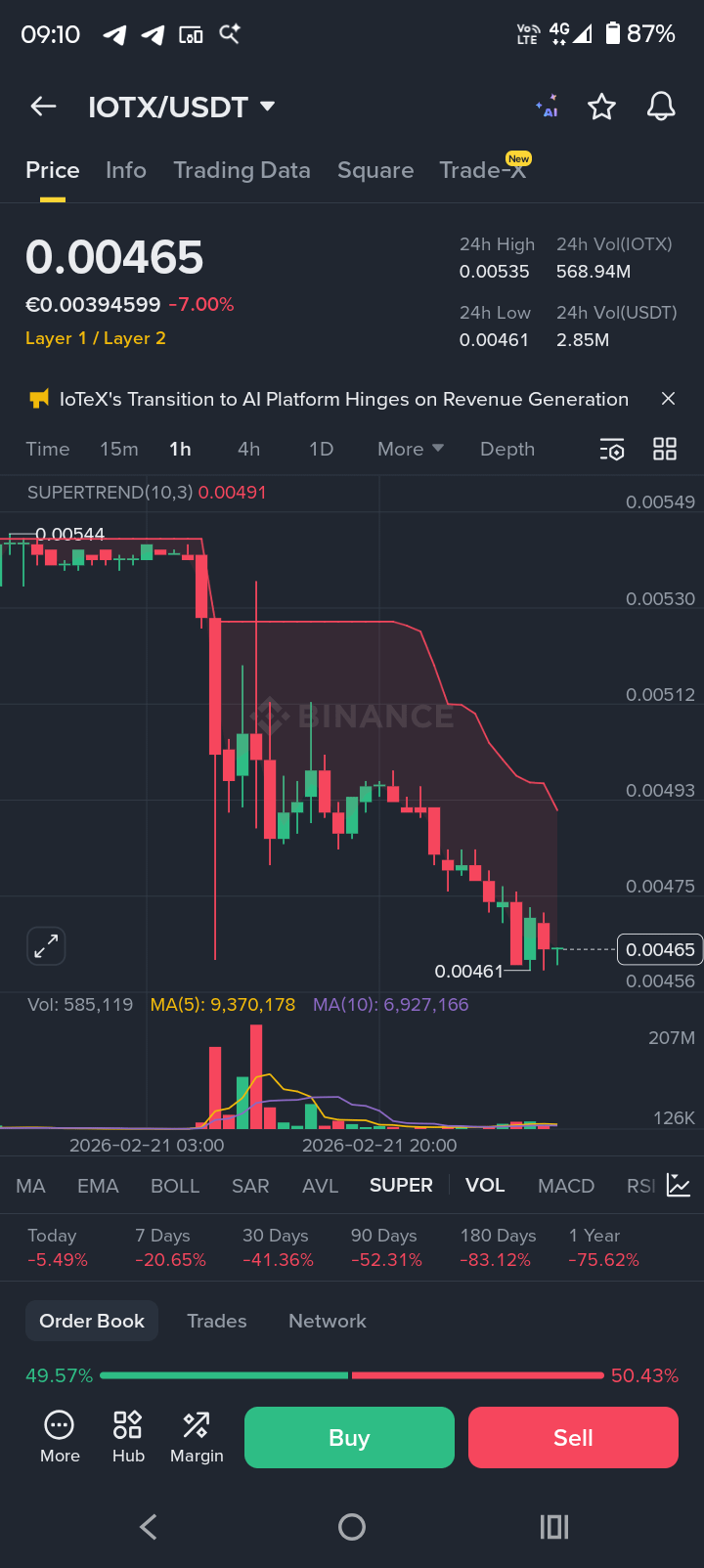
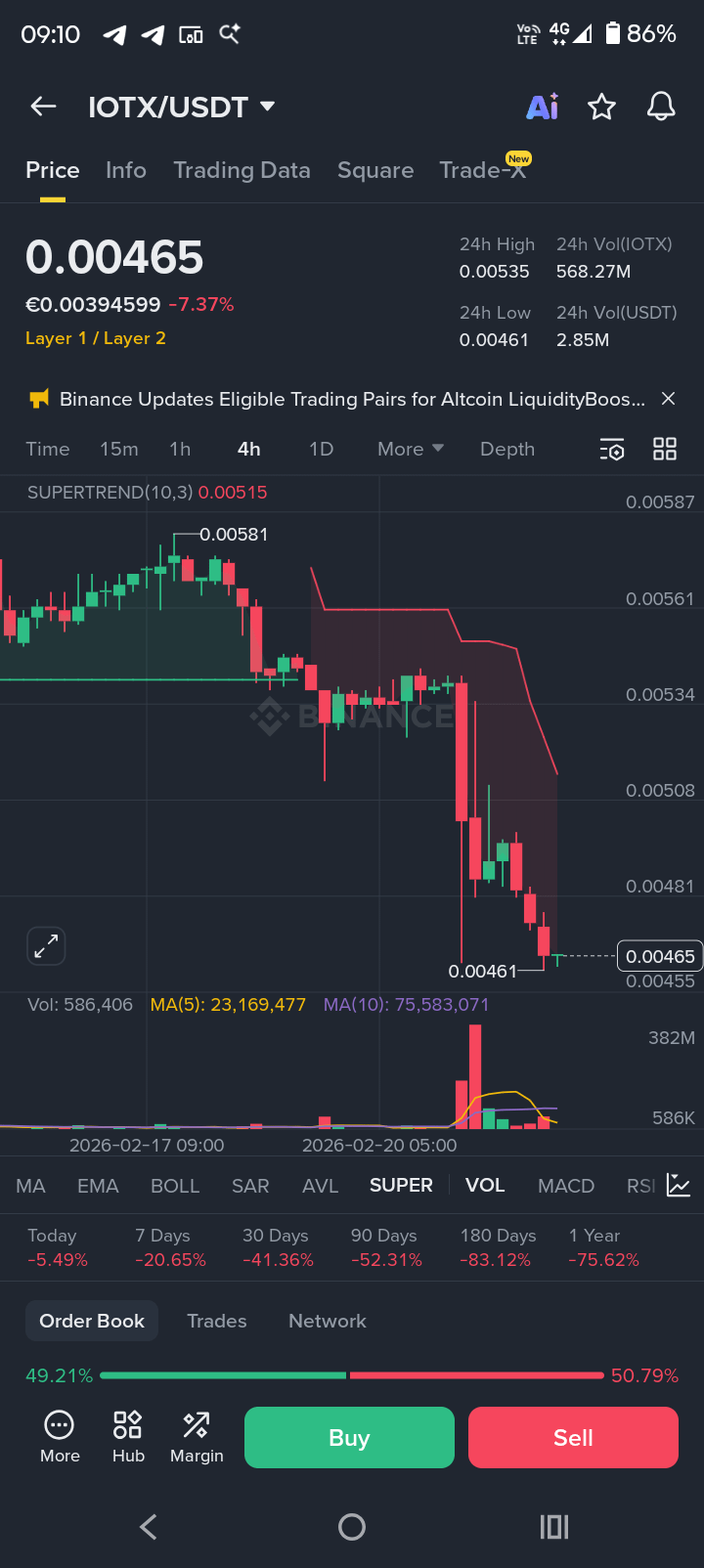
As news spread, IOTX dropped sharply, falling around 9–10% in hours. Trading volume spiked. Panic always moves faster than official statements.
⚠️ The Real Lesson
This wasn’t a code failure. It was operational security. A compromised private key gave full control over bridge contracts — and bridges are prime targets because they hold large pools of liquidity.
One key. Millions moved.
In crypto, security isn’t just about smart contracts. It’s about who holds the keys — and how well they’re protected. 🔐
Ever heard the rule :
Not your keys - not your crypto ?
This is the perfect example.
Expose your key 🗝️ and say good bye to your crypto.
Cause in crypto, who ever holds the keys holds the coins.
If the exchange hold your keys - your coins are not really yours. If you expose your keys to someone you shouldn't - now HE owns your crypto.
Take care of your keys is the lesson to be learn 🗝️.
